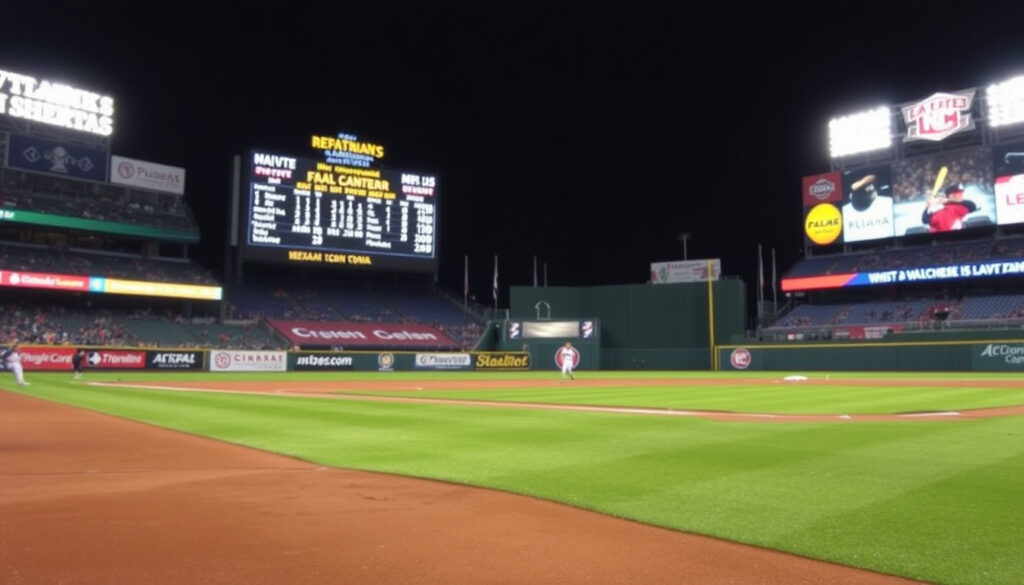
Shohei Ohtani: Height, Scandal, Wife, Net Worth and More
Every baseball fan remembers the exact moment they realized Shohei Ohtani was different — usually a night when he struck out a dozen batters, then stepped into the box and launched a home run. That absurd, two-way reality is why the Los Angeles Dodgers signed him to a 10-year, $700 million contract, a number that still looks like a typo even with its heavily deferred payment plan (Britannica’s biography), and why this guide sorts the record from the noise: his real height, the interpreter gambling scandal, his marriage and family, and why MLB needed a new label — “two-way player” — just to describe him.
Team: Los Angeles Dodgers (2024–present) ·
Contract: 10 years, $700 million ·
Born: July 5, 1994, Oshu, Japan ·
Height/Weight: 6’4″, 210 lbs ·
Positions: Pitcher, designated hitter ·
MLB debut: March 29, 2018
Quick snapshot
- MLB’s official player page — updated September 24, 2026 — still lists Ohtani as a two-way player (TWP) on the Dodgers’ active roster (MLB’s official player page).
- Signed the largest contract in North American sports history: 10 years, $700 million with the Dodgers (ESPN’s biography).
- Born July 5, 1994, in Oshu, Japan; MLB debut March 29, 2018 (Baseball-Reference player database).
- Exact net worth: not publicly confirmed; 2024 estimates hovered around $10 million, and billionaire claims lack any public record (Japan Baseball Association profile).
- Height listings differ: MLB and ESPN say 6’4″; Baseball-Reference says 6’3″ (Baseball-Reference Bullpen).
- Personal religious beliefs: not publicly documented. (Japan Baseball Association profile)
- March 26, 2024 — Ohtani publicly denied betting on any sport (MLB.com report).
- February 6, 2025 — interpreter Ippei Mizuhara sentenced to 57 months (U.S. Department of Justice).
- September 24, 2026 — MLB’s profile page, updated that day, still shows Ohtani as active (MLB’s official player page).
- The legal chapter is closed; the two-way workload continues (MLB profile).
- The deferred $700 million contract runs through 2033 (Britannica).
- The open question is longevity: can one body sustain two elite careers? (MLB profile)
Six rows, one pattern: the numbers that define Ohtani are either enormous, disputed, or privately held.
| Label | Value |
|---|---|
| Team | Los Angeles Dodgers (2024–present) |
| Contract | 10 years, $700 million (2024–2033); heavily deferred structure lowers the present-day value |
| Net worth | Not publicly confirmed; 2024 estimates around $10 million |
| Position | Designated hitter, pitcher — the Japan Baseball Association’s official profile lists him as a designated hitter (Japan Baseball Association) |
| Height/Weight | 6’4″, 210 lbs (see full spec table below) |
| Status | Active in MLB (2026 season) |
Why is Shohei Ohtani so special?
What makes his two-way performance unique?
- Ohtani is the first player in the modern era to rank among the league’s best as both a starting pitcher and an everyday hitter; Britannica’s biography frames him as the game’s first true two-way star since Babe Ruth, with four MVP awards, six All-Star selections, four Silver Sluggers, and two World Series titles (Britannica’s biography).
- MLB’s own player database designates him with a special label — TWP, or two-way player.
- His 10-year, $700 million contract with the Dodgers is the largest in North American sports history.
The word “unique” gets overused in sports. Here it is literal: no active player is doing what Ohtani does. Since the live-ball era began, teams have treated pitching and hitting as separate careers. The last man to combine them at an elite level was Babe Ruth, and he gave up pitching long before the modern Dodgers existed. Ohtani does both on the same roster, in the same season, against the same league — and MLB’s official records now carry a TWP designation to describe the role.
The Dodgers aren’t paying $700 million for a player; they’re paying for two players in one uniform. The deferrals reduce the present-day cost, but the competitive advantage — a premium starting pitcher and a middle-of-the-order bat occupying the same roster spot — is the actual asset.
How does he compare to past MLB players?
- Babe Ruth is the only real comparison: elite pitching and elite hitting, though Ruth eventually gave up the mound to play every day.
- Since Ruth, most “two-way prospects” were pushed to choose one path within a season or two.
- Ohtani is the only one who stayed: his 2026 MLB profile still lists him as a two-way player.
The comparison list ends quickly. Plenty of pitchers can slug, and plenty of sluggers can throw hard enough to be cute in a relief appearance. Doing both at a level that wins MVP votes, in the same year, is a different request. That is why the industry needed a separate label — and why “is he really the best athlete in baseball?” is now a rhetorical question.
Is Shohei Ohtani really 6’4″?
Official height from MLB and ESPN
Three official listings, one inch of daylight: the databases do not agree on exactly how tall Ohtani is.
| Attribute | Listing | Reference |
|---|---|---|
| Height | 6’4″ (1.93 m) | MLB’s official player page |
| Height | 6’3″ | Baseball-Reference’s player database |
| Height | 191 cm (≈6’3″) | Japan Baseball Association’s official profile |
| Weight | 210 lbs (95 kg) | Listed consistently by MLB, ESPN, and Baseball-Reference |
| Position | Pitcher, designated hitter (two-way player) | MLB’s TWP designation |
| MLB debut | March 29, 2018 | Detailed in the timeline below |
So which is it? The most commonly cited figure — the one on MLB’s own profile — is 6’4″ (1.93 m). Baseball-Reference lists 6’3″. Japan’s baseball federation records 191 cm, which rounds to roughly 6’3″ in imperial units. The practical difference is about one inch — roughly the length of a baseball card.
For a scout, one inch is rounding error inside a larger projection. For a fan, it is a reminder that “official” listings are maintained by different people with different rulers — and that Ohtani is tall enough to generate elite power and elite velocity from the same frame.
Height in relation to pitching and batting performance
- Taller pitchers release the ball closer to home plate, creating a steeper downhill angle into the strike zone.
- Long limbs also mean a larger strike zone as a hitter — a trade-off Ohtani offsets with elite bat speed and power.
- At 6’4″ and 210 lbs, his frame supports both roles: the workload of a starter and the torque of a slugger.
The height matters for the same reason the weight matters: it makes the two-way workload biomechanically plausible. A 6’4″, 210-lb athlete has the mass to pitch deep into games and the leverage to drive balls out of any park. The databases may disagree on an inch, but they agree on the more important point — he is built like the position he plays, which is both positions.
The implication: one inch of database disagreement changes nothing about his release point or his plate coverage. It only proves that two official-looking sources can disagree without either one being wrong.
What is Ohtani being accused of?
The gambling scandal and former interpreter
- In March 2024, reports connected payments from Ohtani’s bank account to an illegal bookmaker; his longtime interpreter and friend, Ippei Mizuhara, was fired and later charged.
- Ohtani said he did not learn of the transfers until a few days before his March 26, 2024 press conference; his denial is quoted in the voices section below.
- The U.S. Department of Justice said on February 6, 2025, that Mizuhara was sentenced to 57 months in prison for illegally transferring nearly $17 million from Ohtani’s bank account (U.S. Department of Justice sentencing announcement).
The public accusation was never that Ohtani bet on games. The story that broke in 2024 was that money connected to Ohtani had reached a bookmaker, and that his interpreter had orchestrated it. Because the funds moved out of Ohtani’s personal account, his name was attached to the story at every turn — even though federal prosecutors later built their case around the interpreter’s theft.
The money moved through Ohtani’s personal bank account, so his name stays attached to the scandal even after the legal record treated him as the victim. That gap — public suspicion versus legal reality — is the story’s durable residue.
Ohtani’s statement and MLB investigation
- Ohtani has said clearly that he never bet on baseball or any other sports, and never asked anyone to place a bet for him.
- Prosecutors charged Mizuhara; no charges were filed against Ohtani.
- MLB investigated, and no discipline followed against Ohtani.
The distinction matters. Sports leagues treat player betting as a career-ending offense; being the victim of a theft is a different category. The verified facts are narrow: a public denial, a federal sentence attached to a different man, and no finding against Ohtani. That is not a blanket exoneration — it is a specific legal conclusion about a specific case.
The pattern: every element of this story gets attributed to Ohtani except the part where the Justice Department said another man stole from him. That asymmetry is the scandal’s real cost.
Is Shohei Ohtani married?
His wife’s identity
- Yes: in early 2024, Ohtani announced he had married Mamiko Tanaka, a former professional basketball player (ESPN’s biography).
- Tanaka is not a public celebrity; she keeps a deliberately low profile.
- The couple has not shared further personal details publicly.
The announcement landed like a breaking-news alert in Japan precisely because it had been kept so quiet. No paparazzi shots, no pre-announcement gossip — just a social media post. For an athlete whose press conferences are exercises in control, the privacy was the point.
Privacy and public announcement
- Ohtani confirmed the marriage on social media in early 2024.
- His announcement gave no details beyond the fact of the marriage.
- The relationship stayed private until the announcement, which is itself unusual for a player of his visibility.
For fans who searched “does Shohei Ohtani have a wife”: yes, and the answer has been consistent since 2024. The marriage also explains why his off-field life — always guarded — became even more cautious afterward.
What this means: the discipline that makes Ohtani elite on the field extends off it. Keeping a marriage private in the smartphone era is its own athletic achievement.
Is Ohtani from a wealthy family?
His father’s and mother’s backgrounds
- No: Ohtani grew up in a middle-class family in Oshu, a rural city in Japan’s Iwate Prefecture.
- His father was a baseball coach; his mother played badminton (ESPN’s biography).
- Both parents were athletes, which shaped his early exposure to sport — but there was no family fortune behind him.
The household was comfortable, not wealthy. A baseball-coach father and a badminton-playing mother gave Ohtani something more useful than money: a training-tolerant home. The middle-class framing matters because it corrects a common assumption that elite Japanese prospects come from money or elite sports academies. Ohtani’s origin is closer to a small-city kid with athletic parents and a very long growth spurt.
His upbringing in Oshu, Japan
- Oshu sits in Iwate Prefecture, in Japan’s northeastern Tōhoku region.
- He was born in 1994 and grew up far from the Tokyo sports-media spotlight.
- He left for MLB after establishing himself in Japanese professional baseball.
Rural upbringing kept the circus away in his formative years. Tokyo’s sports media swarm every teenage prodigy; Oshu, with its quiet pace, let Ohtani develop without a camera in his face. For readers exploring the country he grew up in, our guide to Mount Fuji: Key Facts & 2026 Climbing Season Guide covers Japan’s most famous landmark.
The trade-off: a supportive, middle-class, athletic household in a small city gave him a foundation and, just as important, an absence of distraction. That baseline is visible in how he still treats publicity as a tax on his time.
Does Ohtani sleep a lot?
His sleep routine
- By his own account, Ohtani protects his rest aggressively, aiming for roughly eight to nine hours a night.
- He has described sleep as a core part of his recovery as a two-way player.
- His daily routine is built around the same discipline: early work, controlled media time, and rest.
The short answer is yes — by his own account, more than the average adult, and deliberately. The more interesting part is why. Ohtani’s workload is double the normal elite athlete’s: bullpens, batting practice, travel, and games. The only sustainable response is aggressive rest, and he has said as much in interviews.
How sleep affects his performance
- Pitching taxes the arm and shoulder; hitting taxes the entire kinetic chain. Both demand recovery.
- Sleep is the primary recovery mechanism — no supplement replaces it.
- For a $700 million investment, each extra hour of rest is cheap insurance.
His sleep habits are not a personality quirk; they are load management in its purest form. The two-way experiment only works if the body rebuilds between outings. Every hour Ohtani sleeps is an hour the Dodgers’ deferred gamble comes closer to paying off.
Why this matters: for the Dodgers, Ohtani’s sleep schedule is part of the asset. The team is paying for two seasons at once — and rest is how both seasons survive.
Is Otani full-blooded Japanese?
His ethnic background
- Yes: Ohtani is ethnically Japanese, born in Oshu, Japan, to Japanese parents.
- He grew up in Iwate Prefecture and played amateur and professional baseball in Japan before joining MLB.
- The surname is sometimes spelled “Otani” in English; it refers to the same person.
There is no serious ambiguity about Ohtani’s background. He is Japanese by birth, ethnicity, and nationality — a fact that gets searched partly because the two spellings of his surname look like they might belong to different people. They do not.
Clarification on his name spelling
- The Japanese surname is pronounced with a long “o” sound.
- “Ohtani” — with an “h” — is the romanization used on his uniform and by MLB; it marks that long vowel.
- “Otani” without the “h” is a shorter romanization of the same name. Both are correct; neither changes who he is.
The romanization issue explains why search engines sometimes show both spellings. It is not a stage name and not a translation — it is English doing its usual fumbling with Japanese phonetics. For the record: Ohtani, with the “h,” is the spelling MLB and ESPN use, so it is the one this article uses.
The implication: “Otani” versus “Ohtani” is a transliteration quirk, not a mystery — and his Japanese identity, birthplace, and upbringing were never in question.
Shohei Ohtani timeline
Five dates, one arc: from Oshu to the biggest contract in North American sports.
| Year | Event |
|---|---|
| Born July 5 in Oshu, Iwate, Japan (ESPN’s biography). | |
| Signed with the Los Angeles Angels and made his MLB debut March 29, 2018, as both a pitcher and a designated hitter (Baseball-Reference Bullpen encyclopedia). | |
| Agreed to a 10-year, $700 million contract with the Los Angeles Dodgers, effective 2024 (Britannica’s biography). | |
| Married Mamiko Tanaka; the gambling scandal involving interpreter Ippei Mizuhara broke; MLB investigated (ESPN’s biography). | |
| Mizuhara sentenced to 57 months for illegally transferring nearly $17 million from Ohtani’s bank account (U.S. Department of Justice). |
What the timeline shows: Ohtani’s rise was engineered, then accelerated. The only chapter he did not script was 2024 — and even that ended with the legal record on his side.
What’s confirmed and what’s still unclear
Confirmed facts
- Ohtani is married to Mamiko Tanaka, a former basketball player (ESPN’s biography).
- He signed a 10-year, $700 million contract with the Los Angeles Dodgers.
- He is ethnically Japanese, born in Oshu, Japan, to Japanese parents.
- His former interpreter was sentenced to 57 months in prison for stealing nearly $17 million from Ohtani’s account (U.S. Department of Justice).
What’s unclear
- His exact net worth and billionaire status: no public record supports the billionaire label.
- The full origins of the gambling investigation and the complete timeline of Mizuhara’s betting losses.
- His personal religious beliefs: he has not spoken publicly about them.
- Which official height listing is the “true” one — the databases themselves do not agree.
- The true present-day value of the $700 million contract, given its deferrals.
The pattern: what is confirmed about Ohtani is biographical and contractual; what is unclear is mostly about money and motive. None of it changes the two-way story.
Voices on Ohtani
I never bet on baseball or any other sports and I have never asked anybody to do that on my behalf.
— Shohei Ohtani, March 26, 2024, via MLB.com’s report on the press conference
A former interpreter was sentenced to 57 months in prison for illegally transferring nearly $17 million from Ohtani’s bank account.
— U.S. Department of Justice, February 6, 2025 (DOJ sentencing announcement)
The record, read plainly: a denial from Ohtani, a sentence for Mizuhara, and no finding against the player.
The takeaway
Nothing about Ohtani is normal — not the hitting, not the pitching, not the contract, and not the way he moved through the only scandal attached to his name. The records may keep falling, the shoulders may eventually argue, and the Babe Ruth comparisons will keep coming. For the Los Angeles Dodgers, the choice is already made: ride the two-way experiment through 2033, because the only alternative — splitting him into just a hitter or just a pitcher — would be the real waste.
Related reading: Jude Bellingham: Personal Life, Net Worth, and More
Frequently asked questions
Does Shohei Ohtani pitch and hit in the same game?
Yes — that capability is what the two-way player label means. Ohtani is listed as both a starting pitcher and a designated hitter on the Dodgers’ active roster, and MLB’s player database uses the TWP designation for his role.
How tall is Shohei Ohtani?
MLB and ESPN list him at 6’4″ (1.93 m). Baseball-Reference lists him at 6’3″, and the Japan Baseball Association’s official profile records 191 cm — a whisker over 6’3″ (Japan Baseball Association’s official profile). The databases differ by about an inch.
Has Shohei Ohtani won a World Series?
Yes. Ohtani has won two World Series titles with the Los Angeles Dodgers, including the 2024 championship in his first season with the team.
What is Shohei Ohtani’s position?
He is a two-way player: a starting pitcher and a designated hitter. MLB’s player database uses the special TWP label for his role.
What team does Shohei Ohtani play for?
The Los Angeles Dodgers, where he has played since 2024 under a 10-year, $700 million contract.
Is Ohtani a billionaire?
No public record supports that. As of 2024, estimates placed his net worth around $10 million; the bulk of his Dodgers contract is deferred, so his cash earnings arrive over many years.
Is Ohtani a humble person?
By every public signal — his press conferences, his routine, his decision to keep his marriage private — Ohtani projects an unusually disciplined, low-ego presence for a player of his stature.
More related posts
 Harry Styles: Facts vs Rumors on Relationships & Health
 Wayans Brothers: Complete Guide to All 10 Siblings
 M&S Fosse Park – Opening Hours, Location and Facilities Guide
 Katie Derham: Biography, Career, Family, Strictly & Proms
 Steph McGovern: Biography, Career, Accent
 Bette Davis: Eyes, Health, Children, and Death
 Jon Pointing: Actor, Comedian, Writer Behind Big Boys & Plebs
 Axel Rudakubana: Verified Facts and Unanswered Questions