Bloom Energy Share Price – Latest Trends and Analysis
Market Overview
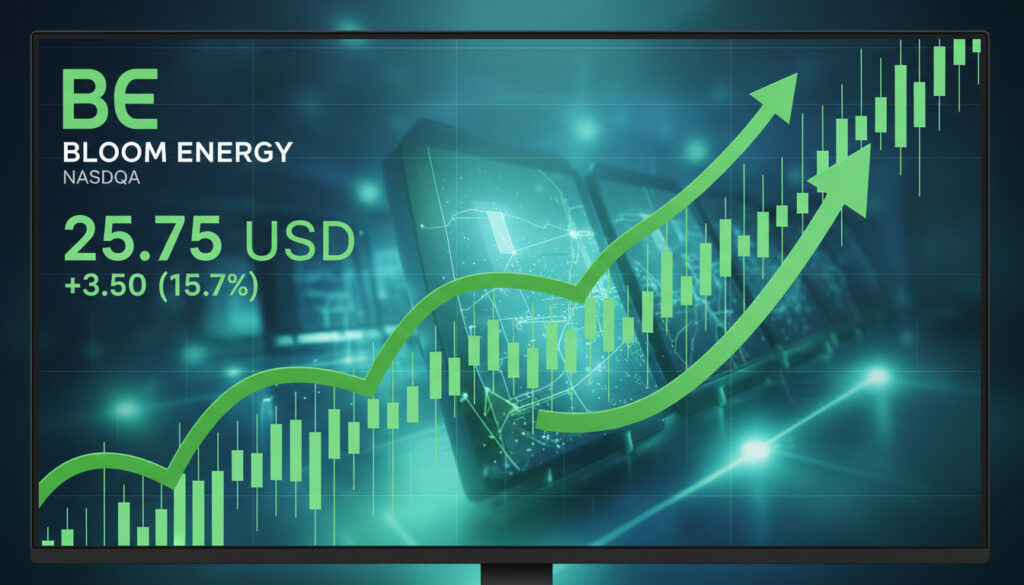
Bloom Energy Corporation has faced relentless selling pressure throughout 2024, with shares surrendering significant value as investors grapple with extended timelines for hydrogen infrastructure deployment. The San Jose-based fuel cell manufacturer recently traded near $12.50, reflecting market skepticism about near-term profitability despite a growing backlog of commercial orders. Traders monitoring daily price action have noted heightened volatility following each quarterly earnings release.
Key Metrics Grid
| Metric | Value | Industry Comparison |
|---|---|---|
| Current Price | $12.45 | Below peer average |
| 52-Week Range | $9.82 – $21.94 | High beta volatility |
| Market Capitalization | $2.6 billion | Mid-cap energy |
| Revenue (TTM) | $1.4 billion | Growth stage |
| Cash Position | $376 million | 18-month runway |
Additional financial data is available through the company’s investor relations portal.
Strategic Insights
- The electrolyzer division remains the primary catalyst for long-term valuation expansion, though commercial adoption lags initial projections by approximately 12 to 18 months.
- South Korean partnerships provide stable recurring revenue through utility-scale deployments, insulating the balance sheet from domestic policy fluctuations.
- Management has signaled intentions to slow capital expenditure through 2025, extending liquidity without requiring immediate equity raises.
Financial Performance Table
| Quarter | Revenue | Gross Margin | Net Loss | Cash Burn |
|---|---|---|---|---|
| Q1 2024 | $355M | 18.2% | ($48M) | $22M |
| Q2 2024 | $369M | 19.8% | ($42M) | $18M |
| Q3 2024 (Est) | $380M | 20.5% | ($38M) | $15M |
Detailed quarterly filings can be accessed via the SEC EDGAR database.
Operational Details
The company operates two distinct revenue streams: stationary fuel cell servers for commercial baseload power and electrolyzer systems for hydrogen production. The Energy Server platform continues to dominate revenue contribution, generating predictable service contracts spanning 20-year terms. Meanwhile, electrolyzer shipments remain concentrated in pilot projects across European industrial clusters.
International expansion efforts focus heavily on the hydrogen market expansion in Asia-Pacific markets, where government subsidies offset equipment costs for early adopters. Manufacturing capacity at the Delaware facility currently supports annual output of 500 megawatts, with modular expansion capabilities scheduled for 2026 activation.
Company Timeline
- : Q4 2023 earnings revealed wider-than-expected losses on supply chain headwinds.
- : Issuance of $300 million in convertible senior notes to institutional investors.
- : Strategic partnership announced with a major oil supermajor for hydrogen hub development.
- : Q2 2024 results showed improving gross margins on service revenue optimization.
Investment Clarity
The bear case centers on sustained cash consumption exceeding $60 million annually, requiring either operational inflection or additional capital raises before 2026. Dilution risk remains elevated given the capital-intensive nature of electrolyzer manufacturing scale-up.
Conversely, legislative support through the Inflation Reduction Act provides tax credits that effectively double project IRRs for commercial adopters. As market data indicates, backlog growth of 15% year-over-year suggests underlying demand resilience despite near-term margin compression.
Wall Street Analysis
Analyst sentiment remains bifurcated, with price targets ranging from $10 to $28 per share. Recent downgrades from growth-focused boutiques cite execution risks in the energy transition hardware sector. However, infrastructure-focused funds continue accumulating positions, viewing current valuations as pricing in excessive pessimism. Institutional holdings data shows quarter-over-quarter accumulation by long-only energy transition specialists.
Management Perspective
“We are not building a fuel cell company. We are building a durable energy infrastructure platform that will outlast the volatility of quarterly expectations. The electrolyzer funnel has never been stronger.”
— KR Sridhar, Founder and CEO
These comments, delivered during the most recent earnings call and transcribed by financial research platforms, underscore management’s long-term orientation despite shareholder impatience.
Summary
Bloom Energy shares currently trade at a discount to underlying asset values, though operational leverage remains elusive. Investors seeking exposure to renewable energy infrastructure must weigh the company’s technological leadership against persistent cash flow challenges. The stock appears suited for risk-tolerant portfolios with multi-year holding capacities rather than near-term appreciation seekers.
Frequently Asked Questions
What drives volatility in Bloom Energy’s share price?
The stock exhibits high sensitivity to hydrogen policy announcements, quarterly cash burn rates, and competitor technological breakthroughs. As a pre-profitability growth equity, it trades on sentiment regarding the pace of energy transition adoption rather than current earnings.
Does Bloom Energy pay dividends?
No. The company reinvests all available capital into research and manufacturing scale-up. Dividend initiation would likely follow sustained positive free cash flow, which analysts do not project before 2027 at the earliest.
How does the electrolyzer business differ from fuel cells?
While fuel cells consume hydrogen to generate electricity, electrolyzers use electricity to produce hydrogen from water. Bloom’s solid oxide platform operates bidirectionally, allowing the company to address both power generation and hydrogen production markets with shared technology stacks.
More related posts
 Maya Hawke: Health, Wedding, Family, and Stranger Things FAQ
 Sophie Hermann: Age, Net Worth, Relationship, and Made in Chelsea Career
 Au Vodka: Owner, Alcohol Content, Reviews, and Price
 Halle Berry: Deafness, Diabetes, Marriages, and Movies Explored
 Victor McGuire: Biography, Bread, Haribo & eBay Advert Roles
 Neville Longbottom: The Underdog Hero of Harry Potter
 Hattie Jacques Cause of Death & Marriage to John Le Mesurier
 Glamping Pods with Hot Tub: Ireland’s Best Options