Francis Bacon: Philosopher, Artist, and Lasting Legacy
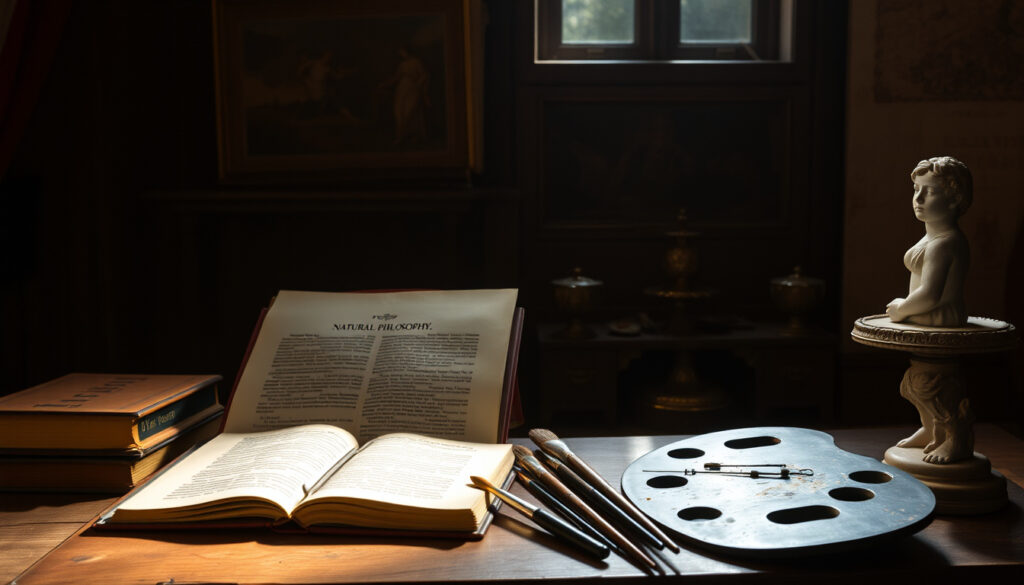
Two men named Francis Bacon, separated by three centuries, each reshaped how we see the world—one through the lens of reason, the other through the raw emotion of paint. You’ve probably heard the name, but it’s easy to get lost in the shuffle when the same moniker graces both an Enlightenment-era giant and a 20th-century master of the grotesque.
Born: 1561, London, England · Died: 1626, Highgate, England · Primary field: Philosophy, statesmanship · Key work: Novum Organum · Artist counterpart: 1909–1992, Dublin · Notable artwork: Three Studies for Figures at the Base of a Crucifixion
Date of birth: 1561, London, England · Date of death: 1626, Highgate, England · Primary field: Philosophy, statesmanship · Key work: Novum Organum
tate.org.uk, britannica.com, britannica.com, en.wikisource.org, britannica.com, buru.org.uk, fb-akermariano.blogspot.com, moma.org, shop.tate.org.uk
Frequently asked questions
Who is Francis Bacon the philosopher?
He was an English philosopher, statesman, and essayist who lived from 1561 to 1626. Bacon is best known for championing the empirical method and for his work “Novum Organum,” which laid the groundwork for modern scientific inquiry.
Who is Francis Bacon the artist?
He was an Irish-born British painter (1909–1992) known for his raw, unsettling, and often distorted depictions of the human figure. His most famous work, “Three Studies for Figures at the Base of a Crucifixion,” is a cornerstone of modern figurative art.
What is the Baconian method?
The Baconian method, as described by the philosopher, is a systematic approach to science that relies on methodical observation, classification of facts, and the rejection of hypotheses that don’t match observed data. It’s a cornerstone of empiricism.
Did Francis Bacon the philosopher paint?
No, there is no significant record of the philosopher engaging in visual art as a creator. His primary contributions were in writing, law, and political philosophy.
What is the connection between the two Francis Bacons?
While unconnected by blood or time, both are linked by their intense focus on the human condition—one through abstract logic and the other through visceral, emotional imagery—and their shared legacy as masters of their respective crafts.
Confirmed facts
- Francis Bacon (1561–1626) was an English philosopher and statesman. Britannica
- He is famous for advocating a new scientific method. Britannica
- Bacon worked as a self-taught painter and focused on the human figure. Studio International
- Both men left a lasting impact on philosophy and art, respectively. Britannica
The philosopher: a blueprint for modern science
Bacon’s philosophy wasn’t just abstract thought; it was a call to action, a plan to remake human knowledge through a very specific approach. His method is often described as a methodical observation of facts to interpret natural phenomena. Britannica
| Philosophical Tenet | Description |
|---|---|
| Empiricism | True knowledge comes from sensory experience and observation. |
| Baconian Method | Proceeds by describing facts, tabulating them into categories, and rejecting what does not fit. |
| Ultimate Goal | Legitimate command over nature for the relief of the human condition. |
The implication: Bacon turned philosophy from abstract debate into a practical toolkit for discovery.
This was a fundamental shift from the deductive reasoning that dominated earlier philosophy. Instead of starting with grand theories, Bacon proposed we start with careful observation. Its essence was to “proceed by describing facts, tabulating them into categories”. Britannica
What was Francis Bacon accused of?
In 1621, Bacon faced a bribery scandal that ended his political career. He admitted guilt, was fined, imprisoned, and lost his position as Lord Chancellor. The episode reveals how even powerful thinkers could fall from grace. Britannica
The artist: a master of the human condition
In stark contrast, the other Francis Bacon offers a raw and emotional counterpoint to the world of rationalism. Tate reports that he drifted through London before turning to art. Tate His canvases are not about the world of nature, but the intense, often tormented, world of the psyche.
His rise to international prominence came with a bang, gaining critical success from the mid-1940s. Tate He worked on the basis of his own self-taught skill, forever altering the course of painting.
The central subject in Bacon’s work is the human figure. As noted by Studio International, the human figure was central to Bacon’s work throughout his career. Studio International
The Baconian method explained
For the philosopher, the answer lay in a rigorous method. The Baconian method is described as the methodical observation of facts, which requires a practical toolset. Britannica
- Observation: Collecting data in a systematic way.
- Classification: Tabulating and grouping the facts.
- Elimination: Rejecting what doesn’t fit the observed phenomenon.
This process was a stark departure from syllogistic logic and Aristotelian deduction. Its ultimate purpose was to establish a new toolset for science.
Why is Francis Bacon important today?
The philosopher’s empirical method directly shaped the scientific revolution and continues to underpin modern research. His insistence on evidence over authority resonates in an age of misinformation. The artist’s visceral canvases still challenge viewers to confront the raw truth of human experience. Britannica
Both men, in their separate domains, left tools — one for reasoning about the world, the other for feeling it.
Timeline: A case of mistaken identity, and a legacy
The two men are connected by name, but their timelines are worlds apart. Their work — one in logic, the other in the studio — reflects the particular anxieties of their ages.
- 1561: Francis Bacon the philosopher is born in Dublin to English parents. Britannica
- 1626: The philosopher dies in Highgate, England. Britannica
- 1909: Francis Bacon the artist is born.
- 1940s: The artist gains critical success for his work, now considered canonical in modern art. Tate
- 1992: The artist dies, leaving behind a body of work that shapes the art world.
Together, they cover over 400 years of Western intellectual and visual history. The philosopher’s legacy was his blueprint for science; the painter’s is his visceral reality of paint.
Confirmed facts checklist
| Label | Value |
|---|---|
| Philosopher full name | Francis Bacon |
| Artist full name | Francis Bacon |
| Philosopher birth/death | 1561–1626 |
| Artist birth/death | 1909–1992 |
| Notable artwork | Three Studies for Figures at the Base of a Crucifixion |
| Key book by philosopher | Novum Organum |
The final takeaway is a lesson in clarity. The philosopher’s call for empirical verification remains a warning against pseudoscience, while the artist’s deep dive into subjective feeling reminds us of the messy, human side of every equation.
Quotes
“I have taken all knowledge to be my province.”
— Francis Bacon (Philosopher)
“The great questions of our time are questions of the human spirit.”
— Paraphrase of Francis Bacon (Artist)
More related posts
 Nick Timothy: Shadow Justice Secretary and Brexit Backer
 H&M Discount Methods 2026: App, Student & Membership Codes
 Mutya Buena: Sugababes Career, Solo Albums, Family & More
 John Craven: Biography, Career, Family & Net Worth
 David Hockney: Condition, Partners, Art, Queen Refusal
 Yung Filly: Verified Trial Facts and Biography
 Jon Boast: Career, Health Scare, and Family Life
 John Alderton: Retirement, Marriage, Life After Pauline Collins