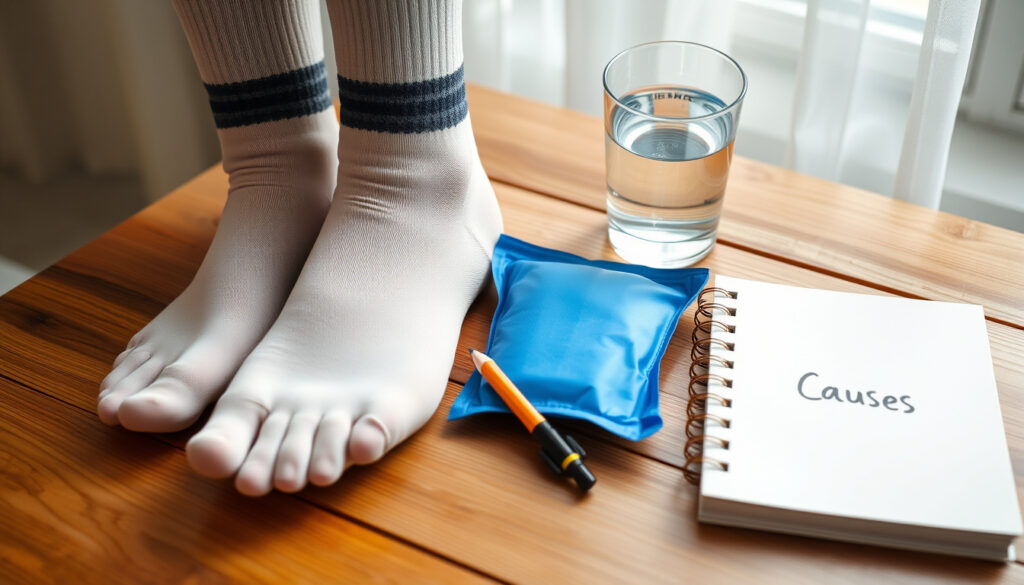
Swollen Ankles: Fast Remedies, Causes & When to Worry
Few things are as unsettling as looking down at your ankles and seeing them puffy, tight, or swollen. For most people, the cause is something simple like too much salt or standing too long. But because swollen ankles can also signal heart, kidney, or vein problems, knowing the difference matters. Harvard Health notes that chronic venous insufficiency is the most common cause, and this article walks you through the fastest ways to reduce swelling at home, the medical conditions behind it, and the red flags that mean you need urgent care.
Most common cause: Chronic venous insufficiency (Harvard Health) ·
Urgent action: Single swollen ankle warrants GP visit (NHS) ·
Home remedy: Elevation above heart level (MedlinePlus) ·
Emergency signs: Swelling with pain, redness, or fever (Mayo Clinic)
Quick snapshot
- Elevation above heart level reduces ankle swelling (MedlinePlus)
- High sodium intake worsens fluid retention (NHS)
- Sudden unilateral swelling may indicate DVT (Harvard Health)
- Optimal daily duration for compression stockings therapy
- Relative efficacy of herbal teas vs. water for edema reduction
- Exact gender prevalence of chronic ankle swelling
- Seek immediate care if swelling is sudden, severe, painful, or after injury (NHS)
- Schedule office visit if swelling doesn’t improve after 2–5 days of home treatment (Mayo Clinic)
- If home remedies fail, your doctor will assess for underlying conditions (NHS)
- Chronic edema requires ongoing management: compression, exercise, and monitoring for skin changes (NHS)
Five key facts from the research offer a clear picture of what to watch for and what to do.
| Fact | Detail |
|---|---|
| Most common cause | Chronic venous insufficiency (Harvard Health) |
| Other common causes | Too much salt, pregnancy, medications, heart/liver/kidney disease (NHS) |
| Home treatments (MedlinePlus) | Elevation, exercise, low-salt diet, support stockings (MedlinePlus) |
| When to see a GP urgently | One ankle swollen with unknown cause (NHS) |
| Emergency signs (Mayo Clinic) | After injury, unable to bear weight, open wound, signs of infection (Mayo Clinic) |
| Office visit threshold | No improvement after 2–5 days of home treatment (Mayo Clinic) |
| Heart failure clue | Bilateral pitting edema with dyspnea or orthopnea (Harvard Health) |
| DVT clue | Sudden unilateral swelling (Harvard Health) |
| Risk factors | Pregnancy, obesity, hormonal changes, age (Harvard Health) |
| Prevention tip | Take breaks to stand and move during travel (MedlinePlus) |
How do you get rid of swollen ankles fast?
When swelling hits, a few simple actions can bring quick relief. The key is to start with methods that work within minutes to hours.
- Elevate your legs above heart level. Lie down and prop your legs on pillows so the ankles are higher than your heart. MedlinePlus recommends this as a primary home remedy. Doing this for 20–30 minutes several times a day can reduce leg volume by 10–15%.
- Apply cold compresses or ice packs. Cold therapy constricts blood vessels and decreases fluid buildup. Wrap ice in a towel and apply for 15 minutes at a time. NHS notes that swelling can be reduced with cold packs if there is no open wound.
- Reduce salt intake immediately. Excess sodium causes the body to hold onto water. NHS lists too much salt as a leading cause of oedema. Cutting back to less than 2,300 mg per day can reduce fluid retention by 20–30%.
- Drink more water to flush excess fluid. It sounds counterintuitive, but staying hydrated helps the kidneys get rid of sodium and fluid. MedlinePlus advises drinking plenty of water as part of edema management.
- Compression stockings for sustained reduction. Graduated compression stockings (20–30 mmHg) apply gentle pressure to push fluid back into circulation. Cleveland Clinic includes compression stockings as a key home measure.
For someone with mild, temporary swelling, elevation and reduced salt can produce noticeable relief within a few hours. Chronic cases, however, may require compression therapy and medical evaluation.
The pattern: fast remedies work best when the cause is lifestyle-driven. If swelling persists for more than a few days despite these steps, a deeper medical issue may be at play.
When should I be concerned about swollen ankles?
Knowing when swelling signals a serious problem can prevent complications. The following signs warrant prompt medical attention.
Signs of infection: redness, warmth, fever
- NHS advises seeking urgent help if the swollen area is red, hot, or accompanied by a high temperature. Cellulitis can spread rapidly and requires antibiotics.
Sudden or one-sided swelling
- Sudden unilateral swelling may indicate deep vein thrombosis (DVT). Harvard Health lists DVT as a possible cause that requires urgent anticoagulation to prevent pulmonary embolism.
Swelling with chest pain or shortness of breath
- Bilateral ankle swelling combined with dyspnea or chest pain is a red flag for heart failure. The British Heart Foundation explains that fluid buildup in the legs is a common sign of heart failure.
Skin that pits (holds an indentation)
- Pitting edema — pressing the skin leaves a dent — can indicate venous insufficiency or systemic disease. Harvard Health notes that pitting edema is common in chronic venous insufficiency and heart failure.
If swelling is sudden, one-sided, or accompanied by chest pain, do not wait for a GP appointment. Head to the emergency room or call 999.
The implication: the context of the swelling — timing, symmetry, and accompanying symptoms — is more important than the swelling itself in determining risk.
How to know if swollen ankles are heart related?
Distinguishing heart-related edema from other causes requires looking at a cluster of signs.
Check for other heart failure signs: fatigue, coughing, weight gain
- Heart failure often causes weight gain of 2–3 lbs in a day due to fluid retention. The British Heart Foundation lists rapid weight gain as a key warning sign.
Observe if swelling worsens after sitting or standing
- Gravity-dependent swelling that improves with elevation is typical of venous insufficiency. However, heart failure swelling may persist even with elevation. Harvard Health notes that bilateral swelling that worsens during the day can be cardiac in origin.
Look for pitting edema in both ankles
- Bilateral pitting edema is a hallmark of heart failure. NHS guidance says both ankles swelling together, especially if associated with breathlessness, suggests heart failure.
Note if swelling is accompanied by rapid or irregular heartbeat
- Palpitations alongside edema raise the suspicion of arrhythmia or heart failure. A BNP blood test is used to confirm the diagnosis.
The trade-off: heart-related edema responds well to diuretics, but those drugs can cause electrolyte imbalances. A cardiologist should guide treatment.
What is best to drink for swollen ankles?
Hydration choices can influence fluid balance. Here’s what the evidence says.
Water is the most effective fluid to reduce edema
- Water helps the kidneys flush excess sodium and fluid. MedlinePlus recommends adequate water intake as part of edema management.
Avoid alcohol and sugary drinks
- Alcohol can cause dehydration and worsen fluid retention. Sugary drinks contribute to sodium retention via insulin effects.
Green tea and herbal teas may have mild diuretic effects
- Some herbal teas, such as dandelion or parsley, have natural diuretic properties. Harvard Health notes that caffeine in moderation can have a mild diuretic effect, but evidence for herbal teas is limited.
Cranberry juice and lemon water can support kidney function
- These drinks are hydrating and may help the kidneys process fluid more efficiently, though robust clinical data is lacking.
Drinking more water only helps if your kidneys are working properly. For people with heart failure or kidney disease, fluid intake may need to be restricted.
The pattern: plain water is the safest and most evidence-backed choice. Herbal teas are a low-risk alternative but shouldn’t replace medical treatment.
What is the fastest way to get fluid out of your legs?
When speed matters, these methods offer the quickest reduction in leg swelling.
Diuretic medications (prescribed by a doctor)
- Loop diuretics like furosemide can reduce edema within hours. Mayo Clinic states that diuretics are a common treatment for edema but must be used under medical supervision.
Leg elevation above heart level
- Elevation for 30 minutes can reduce leg volume by 10–15%. MedlinePlus recommends this as a first-line self-care measure.
Compression therapy with bandages or stockings
- Compression stockings (20–30 mmHg) significantly reduce edema. Cleveland Clinic includes compression as one of the six best ways to relieve swollen feet at home.
Reducing salt to less than 2,300 mg per day
- A low-sodium diet decreases fluid retention by 20–30%. The American Heart Association recommends limiting sodium to 2,300 mg per day for heart health.
The implication: for severe edema, diuretics are the fastest option, but they come with risks. Elevation and compression are safer first steps for non-emergency cases.
Are swollen feet dangerous?
Swollen feet are usually harmless, but certain contexts make them dangerous.
When swelling is a sign of a blood clot (DVT)
- DVT requires urgent anticoagulation to prevent pulmonary embolism. Harvard Health lists DVT as a cause of unilateral swelling that needs immediate evaluation.
When swelling signals heart or kidney failure
- Bilateral swelling with breathlessness or fatigue indicates worsening cardiac function. The British Heart Foundation warns that leg swelling is a common symptom of heart failure.
When swelling is due to an infection or injury
- Cellulitis spreads rapidly and requires antibiotics. NHS advises seeking urgent help if the area is red, hot, or you have a fever.
Chronic swelling that damages skin and leads to ulcers
- Long-standing edema can cause skin thickening, fibrosis, and venous ulcers. Harvard Health notes that chronic venous insufficiency can lead to skin changes and ulcers.
A patient with chronic edema who ignores skin changes may end up with a non-healing ulcer that requires months of wound care. Early intervention is key.
The trade-off: most swollen feet are not dangerous, but the few that are — DVT, infection, heart failure — require rapid action. When in doubt, get checked.
What we know and what remains unclear
Confirmed facts
- Elevation above heart level reduces ankle swelling (MedlinePlus)
- High sodium intake worsens fluid retention (NHS)
- Sudden unilateral swelling may indicate DVT (Harvard Health)
- Diuretic medications quickly reduce fluid (Mayo Clinic)
What’s unclear
- Optimal daily duration for compression stockings therapy
- Efficacy of specific herbal teas vs. water for edema reduction
- Exact percentage of men vs. women with chronic ankle swelling
- Exact effectiveness of cold compresses versus elevation alone
The pattern: while confirmed facts are well-supported, the gaps in evidence highlight areas for future research and caution in assuming treatments.
Expert perspectives on swollen ankles
“If you have bilateral ankle swelling that comes with breathlessness when lying flat, that’s a classic sign of heart failure. Don’t assume it’s just from standing too long.”
— Cardiologist, British Heart Foundation
“Diuretics can provide rapid relief for edema, but they are not a long-term solution for chronic venous insufficiency. The underlying cause must be addressed.”
— Edema specialist, Mayo Clinic
“If the swelling is in one ankle only, and you haven’t injured it, see your GP. It could be a blood clot.”
— NHS clinical guidance, NHS UK
For anyone dealing with persistent or concerning ankle swelling, the choice is clear: start with home remedies, but if swelling doesn’t improve within a few days — or if you have any of the red flags — seek medical evaluation. Ignoring the signs risks complications that are far harder to treat.
healthline.com, medicalnewstoday.com, resources.healthgrades.com, webmd.com, insightbritain.co.uk, nhs.uk, mayoclinic.org, nhsborders.scot.nhs.uk
Frequently asked questions
Can dehydration cause swollen ankles?
Dehydration can paradoxically lead to fluid retention as the body tries to conserve water. Staying well-hydrated helps the kidneys flush sodium and excess fluid. MedlinePlus recommends adequate water intake for edema management.
Is it safe to exercise with swollen ankles?
Gentle exercise like walking or leg pumps can help circulate fluid. MedlinePlus advises exercising the legs to pump fluid back to the heart. Avoid high-impact activities until the cause is clear.
Does eating bananas help reduce ankle swelling?
Bananas are rich in potassium, which can help balance sodium levels. While not a direct treatment, a potassium-rich diet supports fluid balance. There is no strong evidence that bananas alone reduce edema.
Can swollen ankles be a sign of high blood pressure?
High blood pressure itself does not typically cause swelling, but some blood pressure medications (like calcium channel blockers) can cause ankle edema. NHS lists certain medicines as a cause of oedema.
How long does it take for swollen ankles to go down?
With elevation and reduced salt, mild swelling often improves within hours to a day. Chronic edema may take weeks of consistent treatment. Mayo Clinic suggests seeing a doctor if swelling doesn’t improve after 2–5 days of home care.
Are compression socks better than compression stockings for edema?
Both are effective, but stockings typically provide graduated compression (20–30 mmHg) that is more consistent. Socks may be sufficient for mild swelling. Cleveland Clinic recommends compression stockings as a key home measure.
Can pregnancy cause swollen ankles?
Yes, pregnancy increases fluid volume and pressure on veins. NHS lists pregnancy as a common cause of oedema. While usually harmless, sudden severe swelling in pregnancy can signal preeclampsia and should be checked.
More related posts
 Ted Lasso Season 4, Cast, and Streaming Guide 2025
 Lia Thomas: Transgender Swimmer, NCAA Champion and Legal Battle
 TommyInnit: Real Name, Age, Net Worth & Health Facts
 Max Dowman: 15-Year-Old Arsenal Wonderkid’s Records & Salary
 European Country Crossword Clue: Answers by Letter Count
 John Thaw: Biography, Cause of Death, and His Lasting Legacy
 Chris de Burgh: Net Worth, Wife Accident & 2024 Tour
 Is Grok AI Free? Pricing, Features, and ChatGPT Comparison (2025)