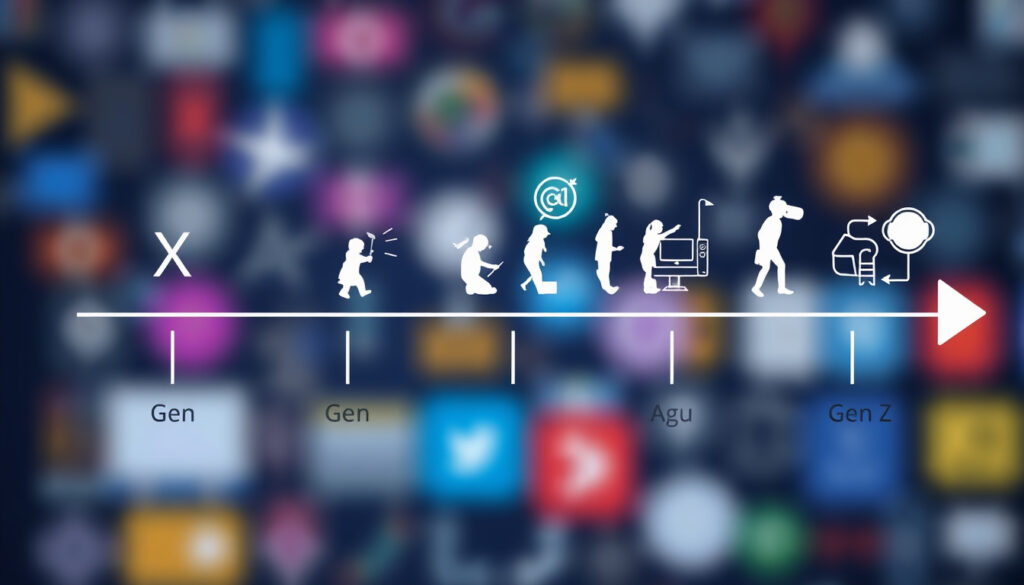
Generation Xyz: Meaning, Age Ranges & Next Generations
Few things spark more rapid-fire questions at a family dinner than generational labels. Mention “Gen Z” and someone will ask if they’re a Millennial; bring up “Gen X” and half the table wonders where they fit, but the actual named cohorts — X, Y, Z, Alpha, Beta — carry real birth-year boundaries that shape everything from marketing strategies to economic forecasts.
Gen X birth years: 1965–1980 ·
Gen Y (Millennial) birth years: 1981–1996 ·
Gen Z birth years: 1997–2012 ·
Gen Alpha birth years: 2013–2024 ·
Gen Beta start year: 2025
Quick snapshot
- Gen X: 1965–1980 (Pew Research Center (leading nonpartisan think tank))
- Millennials: 1981–1996 (Pew Research Center)
- Gen Z: 1997–2012 (Library of Congress (U.S. federal library))
- Gen Alpha: 2013–2024 (BBC Bitesize (UK educational service))
- Gen Beta: 2025–2039 (BBC Bitesize)
- Millennial–Gen Z boundary varies: 1995–1997 depending on source (Pew Research Center)
- No official “Generation XYZ” definition exists (Pew Research Center)
- Future generation names beyond Beta remain unstandardized (Pew Research Center)
- Gen Alpha start year differs: 2010 (Britannica) vs. 2013 (BBC) (Britannica (academic encyclopedia))
- Gen X start year sometimes cited as 1964 by some sources (The Pew Charitable Trusts (nonprofit research organization))
- Gen X starts 1965 (Pew Research Center)
- Millennials begin 1981 (Pew Research Center)
- Gen Z begins 1997 (Library of Congress)
- Gen Alpha begins 2013 (Britannica (academic encyclopedia))
- Gen Beta begins 2025 (BBC Bitesize)
- Gen Beta (2025–2039) now arriving (BBC Bitesize)
- Future cohorts after Beta are provisionally Gamma, Delta — no standard (BBC Bitesize)
- Generational markers will be shaped by AI, climate, and shifting demographics (BBC Bitesize)
Five birth-year ranges, one pattern: each successive cohort lasts 15–16 years, with boundaries that are analytical tools rather than hard biological facts.
| Generation | Birth years | Age in 2025 | Primary source |
|---|---|---|---|
| Generation X | 1965–1980 | 45–60 | Pew Research Center |
| Generation Y (Millennials) | 1981–1996 | 29–44 | Pew Research Center |
| Generation Z | 1997–2012 | 13–28 | Library of Congress |
| Generation Alpha | 2013–2024 | 1–12 | Britannica / BBC Bitesize |
| Generation Beta | 2025–2039 | 0+ | BBC Bitesize |
What are the XYZ generations?
What do the X, Y, Z letters mean?
- Generation X (born 1965–1980) follows the baby boomers and is also known as the “latchkey” generation — the first cohort to grow up with rising divorce rates and dual-income households. Pew Research Center, a leading nonpartisan think tank, sets its range at 1965 to 1980.
- Generation Y (born 1981–1996), widely called Millennials, came of age around the turn of the millennium. Pew’s 16-year span matches Generation X in length.
- Generation Z (born 1997–2012), also known as Zoomers, is the youngest adult cohort. The Library of Congress confirms Pew’s 1997–2012 definition.
Is there a Generation XYZ?
No official demographic body recognizes “Generation XYZ” as a named cohort. The phrase is an informal placeholder for the X–Z range — useful in casual conversation but meaningless in census data or peer-reviewed research. What does exist: X, Y, Z, Alpha, and Beta, each with documented boundaries.
A reader born in 1996 is a Millennial according to Pew; a reader born in 1997 is Gen Z. A single year separates them, yet the analytical boxes carry entirely different economic and social profiles. The Pew Research Center (leading think tank) acknowledges that its boundary at 1997 is a working definition, not a law of nature.
The pattern: The X-Y-Z lettering implies a single ladder, but each generation’s identity is shaped by its own historical context. X grew up with analog and early digital; Y bridged the internet boom; Z has known only a connected world. Blurring them into “XYZ” obscures the very differences the labels were designed to illuminate.
What are the next 5 generations called?
After Gen Z: Gen Alpha and Gen Beta
- Generation Alpha (born 2013–2024) is the first cohort born entirely in the 21st century. Researcher Mark McCrindle coined the name, and both Britannica (academic publisher) and BBC Bitesize cite the 2013–2024 span.
- Generation Beta (born 2025–2039) began in January 2025. According to BBC Bitesize (UK education site), Beta will be shaped by AI integration, climate adaptation, and a fully digital-native childhood.
What comes after Gen Beta?
Future cohort names — Gamma, Delta, and beyond — are provisional labels used by demographers and marketers. No standard-setting body has formalized them. For now, the sequence (X, Y, Z, Alpha, Beta) follows the Greek alphabet after Z, a convention popularized by McCrindle’s naming of Generation Alpha.
Why this matters: For parents, educators, and brands, the next 15 years will see Alpha entering adolescence and Beta emerging as toddlers. Understanding each cohort’s formative conditions — pandemic-era births for late Alpha, AI-from-birth for Beta — is a practical necessity, not a demographic curiosity.
What age is Gen Y and Z?
Gen Y (Millennial) current age range
As of 2025, Millennials (born 1981–1996) are aged 29–44. This span shifts annually, but the birth-year range remains the stable anchor.
Gen Z current age range
Generation Z (born 1997–2012) ranges from 13 to 28 in 2025. The youngest Zoomers are still in school; the oldest are entering their late twenties.
The implication: Age-based labels drift every year, so birth-year ranges are the only reliable way to assign generational identity consistently.
Am I a millennial or a Gen Z?
Birth year cutoff: 1996 vs 1997
- Born in 1996? You’re a Millennial. Born in 1997? You’re Gen Z. That’s the Pew Research Center’s (leading think tank) standard.
- Some sources, like the BBC Bitesize (educational service), note that Gen Z start years range from 1993 to 2000 depending on the researcher.
Check your generation by birth year
- Gen X: 1965–1980 → ages 45–60 in 2025
- Millennials: 1981–1996 → ages 29–44
- Gen Z: 1997–2012 → ages 13–28
- Gen Alpha: 2013–2024 → ages 1–12
- Gen Beta: 2025–2039 → ages 0+
The trade-off: Birth year is the most reliable anchor because ages drift every year. If you want a permanent label, memorize your birth range — Pew’s 1996/1997 split is the most cited, but regional alternatives may place you differently.
Generational timeline at a glance
- 1965 — Generation X begins (earliest year cited by Pew Research Center)
- 1981 — Millennials (Gen Y) start (Pew Research Center)
- 1997 — Generation Z begins (Library of Congress)
- 2013 — Generation Alpha starts (Britannica)
- 2025 — Generation Beta begins (BBC Bitesize)
Which generation is healthiest?
Health metrics by generation
- Gen Z reports higher rates of mental health challenges — anxiety and depression — than older cohorts, according to multiple public health surveys.
- Baby boomers and Gen X have longer life expectancies than earlier 20th-century generations, driven by medical advances and reduced smoking rates.
- No single generation is universally the healthiest. Physical health trends favor older cohorts; mental health data skews younger and worse.
The implication: Comparing “healthiest” across generations is like comparing apples and actuarial tables. A Gen Z adult in 2025 faces different stressors than a Gen X adult did at the same age. The label “healthiest” depends entirely on which metric you choose.
What is the toughest generation?
Toughness defined by hardship
- The “toughest” label is subjective, often applied historically to the Greatest Generation (those who lived through the Great Depression and World War II).
- Gen X earned “tough” status through the latchkey-kid experience — The Pew Charitable Trusts (nonprofit research organization) notes that Gen X grew up with less adult supervision than any preceding cohort.
- No objective toughness ranking exists across generations; the framing is largely cultural nostalgia.
The catch: Every generation faces its own version of hardship — economic, social, environmental. Ranking them by “toughness” tells you more about the rater than the rated.
What age is Gen Alpha?
Gen Alpha birth years 2013–2024
- Born 2013–2024, Gen Alpha children are aged 1–12 in 2025 (BBC Bitesize).
- Britannica (academic encyclopedia) places the start at 2010, but the 2013 start is the more commonly cited range.
Current age of Gen Alpha children
In 2025, the oldest Alphas are entering their teenage years. They are the first cohort to grow up exclusively with smartphones, smart speakers, and algorithmic content from birth — a digital immersion that distinguishes them even from Gen Z.
For parents, educators, and brand strategists, the takeaway is clear: Gen Alpha’s formative environment demands different approaches to screen time, education, and marketing than any previous generation, or they risk designing for a world that this cohort has already moved past.
mentalfloss.com, birthdaylab.net, businessinsider.com, iienstitu.com, mentalfloss.com, en.wikipedia.org, globalcalcs.com
Frequently asked questions
How many generations are there after Gen Z?
Two named generations follow Gen Z: Generation Alpha (2013–2024) and Generation Beta (2025–2039). Beyond Beta, names like Gamma and Delta are provisional.
What are the common stereotypes for Gen X, Y, Z?
Gen X is often seen as independent and skeptical; Millennials as optimistic but entitled; Gen Z as pragmatic, digital-native, and socially conscious. Stereotypes vary widely by culture and source.
Why are they called Millennials?
The term “Millennials” was popularized by researchers Neil Howe and William Strauss in their 1991 book Generations, referencing the cohort coming of age around the millennium. Pew Research Center adopted the 1981–1996 range.
Is there a Generation XYZ officially?
No. “Generation XYZ” is an informal phrase, not a recognized demographic label. The proper named cohorts are X, Y (Millennials), Z, Alpha, and Beta.
Which generation is the largest in population?
Globally, Millennials (Gen Y) are the largest living generation, with roughly 1.8 billion people. Gen Z is smaller but still substantial at around 2 billion depending on the birth-year range used.
What is the typical mindset of Gen Z?
Gen Z tends to be pragmatic, financially cautious, digitally fluent, and values-driven. Surveys by Pew Research Center show they are more likely to prioritize work-life balance and social issues than previous generations.
How does Gen Alpha differ from Gen Z?
Gen Alpha is the first cohort born entirely in the smart-device era (2013–2024), while Gen Z (1997–2012) had an analog-to-digital transition in childhood. Alphas are expected to be even more screen-native and AI-accustomed than Zoomers.
More related posts
 M&S Food to Order – Party Platters and Click & Collect Guide
 Maria Sharapova Now: Net Worth, Family, and 2025 Life
 Idris Elba: Biography, Net Worth, Family, and Latest Updates
 Miranda Cosgrove: Relationship, Ethnicity, Injury & Net Worth
 Seth Green: Family Guy Voice Actor, Biography & Net Worth
 Bean Bag Buying Guide Ireland: Compare Top Retailers & Brands