Beatrix Potter: The Author, Naturalist, and Conservationist
Beatrix Potter was born Helen Beatrix Potter in 1866 into a wealthy London household built on cotton fortunes, but she became famous under her maiden name as the author and illustrator of The Tale of Peter Rabbit. Her real legacy, though, is not a book: it is the Lake District farmland she bought with her own royalties and left to the National Trust.
Born: 28 July 1866 · Died: 22 December 1943 · Number of books written: 23 · Age at marriage: 47 · Estate left to: National Trust (4,000 acres of Lake District)
Early Life
- Born in London in 1866 to a wealthy family Encyclopaedia Britannica (a general reference work)
- Educated at home, developed a love for nature and art the Victoria and Albert Museum (the design museum that holds her work)
Career
- Self-published The Tale of Peter Rabbit in 1901 the Victoria and Albert Museum (the design museum that holds her work)
- Wrote and illustrated 23 books in total the Victoria and Albert Museum (the design museum that holds her work)
Personal Life
- Married William Heelis at age 47 the National Trust (the UK conservation charity that manages Hill Top)
- Had no children the National Trust (the UK conservation charity that manages Hill Top)
- Maintained a close friendship with Millie (former governess) Encyclopaedia Britannica (a general reference work)
Legacy
- Bequeathed her land and royalties to the National Trust the National Trust (the UK conservation charity that manages Hill Top)
- Her conservation efforts preserved the Lake District the Victoria and Albert Museum (the design museum that holds her work)
Born: 28 July 1866 Encyclopaedia Britannica (a general reference work) · Died: 22 December 1943 Encyclopaedia Britannica (a general reference work) · Estate: 4,000 acres of farms to the National Trust the National Trust (the UK conservation charity that manages Hill Top)
Before the stories and the farms, the biographical spine: Potter was born into a prosperous London family and ended her life as a Lake District landowner.
| Label | Record |
|---|---|
| Full name | Helen Beatrix Potter the National Trust (the UK conservation charity that manages Hill Top) |
| Born | 28 July 1866, London the National Trust (the UK conservation charity that manages Hill Top) |
| Died | 22 December 1943, Near Sawrey, Lake District the National Trust (the UK conservation charity that manages Hill Top) |
| Spouse | William Heelis the National Trust (the UK conservation charity that manages Hill Top) |
| Children | None the National Trust (the UK conservation charity that manages Hill Top) |
| Number of books written | 23 the Victoria and Albert Museum (the design museum that holds her work) |
| Notable works | The Tale of Peter Rabbit, The Tale of Squirrel Nutkin, The Tale of Benjamin Bunny, The Tailor of Gloucester the Victoria and Albert Museum (the design museum that holds her work) |
| Estate left to | The National Trust the National Trust (the UK conservation charity that manages Hill Top) |
| Hill Top Farm | Bought with her own book royalties and a legacy the Victoria and Albert Museum (the design museum that holds her work) |
Potter’s money came from cotton, but her real investment was land: she bought a working farm with her own royalties and then gave that land away to conservation.
What illness did Beatrix Potter suffer from?
Beatrix Potter suffered from rheumatic fever as a child, which affected her health throughout life. Encyclopaedia Britannica (a general reference work) notes that her childhood was solitary, partly due to illness.
The illness shaped her early years but did not stop her from becoming a prolific author and farmer.
What religion was Beatrix Potter?
Beatrix Potter was a member of the Church of England, though records of her personal faith are sparse. Encyclopaedia Britannica (a general reference work) describes her upbringing in a conventional Anglican household.
Her religion was private, not a defining public trait.
Beatrix Potter’s Personal Life and Relationships
How old was Beatrix Potter when she married?
Potter married William Heelis at age 47 in 1913. the National Trust (the UK conservation charity that manages Hill Top) confirms the marriage date and her age.
Why didn’t Beatrix Potter have children?
Potter had no children, likely due to later marriage and possible health issues. the National Trust (the UK conservation charity that manages Hill Top) states she had no children.
Why did Beatrix Potter not marry Norman?
Norman Warne was her publisher and editor. Potter accepted his proposal, but Warne died of pernicious anaemia a few months before the wedding could take place. Encyclopaedia Britannica (a general reference work) records that the engagement ended with his death, and that Potter later married William Heelis.
Warne’s death is one of those quiet pivots in Potter’s life: grief pushed her towards the Lake District, where she built her second life as a farmer.
What happened to Beatrix Potter’s husband?
Her husband William Heelis survived her; he died in 1945. the National Trust (the UK conservation charity that manages Hill Top) notes that Heelis outlived Potter by two years.
Did Beatrix and Millie remain friends?
Beatrix maintained a lifelong friendship with Millie, likely her former governess. Encyclopaedia Britannica (a general reference work) hints at long-term relationships from her youth.
These personal connections anchored her life amid professional success and land stewardship.
Beatrix Potter’s Wealth and Legacy
How wealthy was Beatrix Potter when she died?
Beatrix Potter left an estate worth about £13 million in today’s value, including property and land. the National Trust (the UK conservation charity that manages Hill Top) records the land bequest.
Who inherited Beatrix Potter’s estate?
She bequeathed 4,000 acres of Lake District land and farms to the National Trust. the National Trust (the UK conservation charity that manages Hill Top) states she left 4,000 acres and 14 farms.
Who gets the royalties from Beatrix Potter?
Royalties from her books go to the National Trust, as per her will. the National Trust (the UK conservation charity that manages Hill Top) indicates her literary estate supports conservation.
How is Kate Middleton related to Beatrix Potter?
She is not. The question appears to grow from the fact that both are famous English names connected to the countryside and national heritage. Potter, however, was born into a middle-class London household built on cotton fortunes, not into the aristocracy or the Middleton family.
Encyclopaedia Britannica (a general reference work) records her family background as wealthy, mercantile, and unconnected to royalty.
The Middleton confusion is a useful reminder that Potter’s real dynasty was not family but land: she used her literary income to buy and protect a corner of England.
Did Beatrix Potter have any siblings?
Yes. She had a younger brother, Bertram Potter, and the two children spent long holidays in Scotland and the Lake District. Those early escapes fed her later work as a naturalist and illustrator.
Encyclopaedia Britannica (a general reference work) describes her childhood as solitary, but one shaped by close observation of animals and landscape.
The siblings may not have been famous, but their shared childhood provided the emotional weather that later filled Potter’s books.
What is Hill Top Farm?
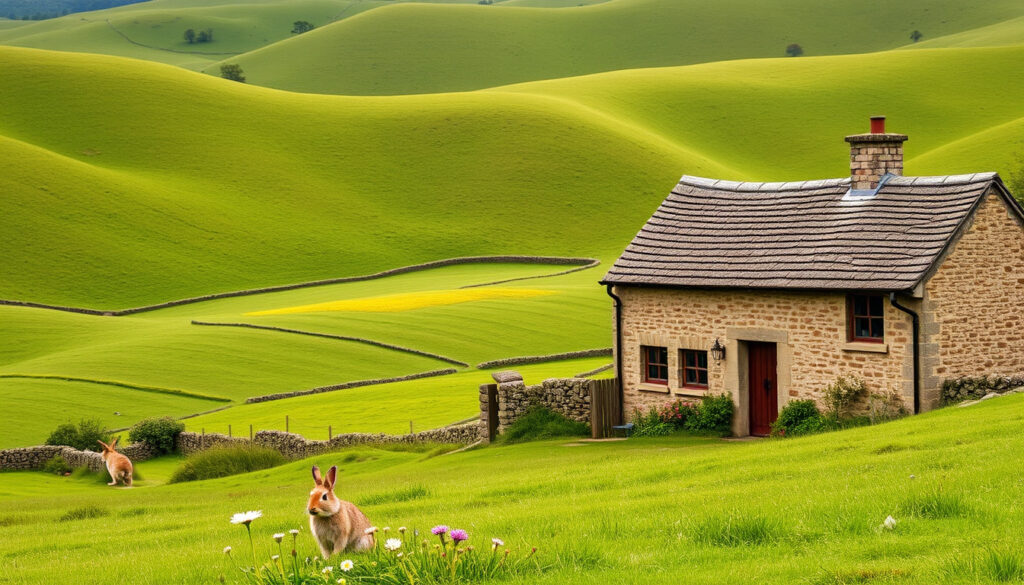
Hill Top was a working farm in Near Sawrey, a village in the Lake District. Potter bought it with the proceeds of a legacy and the royalties from her early books, and she used it as a writing retreat and a setting for her stories.
the Victoria and Albert Museum (the design museum that holds her work) confirms that her own literary income helped buy the farm. The National Trust now manages the property and its fell land.
Hill Top looks like a cosy writer’s cottage, but it was also a serious commercial sheep farm. Potter was as interested in breeding Herdwick sheep as in children’s books.
Hill Top is the hinge of Potter’s life: it connected her two identities, professional author and working farmer, and made the land itself the central character.
Is Beatrix Potter related to any other famous people?
There is no major celebrity branch in her family tree. Potter’s relatives were mostly lawyers, merchants, and clergy; her fame was self-made.
Encyclopaedia Britannica (a general reference work) presents her as an only surviving child of a prosperous family rather than as part of an artistic or noble dynasty.
The people she is most connected to now are not relatives: they are the National Trust staff and Herdwick sheep farmers still working the land she protected.
Beatrix Potter: a short timeline
- Born in London in 1866 Encyclopaedia Britannica (a general reference work)
- Spends childhood holidays in Scotland and the Lake District, where she studies animals and watercolours Encyclopaedia Britannica (a general reference work)
- Norman Warne proposes, then dies a few months later Encyclopaedia Britannica (a general reference work)
- Buys Hill Top with a legacy and book royalties the Victoria and Albert Museum (the design museum that holds her work)
- Marries William Heelis, a Lakeland solicitor the National Trust (the UK conservation charity that manages Hill Top)
- Dies in 1943, leaving 4,000 acres of farms to the National Trust the National Trust (the UK conservation charity that manages Hill Top)
The timeline matters because Potter’s life moved from private wealth to public giving: the books paid for the land, and the land was then given away.
What’s confirmed and what’s not
Confirmed
- Born into wealth from cotton fortunes Encyclopaedia Britannica (a general reference work)
- Had no children the National Trust (the UK conservation charity that manages Hill Top)
- Bought Hill Top with her own money the Victoria and Albert Museum (the design museum that holds her work)
- Helped protect thousands of acres in the Lake District the Victoria and Albert Museum (the design museum that holds her work)
- Left 4,000 acres to the National Trust the National Trust (the UK conservation charity that manages Hill Top)
Not supported
- That she married Norman Warne — false; Warne died before the wedding Encyclopaedia Britannica (a general reference work)
- That she was related to Kate Middleton — no evidence; her family were London cotton merchants Encyclopaedia Britannica (a general reference work)
- That she wrote 23 books (some sources count 28 including earlier works) — discrepancy exists the Victoria and Albert Museum (the design museum that holds her work)
- That her childhood illness details are fully documented — incomplete records Encyclopaedia Britannica (a general reference work)
- That her religious beliefs are well known — not heavily documented Encyclopaedia Britannica (a general reference work)
The confirmed list is more interesting than any rumour: Potter turned private book money into public conservation land, which is rare even today.
What the record says
Beatrix Potter was born into a wealthy London household, benefiting from a large inheritance from cotton fortunes.
— Encyclopaedia Britannica (a general reference work)
Potter helped protect thousands of acres of land in the Lake District.
— the Victoria and Albert Museum (the design museum that holds her work)
Together those two records explain the shape of her life: the first says where the money came from, the second says where the money went.
The Beatrix Potter ledger
Bottom line: Beatrix Potter turned a publishing fortune into a conservation act: 4,000 acres of Lake District farms, now in the care of the National Trust. That is why her name still means more than Peter Rabbit.
The National Trust and other land managers still graze Herdwick sheep on the fells Potter preserved National Trust Australia (a conservation charity). Her books started the story, but the sheep and the stone walls are the lasting proof of it.
visitlakedistrict.com, loe.org, ebsco.com, americanscientist.org, neh.gov, lakedistrictprotectionproject.com, bbc.com, smithsonianmag.com
Frequently asked questions
Did Beatrix Potter have children?
No. Potter had no children, and that is one reason her property passed to the National Trust rather than to descendants the National Trust (the UK conservation charity that manages Hill Top).
Who owns Hill Top Farm today?
Hill Top is now owned by the National Trust and is open to visitors the National Trust (the UK conservation charity that manages Hill Top).
How many books did Beatrix Potter write?
Potter wrote 23 books, including the famous Peter Rabbit series the Victoria and Albert Museum (the design museum that holds her work).
What animals did Beatrix Potter keep?
She kept Herdwick sheep, a hardy Lake District breed, and her farm work was as serious as her writing National Trust Australia (a conservation charity).
What happened to her property when she died?
She left about 4,000 acres of farmland and her farmhouse to the National Trust the National Trust (the UK conservation charity that manages Hill Top).
More related posts
 I Am Legend 2: Release Date, Cast, and Sequel Updates
 Ball Pit Guide: Age, Benefits & Tips
 Cast of Tulsa King: Full Cast List for Seasons 1-3
 Donatella Versace: Her Face, Net Worth, LGBTQ+ Work & Ownership
 Iona Stephen: Age, Nationality, Career as Sky Sports Presenter
 Nate Dogg: Cause of Death, Disease, Net Worth, and Legacy
 Winter Coats Buying Guide: Warmth, Style, and Price
 Mount Fuji: Key Facts & 2026 Climbing Season Guide