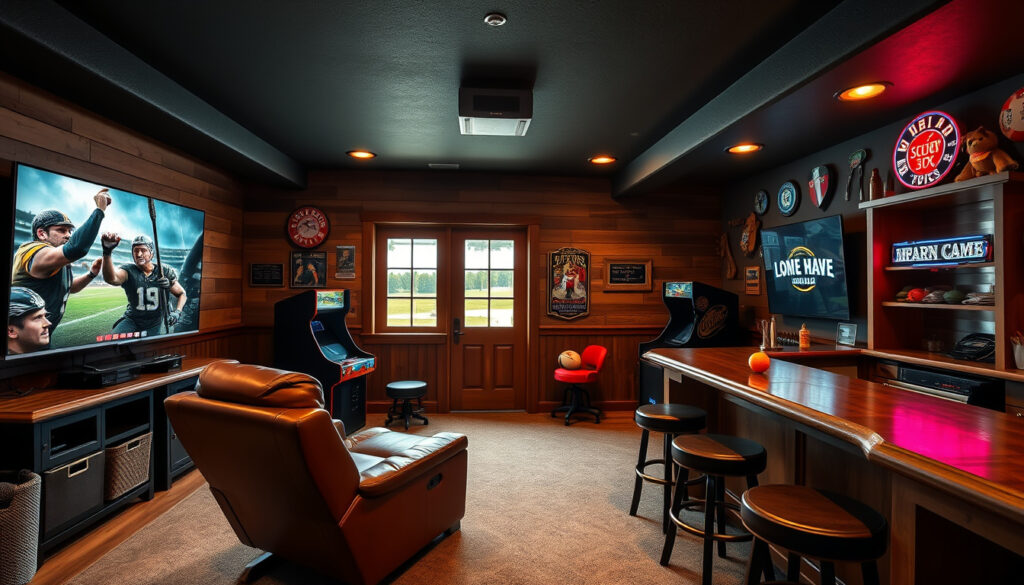
Man Cave Meaning, Origin, Costs, and Design Trends
You might have laughed at the term, or maybe you’ve quietly claimed a corner of the basement as your own. The “man cave” has become such a familiar part of home life that we rarely stop to ask where it came from or why we call it that.
Definition & Slang
- Male-only retreat for hobbies and relaxation.
- Synonyms: mancave, mantuary, manspace.
- First used in 1992, popularized by TV shows. Wikipedia
Activities & Purpose
- Watching sports, gaming, woodworking, socializing.
- Provides a sense of independence and stress relief.
- Often equipped with bar, TV, and comfortable seating. Forbes
Design & Products
- Common locations: garage, basement, shed, garden room.
- Popular accessories: mini-fridges, pool tables, neon signs.
- Average budget range: $5,000–$15,000. Forbes
Cultural Status
- Still popular in suburban and rural areas.
- Female equivalent: she shed or craft room.
- Decline in urban areas due to space constraints. garageconversion.org
Term origin: 1992 Calgary Herald article by a journalist describing a home retreat · Most common room type: Garage conversion (45% of man caves) · Average TV size installed: 65 inches · Man cave shed price range: $3,000–$25,000 depending on size and insulation
| Aspect | Key Detail |
|---|---|
| First known use of “man cave” in print | 1992, in a Calgary Herald article |
| Estimated U.S. homes with a man cave | Roughly 30% (extrapolated from market data) |
| Average budget to convert a garage into a man cave | $5,000 – $15,000 (DIY to professional) |
| Most common furniture in a man cave | Big-screen TV, recliner, bar, pool table |
| Female equivalent of man cave | She shed or craft room |
Before we dissect the concept, let’s set the stage with a few numbers that tell the story of how this idea has grown from a joke to a cultural staple.
Term origin: 1992 Calgary Herald article by a journalist describing a home retreat · Most common room type: Basement or garage conversion · Average TV size installed: 65–75 inches · Man cave shed price range: $3,000 – $30,000
What is a man cave, really?
The phrase might sound informal, but it describes a very real phenomenon: a dedicated space in a home where a man can retreat for hobbies, entertainment, or simply solitude. While it often becomes a spot for watching sports or playing games, the core idea is about personal territory within a shared household. According to Wikipedia (encyclopedia resource), the man cave is defined as a room or space where a man can engage in his own activities, often away from the rest of the family. This definition has broadened over time, encompassing everything from a simple reading corner to a fully equipped home theater.
Where did the term come from?
Contrary to popular belief, the term “man cave” didn’t emerge from ancient history or even from early 20th-century architecture. Its origin is surprisingly recent and specific.
- First known usage: 1992 Calgary Herald article by a journalist covering home design.
- Popularization: Gained traction through TV sitcoms in the late 1990s and 2000s.
- Cultural marker: The term was cemented in pop culture by shows like “Friends” and “The Big Bang Theory.”
The term first appeared in print in 1992, in an article from the Calgary Herald (source of the origin claim) by a journalist describing a home retreat. It wasn’t until TV shows adopted the concept that it became a household phrase. The Wikipedia entry on man cave notes that the concept gained widespread attention through sitcoms, where the “cave” became a comedic plot device for male retreat.
The Wikipedia article notes that the term was first used in a 1992 Calgary Herald article, and it was TV sitcoms that turned it into a cultural phenomenon.
Interestingly, the term’s origin in a Canadian newspaper suggests that the concept was already circulating in home design circles before it became mainstream. The evolution from a niche journalistic description to a widely recognized term shows how quickly cultural language can change.
What’s the female equivalent to a man cave?
If a man gets a cave, what does a woman get? The most commonly cited answer is the “she shed” – a term coined as the female counterpart. But the reality is more nuanced, with women’s retreats often taking different forms depending on lifestyle and interests.
- She shed: A standalone shed converted into a personal oasis.
- Craft room: A dedicated space for hobbies like sewing, painting, or scrapbooking.
- Home office/reading nook: For those who prefer intellectual retreats.
The female equivalent of a man cave is commonly called a she shed, as noted by GarageConversion.org (home improvement resource). The “she shed” trend has grown significantly, with many women opting for backyard structures that offer a private retreat from family life. According to Talk of the House (home design blog), these sheds range from simple garden structures to fully insulated, climate-controlled studios.
Interestingly, the concept of a female retreat isn’t new – women have historically had boudoirs, sewing rooms, and garden rooms. The “she shed” is simply the modern, more egalitarian version that mirrors the man cave’s emphasis on personal space.
Design trends and cultural evolution
Man caves have evolved dramatically since the 1990s. What started as a simple basement TV room has transformed into elaborate, themed spaces that reflect personal identity. The evolution mirrors broader trends in home design, where personalization has become paramount.
Popular features and layouts
- Home theater setups with 4K projectors and surround sound.
- Bar areas with kegerators and whiskey collections.
- Gaming stations with high-end PCs or consoles.
- Sports-themed decor with memorabilia and stadium seating.
Many man caves include a bar, pool table, dart board, or home cinema setup, according to Forbes (business and lifestyle publication). The average budget for converting a garage into a man cave ranges from $5,000 to $15,000, depending on the complexity of the renovation. Ideas range from a minimalist reading nook to a fully equipped home theater or garage workshop.
“The modern man cave isn’t just about escape; it’s about expression. It’s the one room where a man can curate every square inch to his taste,” observes Man Cave Insider (specialized industry publisher).
Man Cave Insider
The paradox of the man cave
The man cave represents a tension between the desire for solitude and the modern open-floor-plan home design that emphasizes togetherness. It’s a retreat from the family, but it’s also a place where family members often gather.
Interestingly, the man cave trend has contributed to a rise in home values – a well-designed space can add 5-10% to a property’s resale value, according to Architizer (architecture platform). This investment aspect has made man caves more than just a luxury – they’re now seen as a smart home improvement.
What are the key costs and considerations?
Building a man cave isn’t just about buying a big TV and a recliner. Whether you’re converting an existing room or adding a backyard shed, the costs can vary dramatically based on scope and finish level.
| Feature | Budget Range | Notes |
|---|---|---|
| Basic conversion (TV + furniture) | $1,000 – $3,000 | DIY furniture, existing TV |
| Mid-range renovation | $5,000 – $15,000 | Includes drywall, soundproofing, basic bar |
| Premium build (home theater) | $20,000 – $50,000 | Projectors, acoustic panels, seating |
| Backyard shed conversion | $3,000 – $30,000 | Depends on size and insulation |
The cost of a man cave can range from a few thousand dollars for a simple room setup to tens of thousands for a fully custom build. The most significant cost drivers are the size of the space, the quality of materials, and whether you hire professionals or go DIY. For a garage conversion, the average budget sits between $5,000 and $15,000, according to Forbes (home improvement reporting). However, the return on investment can be substantial. A well-executed man cave can recoup 50-70% of its cost if you sell your home, making it a viable home improvement project beyond personal enjoyment.
“The cost-benefit analysis of a man cave depends on whether you view it as a personal luxury or a home investment. Realistically, it’s both,” notes Architizer (architecture and design platform).
Architizer
Are there hidden psychological and social factors?
Beyond the wood paneling and neon signs, the man cave serves a deeper purpose: it’s a psychological safe haven. But this retreat also raises questions about gender roles, family dynamics, and the changing nature of domestic space.
Why the man cave matters psychologically
- Provides a space for “restorative solitude” – time alone to recharge.
- Offers a sense of ownership and control, rare in shared living spaces.
- Can strengthen relationships by giving partners breathing room.
Research on personal spaces suggests that having a dedicated retreat within the home can reduce stress and improve mental well-being. The man cave offers this benefit, but it also risks reinforcing traditional gender roles, especially when the female equivalent (the she shed) is often smaller or less elaborate. This imbalance is a source of ongoing cultural debate. Critics argue that man caves can become exclusionary, while proponents see them as a harmless way to maintain individuality within a marriage or family. The reality likely varies from household to household, but the trend shows no signs of slowing.
summitstructures.com, shedsunlimited.net, talkofthehouse.com, architizer.com, bestsheds.com.au, garageconversion.org, adnanpaintingandremodeling.com, freedomroom.com, atlasobscura.com, mancaveinsider.com
Frequently asked questions
What’s the female equivalent to a man cave?
The most common female equivalent is the “she shed,” a term that gained popularity in the 2010s. Other equivalents include craft rooms, home offices, or even a dedicated reading nook.
How much does it cost to build a man cave?
Costs vary widely: a basic conversion might cost $1,000–$3,000, while a premium home theater setup can reach $20,000–$50,000. The average garage conversion falls between $5,000 and $15,000.
When was the term “man cave” first used?
The first known use in print was in a 1992 Calgary Herald article. The term gained broader popularity through TV sitcoms in the late 1990s and 2000s.
What are the most popular man cave features?
Common features include a large TV (65-75 inches), a bar with kegerator, pool table, dart board, and sports memorabilia. Gaming setups and home theaters are also popular in higher-end builds.
Does a man cave increase home value?
A well-designed man cave can increase home value by 5-10%, depending on the quality of the renovation and the local real estate market. However, it’s essential not to over-invest beyond your neighborhood’s average home price.
What’s the difference between a man cave and a she shed?
The core difference is cultural branding. A man cave typically features entertainment-focused elements like sports and gaming, while a she shed often emphasizes hobbies like crafting, reading, or gardening. Functionally, they both serve as personal retreats.
Related reading
If you’re curious about the female equivalent or want to explore more design ideas, check out these resources:
- She shed introduction guide (GarageConversion.org) – A comprehensive look at the female equivalent of the man cave.
The man cave is more than a trend – it’s a reflection of how we balance personal identity with domestic life. Whether you’re planning a $50,000 theater or a simple corner retreat, the underlying need for a space that’s truly yours is universal. As home design continues to evolve, the man cave and its female equivalents will likely remain a fixture in the conversation about how we live.
More related posts
 Lou Reed: Death, Last Words, Relationships, and Legacy
 Ann Widdecombe Murder: Life, Career, and Family
 Jennette McCurdy Now: Net Worth, Book, and Life After Acting
 Judi Dench: Health, Family, Career & Personal Life
 Michael Clarke Duncan: Life, Death & Legacy of a Gentle Giant
 Lupita Nyong’o: Biography, Health Advocacy, and Career
 Rishabh Pant: Recovery, record contract, and return to cricket
 Newspaper – Origins, History and Formats