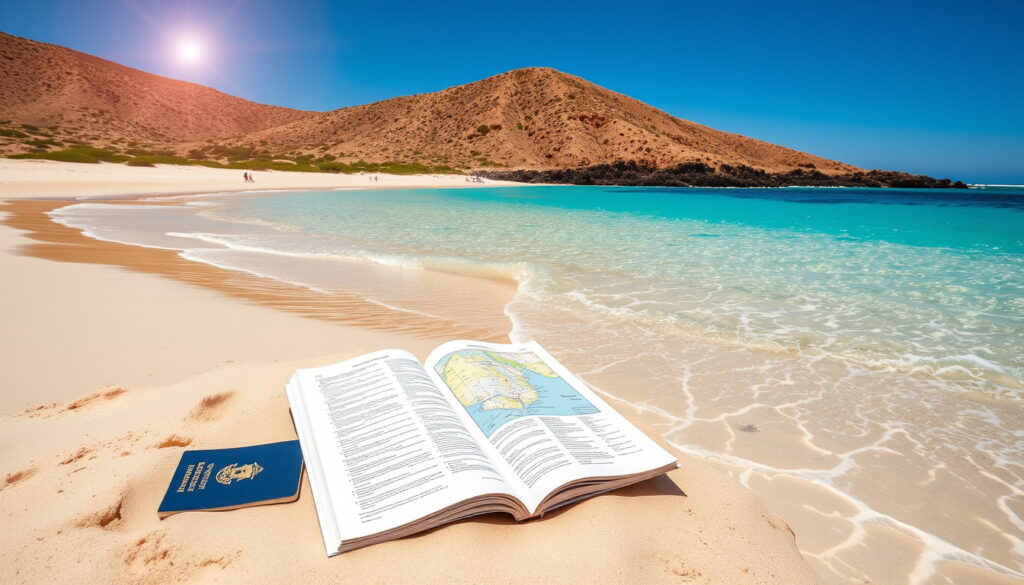
Cape Verde Travel Guide: Safety, Visas, Key Facts
You have probably heard someone rave about the beaches of Sal or Boa Vista and wondered if Cape Verde really delivers. The short answer is yes — but knowing a few facts about safety, visas, and what to expect makes the difference between a great trip and a stressful one.
Population: 561,900 · Capital: Praia · Official language: Portuguese · Currency: Cape Verdean escudo · Location: West Africa, 620 km off the coast of Senegal · Independence from Portugal: 1975
Quick snapshot
- Cape Verde is an African country off the west coast (Britannica).
- Portuguese is the official language (BBC country profile).
- Independence from Portugal was 5 July 1975 (U.S. Department of State).
- Tourism drives the economy (World Bank).
- Exact ethnic breakdown, including white population, is not officially tracked by census.
- Visa requirements depend on nationality — always check with official embassies.
- Official tourism arrival numbers for 2025 are not yet published.
- The accuracy of safety perception indices is disputed.
- Homicide rate fell 34% over the past decade, from 10.5 per 100,000 in 2013 to 7.0 in 2020 (WorldStats).
- Check visa requirements at your local Cape Verde embassy.
- Book flights — TAP Air Portugal and charter airlines serve Sal and Praia.
Five key facts about Cape Verde, each with a specific takeaway:
| Attribute | Value | Editorial note |
|---|---|---|
| Official name | Republic of Cabo Verde | The government uses “Cabo Verde” in official contexts. |
| Independence | 5 July 1975 (from Portugal) | A stable democracy since then. |
| Area | 4,033 sq km | Slightly larger than the Maldives. |
| Currency | Cape Verdean escudo (CVE) | Pegged to the euro. |
| Time zone | UTC-1 | One hour behind London winter time. |
Is Cape Verde good for a holiday?
Best time to visit Cape Verde
- The dry season runs from October to June, offering warm sunshine and minimal rain (Capeverde.com).
- Average temperatures range from 24°C in winter to 28°C in summer (BBC Weather).
- July to September is the rainy season, but still pleasant for experienced travelers.
Safety for tourists in Cape Verde
- U.S. Department of State rates Cape Verde at Level 1: exercise normal precautions (U.S. Department of State travel advisory).
- The UK Foreign Office also advises normal precautions but warns about muggings in main cities and strong sea currents (Roafly, citing UK FCDO).
- OSAC reports that travelers should exercise increased caution in Praia due to crime (OSAC safety report).
- Most crimes are financially motivated: pickpocketing, burglary, and occasional armed robbery (OSAC).
- Violent crime against tourists is rare, according to Travel Risk Atlas.
The implication: Cape Verde is one of the safest destinations in Africa for package holiday travelers, but city visitors need street smarts.
Is Cape Verde a rich or poor country?
Economic profile of Cape Verde
- Cape Verde is classified as a developing country by the World Bank (World Bank data).
- The economy relies on services (especially tourism), remittances from the diaspora, and light manufacturing (BBC country profile).
- Remittances account for about 15% of GDP, according to the World Bank.
- Unemployment is around 12% and youth unemployment higher, pushing many to seek work abroad.
GDP and development indicators
- GDP per capita in 2024 was approximately $3,900 (PPP), putting Cape Verde in the lower-middle-income bracket (IMF country data).
- The country ranks 128th on the Human Development Index (UNDP Human Development Report).
- Poverty rate is around 35%, though it has been declining.
Why this matters: Cape Verde is not a wealthy nation, but it is politically stable and has a growing middle class — the paradox is that the tourism you see is far more developed than the local economy it sits within.
Is Cape Verde Portuguese or African?
Cape Verde’s cultural identity
- Cape Verde is an African archipelago located 385 miles off the coast of Senegal (Britannica).
- It was uninhabited until Portuguese colonizers arrived in the 15th century, bringing enslaved Africans who created the majority population.
- The culture blends African roots with Portuguese colonial influence — music like morna and funaná shows this fusion.
Official languages: Portuguese and Cape Verdean Creole
- Portuguese is the official language, used in government, media, and education (BBC country profile).
- Most Cape Verdeans speak Cape Verdean Creole (Kriolu) at home, a Portuguese-based creole with strong African influences.
- English is spoken in tourist areas but not widely otherwise — learning a few Kriolu phrases helps.
The catch: Cape Verde is unequivocally African geographically and culturally, but its official identity is a Lusophone nation — it’s both African and Portuguese-influenced, not one or the other.
How do I get to Cape Verde from Ireland?
Flights from Ireland to Cape Verde
- No direct flights from Ireland — you connect via Lisbon or other European hubs (Skyscanner).
- TAP Air Portugal flies daily from Lisbon to Amílcar Cabral International Airport (Sal) and to Nelson Mandela International Airport (Praia).
- Charter airlines from the UK also operate seasonal flights to Sal and Boa Vista.
- Total travel time from Dublin is around 8–10 hours with a layover.
Direct vs connecting options
- Connecting via Lisbon is the most reliable option. TAP offers codeshare with Aer Lingus for the Dublin–Lisbon leg.
- Charter flights from Manchester or London may be cheaper but require positioning from Ireland.
- Booking in advance (3–5 months) can save up to 40% on airfare.
What this means: Irish travelers have to accept a connection, but Lisbon is a short hop and the total journey is comparable to flying to the Canary Islands. For more travel guidance, see our Czechia travel guide.
What to be careful of in Cape Verde?
Health recommendations and injections
- The UK NHS recommends hepatitis A, typhoid, and tetanus vaccines for most travelers (NHS travel vaccinations).
- Certified malaria prevention may be advised depending on your itinerary — check with your GP.
- The Times reported an increase in shigella sonnei infections among returning travelers in late 2025 (The Times travel safety update).
- Medical facilities on Boa Vista are limited; the largest hospitals are in Praia and Mindelo (The Times).
Crime and safety tips
- Petty theft is the main risk — keep valuables out of sight, especially in Praia and Mindelo (OSAC).
- Avoid walking alone at night in urban areas.
- Road quality varies; roads outside resorts can be poorly lit and dangerous (Travel Risk Atlas).
Visa requirements
- Many nationalities, including EU, UK, US, and Canadian citizens, do not need a visa for stays up to 30 days (Capeverde.com visa information).
- Irish citizens can enter visa-free for tourism for up to 30 days.
- Always verify with the nearest Cape Verde embassy or consulate before travel, as rules can change.
Cape Verde is safe and welcoming, but the combination of limited medical infrastructure on outer islands and occasional foodborne illness means travel insurance with medical evacuation cover is not optional — it’s essential.
The pattern: Cape Verde’s low crime rate and stable democracy make it one of Africa’s safest destinations, but health and road risks require preparation, not worry.
Upsides
- Very low violent crime against tourists
- Stable democracy and English-friendly resorts
- Beautiful beaches and reliable October–June weather
- Visa-free for many Western travelers
Downsides
- Limited medical facilities on smaller islands
- Petty theft in urban areas
- No direct flights from Ireland; connections add time
- Developing economy means some infrastructure gaps
Clarity check: what we know and what remains uncertain
Confirmed facts
- Cape Verde is an independent African republic, gained independence from Portugal on 5 July 1975 (Britannica).
- Portuguese is the official language; Cape Verdean Creole is the national language (BBC country profile).
- Tourism is the largest economic sector (World Bank).
- U.S. State Department rates it Level 1 (exercise normal precautions) (U.S. Department of State).
- Homicide rate has been declining (WorldStats).
What’s unclear
- Exact percentage of white population — not officially tracked by census.
- Visa rules for some nationalities may change; always verify directly with embassy.
- Safety perception scores vary widely (one index gives 57/100, another 47/100 — both from The World Travel Index).
- Official tourism arrival numbers for 2025 are not yet published.
- The accuracy of safety perception indices is disputed.
Quotes from the experts
“Travelers should exercise normal precautions in Cabo Verde. Some areas have increased risk.”
“Cape Verde is regarded as one of the safest destinations in Africa.”
“As a stable democracy, Cape Verde stands out in the region for its peaceful politics and growing services sector.”
— BBC country profile (reliable news source)
“Travelers should exercise increased caution in Praia due to crime.”
Summary
Cape Verde delivers a genuine tropical escape with safety levels rare in Africa — the U.S. and UK governments both give it their lowest advisory level. But the archipelago’s developing economy and limited healthcare on remote islands mean that preparation, not paranoia, is the right mindset. For Irish travelers planning a family holiday, the choice is clear: book a resort on Sal or Boa Vista, confirm your vaccines and insurance, and enjoy the sun — but skip the tap water and swim only at flagged beaches. For family activity ideas, check out our Ball Pit Guide.
visahq.com, travelsafe-abroad.com, theworldtravelindex.com, documents1.worldbank.org, traveladvisory.io
Frequently asked questions
Is Cape Verde an expensive holiday destination?
Mid-range — package holidays to Sal and Boa Vista are comparable to the Canary Islands, though dining out and excursions can cost more due to imports. Budget travelers can find affordable guesthouses on Santiago and São Vicente.
Do I need a visa to enter Cape Verde from the United Kingdom?
UK passport holders do not need a visa for stays up to 30 days for tourism. Confirm with the Cape Verde embassy before travel, as rules may change.
What is the average temperature in Cape Verde?
Year-round average is 25°C (77°F). Winter months (November–April) are slightly cooler at 22–26°C, summer months (May–October) 26–30°C.
Can I drink tap water in Cape Verde?
No — tap water is not considered safe. Stick to bottled or filtered water, even in hotels.
Are there direct flights from London to Cape Verde?
Seasonal charter flights operate to Sal and Boa Vista from London Gatwick and Manchester. Check with TUI, Jet2, or British Airways for scheduled flights.
Is Cape Verde part of the European Union?
No, Cape Verde is an independent African nation, but it has strong economic and political ties with the EU and uses the euro-pegged escudo.
More related posts
 Jimmy Smits: Ethnicity, Famous Roles, and What He Is Doing Now
 Moses Itauma: Biography, Record, Next Fight | Heavyweight Profile
 Teddy Sheringham: Feuds, Career, and Personal Life
 Kate Moss: Biography, Height, Weight, and Why She Was a Big Deal
 Vinícius Júnior: Bio, Stats, Goals, Injury & Height
 Tupac Shakur’s Death: Facts and Unanswered Questions
 Chris de Burgh: Net Worth, Wife Accident & 2024 Tour
 Joanne McNally: Age, TV Shows, Nose Cartilage, ADHD