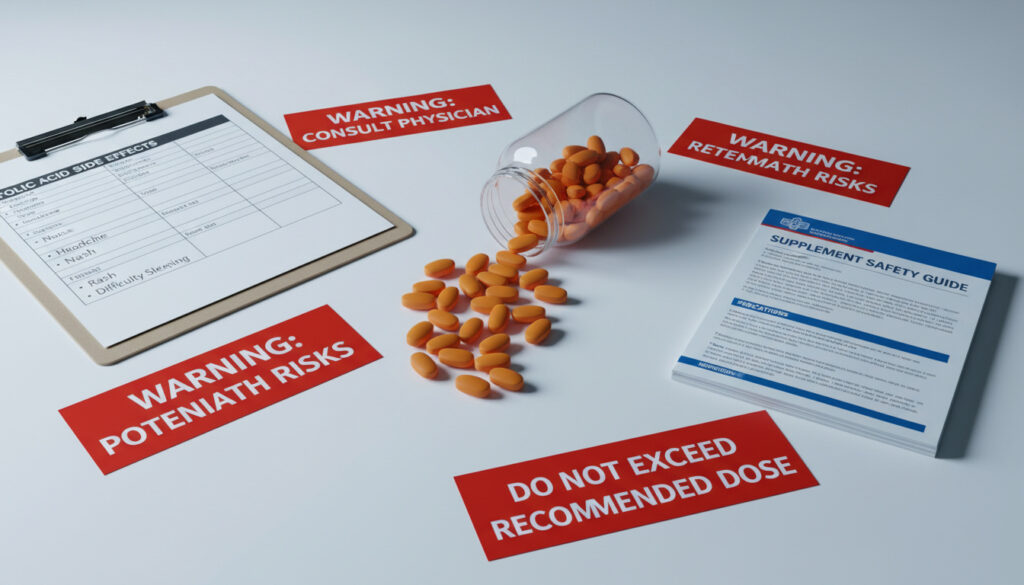
Folic Acid Side Effects – Risks, Symptoms and Safety Guide
Folic acid serves as the synthetic form of vitamin B9, critical for DNA synthesis and red blood cell formation, yet exceeding recommended dosages triggers distinct adverse effects ranging from gastrointestinal distress to neurological complications. Public health agencies emphasize the nutrient’s importance for preventing neural tube defects while warning against unsupervised high-dose consumption.
Most adults tolerate daily supplemental intake without incident when adhering to established dietary allowances. However, concentrations exceeding 1,000 micrograms disrupt normal metabolic pathways, potentially accumulating as unmetabolized folic acid in systemic circulation.
Clinical documentation from national health services and academic medical centers reveals specific symptom profiles associated with both acute toxicity and chronic overexposure.
What Are the Common Side Effects of Folic Acid?
400–1,000 mcg daily
Nausea, bloating, abdominal discomfort
Insomnia, irritability, skin reactions
Masking vitamin B12 deficiency
Key Insights
- The Centers for Disease Control and Prevention recognizes 400 mcg daily as safe for general adult populations
- Gastrointestinal manifestations typically emerge first among adverse reactions
- Vitamin B12 deficiency masking presents the most severe clinical risk, potentially allowing neurological damage to progress undetected
- Pregnancy protocols require 600 mcg daily with medical supervision to prevent fetal neural tube defects
- No clinical evidence substantiates associations with weight gain or acne vulgaris
- Symptom resolution usually occurs within 72 hours of cessation according to NHS clinical data
- Sustained intake above 1,000 mcg correlates with accelerated cognitive decline in B12-deficient individuals
Reference Data
| Parameter | Standard Value |
|---|---|
| Adult Recommended Dietary Allowance | 400 mcg |
| Tolerable Upper Intake Level | 1,000 mcg |
| Pregnancy Requirement | 600 mcg |
| Prescription Therapeutic Dose | 5 mg (treatment of deficiency) |
| Toxicity Onset Threshold | >1,000 mcg/day sustained |
| Primary Drug Interaction | Vitamin B12 absorption/masking |
Cleveland Clinic pharmaceutical guidelines confirm that cutaneous reactions, sleep disturbances, and mood changes frequently accompany doses exceeding recommended limits.
What Happens If You Take Too Much Folic Acid?
Acute Physiological Responses
Doses exceeding 1,000 mcg precipitate digestive disturbances including nausea, abdominal cramping, flatulence, and altered bowel function. These manifestations typically resolve upon dosage reduction or discontinuation.
Neurological and Dermatological Manifestations
High-dose protocols frequently produce insomnia, anxiety, irritability, and mood fluctuations. Cutaneous responses range from pruritus and urticaria to rare cases of facial swelling or anaphylaxis requiring emergency intervention.
Sustained intake above 1,000 mcg daily generates unmetabolized folic acid (UMFA) in systemic circulation. Clinical toxicology data links such accumulation to potential long-term health complications including insulin resistance and immune dysfunction.
Is Folic Acid Safe for Daily Use and Pregnancy?
General Population Guidelines
The Centers for Disease Control and Prevention maintains that 400 mcg daily represents a safe, effective dosage for most adults. CDC safety guidelines confirm this quantity prevents neural tube defects without provoking adverse effects in healthy individuals.
Prenatal Considerations
Pregnant individuals require 600–800 mcg daily to support fetal neural development. However, excessive maternal intake potentially masks occult B12 deficiency, creating risks for both maternal neurological health and optimal fetal brain growth progression.
Does Folic Acid Cause Weight Gain or Acne?
Examining Body Mass Claims
Current clinical databases contain no substantiated evidence correlating folic acid supplementation with adipose tissue accumulation, metabolic weight gain, or changes in body mass index.
Dermatological Analysis
Similarly, peer-reviewed literature lacks documentation linking synthetic B9 supplementation to acne vulgaris exacerbation or sebaceous dysfunction beyond rare allergic responses.
Systematic review of pharmaceutical databases and clinical trials reveals no causal relationship between folic acid intake and either weight fluctuation or acne development.
Can Folic Acid Mask B12 Deficiency or Cause Long-Term Issues?
The Hematologic Masking Mechanism
High-dose folic acid corrects megaloblastic anemia associated with B12 deficiency while allowing neurological degeneration to progress undetected. Clinical consensus documentation confirms this masking may lead to irreversible nerve damage, memory loss, or subacute combined degeneration.
Cancer and Cognitive Implications
Long-term consumption exceeding 1,000 mcg daily correlates with increased cancer recurrence rates (1.7–6.4% elevation for prostate and colorectal malignancies) and potential acceleration of age-related cognitive decline up to 3.5 times baseline risk in B12-deficient populations according to comprehensive nutritional analysis. Biochemical research confirms UMFA accumulation disrupts normal folate metabolism.
Medical guidelines recommend testing methylmalonic acid and homocysteine levels before initiating high-dose therapy. Mayo Clinic protocols emphasize this screening for elderly patients and those with malabsorption disorders, alcoholism, or hemolytic anemia.
When Do Folic Acid Side Effects Typically Appear?
- Immediate (Minutes to Hours): Hypersensitivity reactions including facial swelling or anaphylaxis occur rarely, requiring emergency intervention.
- Acute (2–24 Hours): Gastrointestinal distress manifests as nausea, bloating, or abdominal pain.
- Subacute (24–48 Hours): Sleep architecture disruption and mood irritability emerge.
- Short-Term (Days to Weeks): Hematologic parameters normalize while potential B12 masking begins.
- Chronic (Months to Years): Sustained high-dose exposure may influence cancer recurrence markers and cognitive trajectories.
What Is Definitively Known Versus Uncertain About Folic Acid Risks?
| Established Clinical Facts | Areas Requiring Further Investigation |
|---|---|
| 400 mcg daily is safe for general adult populations | Long-term cognitive effects in healthy, non-B12-deficient adults |
| Definitive capability to mask B12 deficiency anemia while neurological damage progresses | Population-specific thresholds for unmetabolized folic acid accumulation |
| Digestive symptoms occur at >1,000 mcg doses | Direct causative links to specific cancer types at standard supplement doses |
| No evidence for weight gain or acne induction | Optimal duration limits for therapeutic high-dose administration |
How Does the Synthetic Form Differ From Natural Folate?
Dietary folate occurs naturally in leafy greens, legumes, and fortified grains, existing as polyglutamate compounds requiring enzymatic conversion for absorption. Synthetic folic acid, the monoglutamate form used in supplements and flour fortification, demonstrates higher bioavailability but oxidizes differently in hepatic tissue.
This metabolic distinction explains why supplemental forms more readily saturate conversion enzymes, potentially leading to unmetabolized folic acid in serum—a phenomenon rarely observed with whole-food folate sources. When selecting nutritional strategies, consumers might explore local suppliers such as Food Warehouse Near Me – Top Clubs, Prices & Locations to compare fortified versus natural food options.
What Do Health Authorities Say About Folic Acid Risks?
Folic acid is safe up to 1 mg/day for most adults when taken orally.
National Institutes of Health Office of Dietary Supplements
High doses may mask vitamin B12 deficiency symptoms, potentially allowing neurological damage to progress untreated.
Mayo Clinic Clinical Pharmacology
What Should Guide Your Approach to Folic Acid Supplementation?
Daily supplementation at 400 mcg provides safe, effective protection against neural tube defects and anemia for most adults. Risks emerge primarily at doses exceeding 1,000 mcg daily or when taken without regard for concurrent B12 status. Medical consultation remains essential before initiating therapeutic doses or during pregnancy. For additional lifestyle resources, see Key Cutting Near Me – Costs, Options and Local Services.
Frequently Asked Questions
Which foods naturally contain high folate concentrations?
Dark leafy greens, lentils, chickpeas, asparagus, and fortified cereals provide substantial dietary folate without synthetic supplementation risks.
How long do side effects persist after discontinuing folic acid?
Most gastrointestinal and neurological symptoms resolve within 24 to 72 hours of cessation, though B12 deficiency complications may require longer recovery periods.
Can pediatric patients safely consume folic acid supplements?
Pediatric dosing requires medical supervision adjusted for age and weight; childhood deficiency is rare in developed nations with fortified food supply.
What distinguishes folate biochemistry from folic acid?
Natural folate requires enzymatic conversion to the active tetrahydrofolate form, while synthetic folic acid bypasses certain regulatory steps, enabling high-dose accumulation.
Is vitamin B12 testing necessary before taking folic acid?
Medical guidelines recommend B12 screening for adults over 50, vegans, or those with malabsorption conditions before initiating high-dose folic acid regimens.
Can dietary sources alone provide sufficient folate?
A balanced diet with fortified grains and leafy vegetables typically meets 400 mcg requirements, though pregnancy often necessitates additional synthetic supplementation.
More related posts
 Lucy Fallon: Children, Partner, Net Worth, and Life Now
 Fashion Nova: What It Is, How It Works, and Is It Ethical
 123Movies Free Online Movie Streaming Sites – Safe Legal Alternatives
 John Bishop: Wife, Children, Bradley Cooper Film & Biography
 Pets at Home Rabbit Easter Ban: Details and Reasons
 Power Rangers: Original Team, LGBTQ, and Current Series
 Olivier Rioux: Height, Stats, and Why the 7’9″ Star Isn’t in the NBA
 Can You Freeze Cheese? The Best Tips for All Types