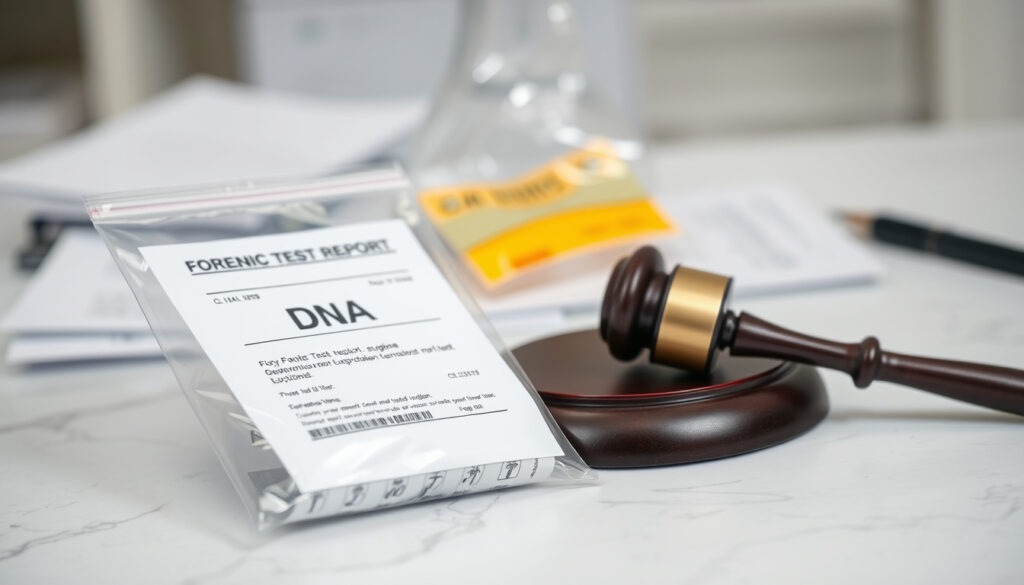
Julia Wandelt Convicted: DNA Test Refutes Madeleine McCann Claim
In 2022, a Polish woman named Julia Wandelt sparked international headlines by claiming she was Madeleine McCann, the British toddler who disappeared from a Portuguese holiday resort in 2007. Now, after DNA evidence presented in a British court proved that claim false, she has been convicted of harassing the McCann family and ordered deported to Poland.
DNA test result: Not a match to Madeleine McCann · Harassment conviction date: November 2025 · Sentence: 6 months imprisonment (time served) · Claim first made: 2022 · Madeleine McCann disappeared: May 3, 2007
Quick snapshot
- Convicted of harassment in November 2025 (Yahoo News)
- Sentenced to 6 months, already served (MixVale)
- Ordered deported to Poland (BBC News)
- Case attracted global media attention (BBC News)
- McCann family expressed distress (ITV News)
- Raised awareness about false identity claims (Yahoo News)
Seven key facts about the case, one pattern: every major claim Wandelt made was contradicted by scientific evidence or court testimony.
| Label | Value |
|---|---|
| Full name | Julia Wandelt |
| Nationality | Polish |
| Claim | Asserted she was missing British child Madeleine McCann |
| DNA test outcome | Not a match (confirmed by BBC News) |
| Legal charge | Harassment of the McCann family |
| Sentence | 6 months imprisonment (time served) (BBC News) |
| Deportation | To Poland (BBC News) |
Did Julia Wandelt get a DNA test?
Who conducted the DNA test?
Detective Chief Inspector Mark Cramwell, leading the Metropolitan Police’s Operation Grange, authorised the DNA test in December 2024 (BBC News, reporting on the investigation). The stated purpose was to deter Wandelt’s repeated contact with the McCann family. Her DNA was taken after her arrest at Bristol Airport in February 2025 (BBC News).
What was the result of the DNA test?
The DNA evidence, presented during the five-week trial at Leicester Crown Court, conclusively proved that Wandelt is not Madeleine McCann (BBC News, citing court proceedings). The jury was told that police informed Wandelt of the result in April 2025 (BBC News).
The DNA test was not a voluntary celebrity check — it was a police tactic to stop harassment. The result was definitive: no biological link, and the claim collapsed.
Bottom line: Julia Wandelt asked for a DNA test, got one through a police investigation, and the result was a clean scientific refutation of her claim.
The case demonstrates how forensic evidence can dismantle a false identity claim.
What would Madeleine McCann look like today, 2026?
Age-progression images of Madeleine McCann
Law enforcement and child protection agencies have released several age-progression images of Madeleine McCann over the years, showing how she might look as a teenager and young adult. These images are based on family photographs and forensic modelling.
How did Julia Wandelt compare to those images?
Wandelt’s appearance did not match the age-progression images, and the DNA evidence made any comparison moot. The court heard that she had no physical resemblance beyond generic features (BBC News, trial coverage).
Bottom line: Age-progression images are speculative tools. The DNA test made the visual comparison irrelevant — the science settled the identity question.
The pattern is that visual speculation gave way to conclusive lab results.
Where is Julia Wandelt now?
Conviction and sentencing in 2025
On 8 November 2025, the Leicester Crown Court found Wandelt guilty of harassment but not guilty of stalking (BBC News, court report). She was sentenced to six months in prison, which she had already served in pre-trial detention (Yahoo News). The court heard that her conduct spanned from June 2022 to February 2025 (BBC News, trial details).
Deportation to Poland
Following the conviction, Wandelt faces deportation to Poland (ITV News). She is a Polish national and has been ordered removed from the UK after serving her sentence.
The deportation order means Wandelt’s presence in the UK will end, but the case raises questions about the psychological drivers behind her claim — a factor that remains officially unconfirmed.
Bottom line: Julia Wandelt has been convicted, served her time, and will be returned to Poland. The legal chapter is closed.
The implication is that the justice system provided closure for the McCann family while leaving the underlying motive unexplained.
Why weren’t the McCanns prosecuted for leaving their children alone?
Portuguese police investigation and legal framework
Portuguese authorities initially considered charges against Kate and Gerry McCann for neglect, and they were formally declared suspects (arguidos) in 2007. However, the case was later dropped due to lack of evidence (ITV News, background reporting).
Parental responsibility and lack of evidence
UK and Portuguese laws differ on child neglect thresholds. The Portuguese prosecutor concluded that there was no criminal intention and insufficient evidence to proceed. The McCanns have always maintained that they checked on the children regularly.
Bottom line: The McCanns were investigated but never charged. The legal systems of both countries found no basis for prosecution.
The catch is that the McCanns’ legal ordeal ended without charges, but public scrutiny never fully subsided.
Did they ever find Madeleine McCann’s remains?
Search efforts and official statements
Despite extensive searches by Portuguese police, the Metropolitan Police’s Operation Grange, and private investigators, no remains of Madeleine McCann have ever been found. The official investigation remains open.
Rumors and unconfirmed sightings
Numerous unconfirmed sightings and claims have surfaced over the years, including Wandelt’s. None have been substantiated. The case remains unsolved, and the question of what happened to Madeleine McCann is still unanswered.
Bottom line: No remains, no credible evidence of her death. The disappearance is still an open case.
The pattern is that despite massive resources, the central mystery endures.
Timeline
From the disappearance to the conviction, the key events in chronological order:
| Date | Event |
|---|---|
| May 3, 2007 | Madeleine McCann disappears from Praia da Luz, Portugal |
| 2007–2022 | Extensive searches and investigations; no trace of Madeleine found |
| 2022 | Julia Wandelt begins publicly claiming she is Madeleine McCann (BBC News) |
| 2023 | Media coverage; Wandelt continues to post on social media |
| December 2024 | Detective Chief Inspector Mark Cramwell authorises DNA test under Operation Grange (BBC News) |
| February 2025 | Wandelt arrested at Bristol Airport (BBC News) |
| April 2025 | Police inform Wandelt of DNA result (BBC News) |
| November 2025 | Five-week trial at Leicester Crown Court; Wandelt convicted of harassment (BBC News) |
Confirmed facts vs. What’s unclear
Confirmed facts
- Julia Wandelt is not biologically related to Madeleine McCann (DNA test) (BBC News)
- She was convicted of harassing the McCann family (November 2025) (BBC News)
- She has been ordered deported to Poland (BBC News)
What’s unclear
- What motivated Julia Wandelt to make the claim (possible mental health issues, but not confirmed)
- Where Madeleine McCann is or what happened to her (case remains unsolved)
Quotes from the case
“DNA testing proved that she is not Madeleine McCann.”
— BBC News, reporting on the trial evidence
“Wandelt turned up at the McCanns’ home and sent letters and messages.”
— ITV News, court reporting
“Soft heart. Strong soul.”
— Julia Wandelt’s Instagram bio (as cited in trial coverage)
The case has drawn a clear line between a false claim and the reality of a missing child. For the McCann family, the harassment conviction brings a measure of legal closure, but the central mystery of Madeleine’s fate remains unresolved. The question that first drew global attention in 2007 still has no answer.
Related reading: **Honeysuckle Weeks: What Happened After Her Disappearance and Now** · **Ian Watkins: Death, Crimes and Prison Attack Facts**
the-independent.com, thesun.co.uk, bbc.com, civicpost.co.uk, mirror.co.uk, bbc.com, regionalbulletin.uk
Frequently asked questions
Who is Julia Wandelt?
Julia Wandelt is a Polish woman who gained international attention in 2022 by claiming she was Madeleine McCann, the missing British toddler. She was later convicted of harassment.
Why did Julia Wandelt claim to be Madeleine McCann?
Her motivations are not officially confirmed. She cited physical similarities and a belief that she was not Polish. The court heard that her conduct spanned more than two years.
What evidence did Julia Wandelt present for her claim?
She posted photos and videos on social media, claiming resemblance and stating she had memories of being taken. No scientific evidence supported her claim.
How did the McCann family respond to Julia Wandelt?
The McCann family expressed distress over the harassment. They did not engage with her claims publicly, but the court heard that Wandelt contacted Kate McCann repeatedly.
What was the court’s reasoning in the harassment case?
The jury found that Wandelt’s conduct, including visiting the McCann home and sending letters, amounted to harassment. She was cleared of the stalking charge.
How did the DNA test work and who performed it?
The DNA test was authorised by Detective Chief Inspector Mark Cramwell of Operation Grange. Wandelt’s sample was taken after her arrest and analysed by a forensic laboratory. The result was presented as evidence in court.
Is Julia Wandelt still in the UK?
As of the conviction in November 2025, she has been ordered deported to Poland. She is not currently believed to be residing in the UK following the deportation order.
More related posts
 Sunday Brunch Guests Today: Full List & Presenter News
 Mikey Graham 2026: Boyzone Reunion, Health, Divorce Update
 200+ Funny Nicknames: Teasing, Cute & Creative Names
 Al Capone: Life Story, Alcatraz Time, Death & Family Legacy
 Chris Evert: Health Update, Family & Relationships
 Daryl McCormack: Wife, Ethnicity, Peaky Blinders & Bio
 Life Quotes: The Best Quotations to Inspire You in 2025
 Devil Wears Prada: True Story, Sequel & Cast Facts