What Is the Fastest Way to Cure a Stomach Ulcer – Healing in 4-8 Weeks
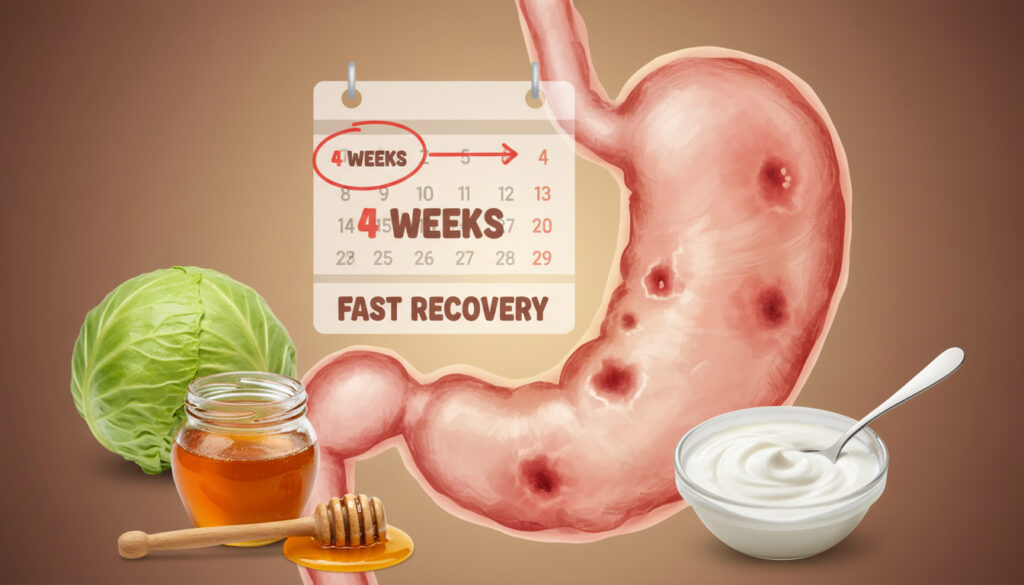
Stomach ulcers, also known as peptic ulcers, have no instant cure. Medical consensus indicates that the fastest path to healing requires eliminating the underlying cause—most commonly an H. pylori bacterial infection—using targeted antibiotics combined with acid-reducing medications such as proton pump inhibitors. When patients adhere strictly to prescribed regimens, complete healing typically occurs within four to eight weeks.
While antacids may relieve burning sensations within hours, they do not address the root cause or promote tissue repair. Similarly, dietary changes and natural supplements can support recovery but cannot replace pharmaceutical intervention when bacteria are present. Understanding the distinction between symptom management and actual cure remains essential for anyone seeking rapid, lasting relief.
This guide examines the fastest medically verified treatments, the biological timeline of stomach lining repair, and why certain popular remedies fail to deliver the speed that patients expect.
What Is the Fastest Way to Cure a Stomach Ulcer?
Antibiotics + PPIs for H. pylori
4-8 weeks with treatment
H. pylori bacteria (majority of cases)
See doctor for diagnosis
- Removing the cause—specifically H. pylori—triggers the fastest healing trajectory
- No medication provides an “instant” cure; drugs protect the lining while biology repairs tissue
- Natural remedies function as adjuncts but cannot replace antibiotics for bacterial infections
- Untreated ulcers risk serious complications including perforation and internal bleeding
- Completing the full antibiotic course prevents resistance and recurrence
- Acid suppression remains essential throughout the healing window
| Fact | Detail |
|---|---|
| Primary Cause | H. pylori infection or long-term NSAID use |
| Fastest Treatment | Combination antibiotics + Proton Pump Inhibitors |
| Healing Start | When causative factor is eliminated |
| Recurrence Prevention | Full antibiotic completion and acid suppression |
| Typical Duration | 4-8 weeks for full mucosal repair |
| Symptom Relief | Days with acid blockers (not healing) |
| Emergency Indicators | Vomiting blood, black tarry stools, severe pain |
| Confirmation Testing | Retest H. pylori 4 weeks post-antibiotics |
How Do Antibiotics and Acid-Reducing Medicines Treat Stomach Ulcers?
Effective ulcer treatment targets both the underlying cause and the acidic environment that prevents healing. For the majority of patients, this means eradicating H. pylori bacteria while simultaneously suppressing gastric acid production to protect the compromised stomach lining.
Antibiotic Regimens for H. Pylori
When H. pylori infection is present—a bacterium responsible for the majority of peptic ulcers—clinicians prescribe combination antibiotic therapy lasting 10 to 14 days. Standard protocols include two or three antibiotics such as amoxicillin, clarithromycin, and metronidazole to prevent bacterial resistance. Research emphasizes that completing the entire course is non-negotiable; partial treatment leads to resistant strains and almost certain recurrence.
Stopping antibiotics early—even if symptoms disappear—allows surviving bacteria to multiply and develop resistance, making future treatment more difficult and slower.
Proton Pump Inhibitors and Acid Blockers
Proton pump inhibitors such as omeprazole, lansoprazole, and esomeprazole serve as first-line acid suppression therapy. According to Cleveland Clinic, these medications block acid production at the cellular level, creating an environment where the ulcer can heal rather than facing constant chemical irritation. Treatment typically continues for four to eight weeks.
Histamine H2 blockers—including famotidine and cimetidine—offer an alternative that reduces acid by approximately 70 percent, though they remain less potent than PPIs. Johns Hopkins Medicine notes that these are often reserved for maintenance therapy or milder cases.
Why Combination Therapy Works Faster
Monotherapy rarely succeeds. The National Institute of Diabetes and Digestive and Kidney Diseases explains that simultaneous acid suppression allows antibiotics to work more effectively while preventing new damage during the healing window. Protective agents like bismuth subsalicylate or sucralfate may be added to coat the ulcer site, potentially boosting eradication rates to 90 percent when combined with standard therapy.
What Role Does H. Pylori Play in Stomach Ulcers?
Understanding the bacterial origin of most stomach ulcers clarifies why cure speed depends on antimicrobial treatment rather than simply dietary adjustments. The Helicobacter pylori bacterium colonizes the stomach’s protective mucous layer, triggering inflammation and breaking down the mucosal barrier that normally shields tissue from digestive acids.
How H. Pylori Damages the Stomach Lining
Once established, the bacterium produces enzymes and toxins that weaken the stomach’s defenses. Mayo Clinic confirms that this bacterial invasion represents the primary cause of peptic ulcers, far outweighing lifestyle factors like stress or spicy food consumption, which may exacerbate symptoms but do not create the initial wound.
Patients seeking rapid relief must understand that without eliminating this infectious trigger, the ulcer cannot fully heal regardless of acid suppression. This biological reality underpins every fast-cure protocol.
Testing and Diagnosis
Accurate diagnosis precedes rapid treatment. Medical practitioners utilize urea breath tests, blood antibody tests, or stool antigen tests to confirm H. pylori presence. Irish health authorities recommend endoscopy with biopsy when symptoms suggest complications or when cancer must be ruled out. During endoscopy, a camera examines the esophagus, stomach, and duodenum while tissue samples confirm bacterial infection.
Eradication Confirmation
Speed requires verification. Patients must return for retesting at least four weeks after completing antibiotics to confirm the bacteria have been fully eliminated. UCHealth specialists stress that premature celebration of symptom relief without confirmatory testing often leads to recurrence, resetting the healing timeline.
While addressing gastrointestinal health, some patients concurrently monitor other nutritional factors. Those interested in vitamin supplementation side effects might review information on Folic Acid Side Effects to understand broader gastric health interactions.
Can Natural Remedies Speed Up Stomach Ulcer Healing?
The marketplace offers numerous herbal and dietary supplements promising rapid ulcer cures. While certain substances show promise in supporting mucosal health, no natural remedy has demonstrated superior speed to pharmaceutical eradication of H. pylori or comparable acid suppression.
Evidence for Cabbage Juice and Turmeric
A frequently cited study suggests that cabbage juice healed ulcers in seven to ten days—faster than standard treatment at that time. Research documented this effect in a small patient group, though modern antibiotic protocols were not available for comparison. Turmeric extracts show ulcer-free rates of 48 to 87 percent after four to twelve weeks in controlled studies.
For H. pylori-positive ulcers, natural supplements alone prove insufficient to eradicate bacteria. Using them as primary treatment delays healing and risks complications including perforation and bleeding.
Probiotics and Dietary Support
Specific probiotic strains—particularly Lactobacillus and Saccharomyces boulardii—may enhance antibiotic success rates by reducing side effects and supporting gut flora. Medical News Today reports that flavonoid-rich foods such as berries and legumes provide protective compounds, while honey shows antibacterial properties in laboratory settings.
Contrary to popular belief, chili peppers and spicy foods do not cause ulcers and may not necessarily worsen existing ones, though individual sensitivity varies. Ulcers stem from bacterial infection or NSAID use.
Lifestyle optimization extends beyond diet. Managing stress through natural means, including understanding How to Increase Dopamine Naturally, may support overall wellness during recovery, though stress management alone does not cure the underlying infection.
How Long Does Stomach Ulcer Healing Actually Take?
Patients seeking the fastest cure must align expectations with biological reality. Tissue regeneration follows a predictable sequence that cannot be rushed through pharmaceutical intervention alone.
- Week 1: Initiation of antibiotics and PPIs. Symptom relief typically begins within days as acid suppression reduces burning pain and nausea.
- Weeks 2-4: Active mucosal repair begins. The stomach lining starts regenerating protective cells, though the ulcer crater remains vulnerable.
- Weeks 4-8: Complete epithelial healing for most patients adhering to medication schedules. The ulcer site closes and strengthens.
- Follow-up (Week 6+): Retesting for H. pylori eradication using breath or stool tests to confirm the bacteria have been eliminated and prevent silent recurrence.
Deviations from this timeline usually indicate non-compliance, persistent infection, or incorrect diagnosis. Patients continuing NSAIDs during treatment often experience delayed healing or treatment failure.
What Is Certain About Ulcer Cures Versus What Remains Unclear?
Medical literature establishes firm boundaries between verified facts and persistent uncertainties regarding rapid ulcer healing.
| Established Medical Facts | Areas of Uncertainty or Variability |
|---|---|
| Antibiotics cure H. pylori ulcers in 80-90% of cases when taken correctly | Exact healing speed varies significantly by individual immune response and ulcer size |
| Acid reducers (PPIs) are essential for protecting the lining during repair | Whether specific diets significantly accelerate healing beyond removing irritants |
| Stopping antibiotics early guarantees recurrence and potential resistance | The comparative speed of natural remedies versus modern triple therapy |
| 4-8 weeks represents the standard healing window for uncomplicated ulcers | Long-term impacts of repeated antibiotic courses on gut microbiome |
| Smoking and alcohol demonstrably slow healing and increase recurrence | Optimal probiotic strains and dosages for maximum adjunctive benefit |
Why Doesn’t an Instant Cure Exist for Stomach Ulcers?
The human stomach lining consists of epithelial cells that regenerate slowly under normal circumstances. When ulceration occurs—essentially a breach in the protective mucosal barrier—repair requires rebuilding cellular architecture, restoring blood flow to damaged tissue, and reestablishing the mucus layer that protects against acid.
Pharmaceutical interventions facilitate this process by removing obstacles: antibiotics eliminate infectious impediments, while PPIs halt the chemical assault. However, no drug can instantly synthesize new tissue. The four-to-eight-week window represents the biological minimum for meaningful structural repair, not a limitation of modern medicine.
Furthermore, misdiagnosis complicates speed. Upper gastrointestinal symptoms may indicate gastritis, functional dyspepsia, or malignancy rather than simple ulceration. Rushing treatment without proper diagnosis risks inappropriate therapy and delayed identification of serious conditions.
What Do Leading Medical Authorities Say About Fast Ulcer Treatment?
Medical institutions consistently emphasize cause removal over symptomatic relief.
Your stomach lining will begin to heal when the cause of the ulcer goes away.
Cleveland Clinic
This principle guides all evidence-based rapid treatment protocols. The focus on antibiotics for bacterial causes reflects decades of clinical outcomes showing faster permanent resolution compared to acid suppression alone.
Antibiotics to treat H. pylori infection.
NHS
The brevity of this clinical directive belies its importance: without antimicrobial intervention, H. pylori-positive ulcers persist indefinitely, cycling through periods of apparent remission and painful flare-ups.
What Is the First Step to Cure a Stomach Ulcer Quickly?
The fastest route to curing a stomach ulcer begins with medical consultation and diagnostic testing to confirm H. pylori status or identify NSAID-induced damage. Once diagnosed, strict adherence to combination antibiotic therapy plus proton pump inhibitors offers the shortest path to full healing—typically four to eight weeks. Patients must complete all prescribed medications even when symptoms vanish, avoid NSAIDs and alcohol during recovery, and return for follow-up testing to confirm bacterial eradication. While natural remedies like cabbage juice and probiotics may support recovery, they cannot replace pharmaceutical treatment for infectious ulcers.
Frequently Asked Questions About Stomach Ulcer Cures
Does H. pylori always cause stomach ulcers?
No. While H. pylori infection causes the majority of peptic ulcers, long-term NSAID use (ibuprofen, aspirin) represents the second most common cause. Rarely, Zollinger-Ellison syndrome causes excess acid leading to ulcers.
Can natural remedies heal stomach ulcers without antibiotics?
For H. pylori-positive ulcers, natural remedies alone are insufficient. While supplements like cabbage juice and turmeric show supportive benefits, they cannot eradicate bacterial infection, which requires prescribed antibiotics.
How do doctors treat stomach ulcers with antibiotics?
Physicians prescribe triple or quadruple therapy combining two to three antibiotics (amoxicillin, clarithromycin, metronidazole) with PPIs for 10-14 days. This combination kills bacteria while protecting the stomach lining.
What medicines reduce stomach acid for ulcers?
Proton pump inhibitors (omeprazole, esomeprazole) block acid production most effectively. H2 blockers (famotidine) reduce acid by 70%. Antacids neutralize existing acid but do not promote healing.
Can I take antacids while completing my antibiotic course?
Antacids may interfere with antibiotic absorption. Patients should consult their prescribing physician about timing; generally, antacids are taken separately from antibiotics if allowed at all during the eradication protocol.
Do spicy foods cause stomach ulcers?
No. Spicy foods may irritate existing ulcers but do not cause them. Ulcers result from H. pylori infection or NSAID damage. However, avoiding irritants during healing remains advisable.
Is cabbage juice proven to cure ulcers faster than standard medicine?
One small historical study showed healing in 7-10 days with cabbage juice, but this predated modern antibiotic therapy. Current evidence does not support cabbage juice as faster than antibiotics plus PPIs for H. pylori ulcers.
More related posts
 Travis Scott: Kids, Relation to Kylie Jenner, and Net Worth (2025)
 Moses Itauma: Biography, Record, Next Fight | Heavyweight Profile
 Ferry to France from UK – Routes, Prices and 2025 Guide
 Teddy Bears: Irish History, Value, and Collecting Guide
 David Bowie Cause of Death, Sobriety & Life Facts
 200 Pounds in kg – Exact NIST Conversion Guide
 Life Quotes: The Best Quotations to Inspire You in 2025