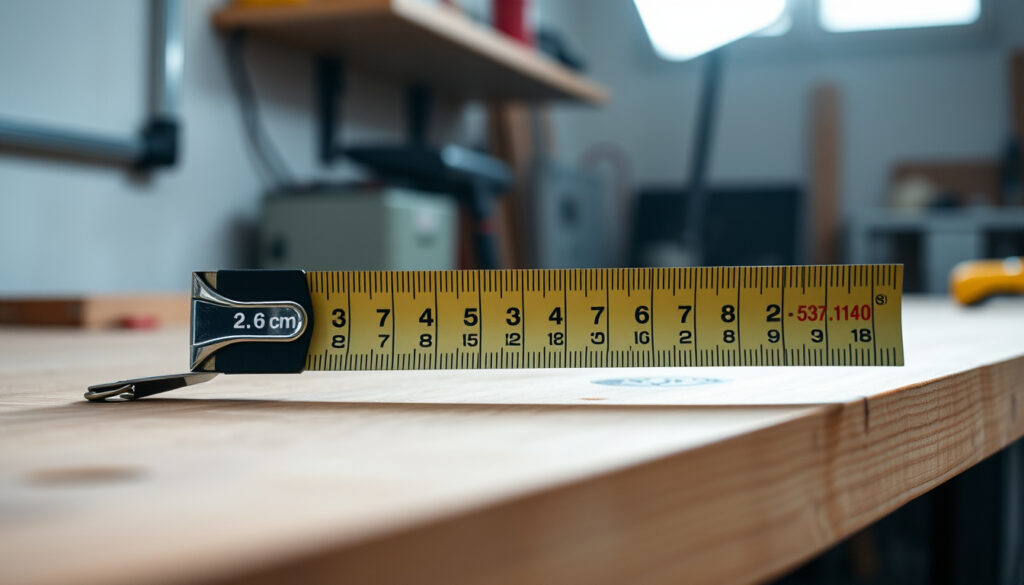
60 cm in Inches: 23.622 Exact, Feet Conversion Guide
Ever found yourself staring at a tape measure, wondering just how long 60 centimeters really is when you switch to inches? Whether you’re sizing up a TV, checking furniture dimensions, or helping a kid with a school project, that gap between metric and imperial can trip you up fast. Here’s everything you need to know about converting 60 cm to inches — with real numbers, step-by-step math, and visual comparisons that stick.
60 cm equals: 23.622 inches · In feet: 1 ft 11.622 in · Fraction: 23 5/8 in · Ruler view: Nearly 24 in · Common use: TV screen width
Quick snapshot
- 60 cm = 23.622047244 inches exactly (RapidTables converter)
- Fraction form: 23 5/8 inches (Worldometer conversion table)
- Feet+inches: 1 ft 11 5/8 in (Worldometer conversion table)
- Most consumer rulers only mark to 1/16-inch precision, making the 23 5/8 mark harder to locate precisely without a precision ruler
- The 2.54 cm/inch standard was formally adopted internationally in 1959 — before that, slight regional variations existed (RapidTables reference)
- Online ruler tools now let you input 60 cm and see the exact inch position — no math required
Six measurement conversions, one constant: the metric-to-imperial bridge is always 2.54.
| Label | Value |
|---|---|
| 60 cm to inches (decimal) | 23.622 |
| 60 cm to inches (exact) | 23.622047244 |
| 60 cm to inches (fraction) | 23 5/8 |
| 60 cm to feet | 1.97 |
| 1 inch in cm | 2.54 |
| 1 cm in inches | 0.3937007874 |
| 1 foot in cm | 30.48 |
| 2 feet in cm | 60.96 |
| 60 cm as feet + inches | 1 ft 11.62 in |
| 60 cm as feet + fraction inches | 1 ft 11 5/8 in |
How many inches is 60 cm?
Dividing 60 by the conversion factor 2.54 gives 23.622047244 inches, or roughly 23 5/8 inches when rounded to the nearest eighth. This is the standard method taught in educational settings, and it works for any centimeter value — you just divide by 2.54 (Study.com lesson on conversion steps).
Conversion formula
- Formula: inches = centimeters ÷ 2.54
- Example: 60 ÷ 2.54 = 23.622047244
- Short form: 60 cm ≈ 23.62 in
The reason this number is so precise is that 2.54 is not an approximation — it’s the internationally agreed-upon exact ratio, defined by the International Yard and Pound Agreement of 1959 (RapidTables conversion reference).
Exact value and fraction
- Decimal: 23.622047244 inches
- Rounded: 23.62 inches (common in calculators)
- Nearest 1/8: 23 5/8 inches
- Nearest 1/16: 23 10/16 = 23 5/8 (same)
The fraction 23 5/8 inches is especially useful when working with rulers, where markings typically stop at 1/16-inch increments (Worldometer conversion table).
Interactive examples
- Input: 60 cm → Output: 23.622 in (RapidTables calculator)
- Input: 60 cm → Output: 23 5/8 in (Worldometer fraction table)
- Input: 60 cm → Output: 1 ft 11.62 in (Calculat.io converter)
The implication: whether you need five decimal places or a ruler-friendly fraction, 60 cm always maps to the same physical length — there’s no ambiguity once you pick your precision level.
How to convert 60 cm to feet and inches?
Going from centimeters all the way to a feet-and-inches readout takes two steps, because you need to split the result into whole feet (12 inches each) and a remainder in inches. Most online tools handle this automatically, but doing it by hand is straightforward.
Step-by-step process
- Step 1: Divide 60 by 30.48 to get total feet — 60 ÷ 30.48 = 1.9685 feet
- Step 2: The whole part is 1 foot. Subtract 1 from 1.9685 to get 0.9685 remaining
- Step 3: Multiply the remainder by 12 (inches per foot) — 0.9685 × 12 = 11.622 inches
- Result: 1 foot 11.622 inches, or approximately 1 ft 11 5/8 in
According to The Calculator Site conversion methodology, the formula looks like this: whole feet = floor(cm ÷ 30.48), then inches = (cm ÷ 30.48 − whole feet) × 12.
Feet calculation
- cm ÷ 30.48 = total feet
- 60 ÷ 30.48 = 1.9685 ft (total)
- Floor(1.9685) = 1 (whole feet)
Remainder to inches
- (total ft − whole ft) × 12 = inches remainder
- (1.9685 − 1) × 12 = 0.9685 × 12 = 11.622 in
- Rounded to nearest 1/8: 11.625 ≈ 11 5/8 in
Using the fractional form 1 ft 11 5/8 in introduces a tiny error of about −0.07 mm, which is imperceptible for everyday measurements (Worldometer fractional breakdown).
The pattern: split the problem into two layers — first “how many full feet?”, then “what’s left over in inches?” — and you can convert any centimeter length without a calculator.
Is 60 cm 2 ft?
Not quite — 60 cm falls just short of 2 feet. Here’s the direct comparison that settles the question.
2 ft in cm
- 1 foot = 30.48 cm
- 2 feet = 60.96 cm
- 60 cm ÷ 30.48 cm/ft = 1.9685 ft (not 2)
2 feet equals 60.96 centimeters, meaning 60 cm is exactly 0.96 cm — or about 0.378 inch — shorter than 2 feet (The Calculator Site comparison data).
Direct comparison
- 60 cm: 23.622 inches
- 2 ft: 24 inches
- Difference: 0.378 inch (60 cm is shorter)
Put another way, 60 cm on a ruler sits just over 23.6 inches, leaving a gap of less than 3/8 inch before you reach the 24-inch mark — the equivalent of 2 feet.
Common misconceptions
- Myth: 60 cm is “about 2 feet”
- Reality: 2 ft = 60.96 cm, which is 0.96 cm more than 60 cm
- Error magnitude: about 1.6% — noticeable in precise applications like engineering or tailored clothing
What this means: for casual estimates, calling 60 cm “nearly 2 feet” is fine. For any work requiring precision — woodworking, garment construction, technical drawings — the 0.378-inch gap matters, and you should use 23.62 inches instead.
What is the actual size of 60 cm in inches?
Numbers only get you so far. Seeing 60 cm in relation to familiar objects makes the size click instantly.
Real-world examples
- Two 12-inch rulers end to end: A standard ruler is 12 inches. Laying two rulers in a row gives 24 inches — 60 cm is just 0.378 inch shorter, so two rulers are almost exactly right.
- Half a yard: A yard is 36 inches; half is 18 inches. 60 cm is 23.62 inches, which is notably longer than half a yard.
- Small TV or monitor width: A 24-inch screen is slightly wider than 60 cm — think of a compact computer monitor or a small bedroom TV.
- Width of a standard doorway (interior): Interior door widths in the US typically range from 28–32 inches, so 60 cm at 23.6 inches is narrower.
Ruler placement
- On a standard inch ruler (12 inches), the 23 5/8-inch mark falls just past the ruler’s midpoint by 11 5/8 inches
- Most rulers only mark to 1/16-inch precision, so 23 5/8 (which is 23 10/16) lands on the 10/16 mark — that’s the 5/8 line on the ruler
- You’d need a little more than two 12-inch rulers to span 60 cm
Visual note: if you place two standard 12-inch rulers end to end, the combined length is 24 inches — just 0.378 inch longer than 60 cm (RapidTables ruler visualization). For most practical purposes, two rulers give you a perfect proxy for 60 cm.
Height context
- 60 cm as a height measurement: That’s roughly knee height for an average adult
- Child’s height equivalent: Around 1 foot 11.6 inches — roughly the stature of a 3- to 4-year-old child
- Object height: Roughly the height of a standard kitchen stool or a large potted plant
For context on human scale: a person who is 5 feet 0 inches tall measures 152.4 cm — so 60 cm is about 39% of that height, placing it around knee level for most adults.
Is 60 cm big or small?
Whether 60 cm feels large or small depends entirely on what you’re measuring it against. Here’s how it stacks up across the most common use cases.
Everyday comparisons
- TV screens: 60 cm is slightly less than the width of a 24-inch TV — medium-small for a monitor, small for a TV
- Clothing: A 60 cm inseam falls in the “short” range for men’s pants — roughly equivalent to a US size 30×30
- Furniture: A coffee table is typically 40–50 cm deep; 60 cm would be a deeper table or a standard desk depth
- Storage: A 60 cm shelf is a common kitchen cabinet depth — deep enough for most plates and bowls
Height charts
- 60 cm ≈ 1 ft 11.6 in
- Average 3–4 year old: ~3 ft 0 in to 3 ft 5 in (much taller)
- Average newborn: ~19 inches (shorter)
- Toddler table height: Most toddler tables sit at 50–60 cm — 60 cm is right at the upper end
So as a height reference, 60 cm is short for a person but tall for a piece of furniture. In a child’s bedroom, it would be a perfectly proportioned bookshelf or desk. In a living room, it’s a medium-sized side table.
Size perceptions
- Small: Compared to standard door widths (80 cm+), most adult heights (150+ cm), or kitchen counters (90 cm)
- Medium: Compared to most bookshelves (20–30 cm deep), small appliances, or computer monitors
- Large: Compared to a piece of A3 paper (29.7 cm), a school notebook, or a large book
How to convert 60 cm to inches in 3 steps
You don’t need a calculator for this, though one helps. Here’s the three-step method from Mashup Math math education platform, a widely used math education resource.
- Identify the centimeter value. Write down 60 cm. This is your starting number.
- Divide by 2.54. This is the conversion factor: 1 inch = 2.54 cm. So: 60 ÷ 2.54 = 23.622047244 inches.
- Round if needed. For most practical uses, round to two decimal places: 23.62 inches. For ruler work, round to the nearest eighth: 23 5/8 inches.
A calculator gives you the exact result instantly, but knowing the 2.54 divisor means you can convert any centimeter value — 40 cm, 75 cm, 120 cm — using the same three steps.
Quick reference
Confirmed facts
- The international standard since 1959 sets 1 inch = 2.54 cm exactly — no regional variations exist today (Study.com educational reference)
- 60 cm equals 23.622 inches in decimal form and 23 5/8 inches as a ruler-friendly fraction (RapidTables conversion data)
- The fractional approximation 1 ft 11 5/8 in introduces a measurement error of only −0.07 mm — negligible for any practical application (Worldometer conversion chart)
Points to watch
- Some older or less precise tables list 60 cm as 23 11/16 inches — this is a rougher approximation with a larger error margin (BYJU’S conversion reference)
- Most standard rulers only mark to 1/16-inch precision, making it difficult to pinpoint the exact 23 5/8-inch mark without a precision ruler or digital tool
The 1959 International Yard and Pound Agreement locked in 2.54 cm as exactly one inch — a definition that ended centuries of slightly different inch measurements across countries. That single decision means every modern conversion, from furniture to aerospace, uses the same ruler.
What the experts say
Inches = Centimeters ÷ 2.54 — This simple formula is the key to converting any centimeter length to inches. For 60 cm specifically, the result is 23.62 inches.
The exact result of 60 cm ÷ 2.54 cm/in is 23.622047244094 inches. For most practical purposes, 23.62 inches is sufficient precision.
— RapidTables conversion calculator
If your project requires tolerances tighter than 0.38 inch — precision machining, custom tailoring, or technical drawings — use the exact decimal 23.622 inches and double-check with a digital caliper rather than a standard ruler.
For anyone comparing metric and imperial in real life, 60 cm lands in a useful middle zone: long enough to measure most small objects accurately, short enough that two standard rulers give a near-perfect proxy. Whether you’re working on a DIY project, shopping for a monitor, or helping a student with homework, knowing the exact conversion — 23.622 inches, or 1 foot 11 5/8 inches for feet-and-inches contexts — removes the guesswork entirely. And if you reach for two rulers, you’ll find that 60 cm is close enough to two 12-inch rulers that the difference is practically invisible in everyday situations.
What is 60 cm in ft?
60 cm equals approximately 1.97 feet, or more precisely 1 foot 11.62 inches (1 ft 11 5/8 in when rounded to the nearest eighth).
Is 60 cm 24 inch?
Not quite. 60 cm = 23.622 inches, which is 0.378 inch short of 24 inches. The difference is small — about 3/8 inch — but measurable with a ruler.
How many cm is 4’11” height?
A person who is 4 feet 11 inches tall measures 149.86 cm (4 × 30.48 + 11 × 2.54). This is roughly 2.5 times taller than a 60 cm measurement.
What size is 2 ft in cm?
2 feet equals 60.96 cm (2 × 30.48). This is 0.96 cm — or 0.378 inch — more than 60 cm.
Is 60 cm 5 feet?
No. 5 feet equals 152.4 cm, which is more than double 60 cm. 60 cm is closer to 2 feet (24 inches) than to 5 feet.
Is 60 inch 2 feet?
60 inches equals exactly 5 feet, not 2 feet. 2 feet equals 24 inches. 60 cm, at 23.622 inches, falls just short of the 2-foot mark.
Is 60 cm 5 ft?
No. 5 feet is 152.4 cm. 60 cm is about 39% of 5 feet. A more accurate comparison: 60 cm is closer to 2 feet (24 inches) than to 5 feet.
Related reading: 5 ft 5 in cm: Exact Conversion, Chart & Comparisons · 200 Pounds in kg – Exact NIST Conversion Guide
calculat.io, youtube.com, youtube.com, math.answers.com, youtube.com, math.answers.com
While 60 cm measures 23.622 inches for TVs or furniture, the 160 cm in feet guide offers context for average human heights around 5 feet 3 inches.
More related posts
 Shaggy Rogers: Voiced by Messick, Now Lillard
 Dylan Efron: Brother of Zac, Reality TV Star, and Producer
 Pope Leo XIV: Biography, Firsts & News
 Ben Nevis Mountain: Climbing, Safety & Facts
 Booster Seat Age Requirements: Ireland and US Rules
 Second Hand Golf Clubs Ireland: Best Stores & Buying Guide
 12 Grapes Under the Table: Rules and Meaning Explained
 One Piece: Manga Ending, Netflix Seasons & Age Rating