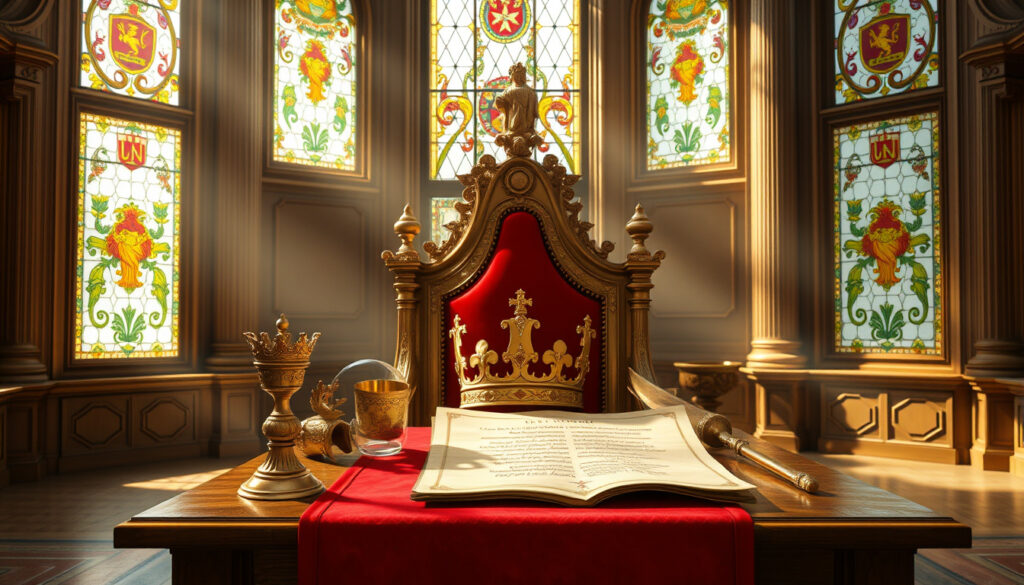
English Royalty: Hierarchy, Succession & Titles
Ever stared at a news headline about “the Prince of Wales” and wondered how it fits compared to a duke or a baron? This guide maps the current living members of the British royal family, the strict order of succession, and the ranking of titles from sovereign to baron, all grounded in official sources.
Current monarch: King Charles III ·
Reigning dynasty: House of Windsor ·
Number of monarchs since 827: 63 ·
Official residence of the monarch: Buckingham Palace ·
Estimated net worth of the British royal family: £28 billion (2023 estimate)
Quick snapshot
- King Charles III is the current monarch (Wikipedia (Encyclopedia))
- Prince William is first in line to the throne (Wikipedia (Encyclopedia))
- The lowest peerage title is baron/baroness (UK Government (Official))
- Exact net worth contested — £28B includes Crown Estate (not personal property) (The Guardian (Editorial))
- “Most unpopular royal” varies by poll — no single answer (YouGov (Polling))
- “12 royal families” is ambiguous — may refer to peerage dynasties or European monarchies (Wikipedia (Encyclopedia))
- September 8, 2022: Queen Elizabeth II dies; King Charles III ascends (BBC News (Editorial))
- May 6, 2023: Coronation of King Charles III and Queen Camilla (BBC News (Editorial))
- 2024: King Charles III publicly diagnosed with cancer (BBC News (Editorial))
- Prince William remains heir apparent (Wikipedia (Encyclopedia))
- Prince George next in line after William (Wikipedia (Encyclopedia))
- Princess Charlotte third (changed by 2013 Succession Act) (Wikipedia (Encyclopedia))
Here is a snapshot of the monarchy’s key details.
| Monarch | King Charles III |
|---|---|
| Queen Consort | Camilla |
| Heir Apparent | Prince William, Prince of Wales |
| Number of monarchs since 827 | 63 |
| Current dynasty | House of Windsor |
Who is currently royalty in England?
The King and Queen
King Charles III became monarch on September 8, 2022, immediately after the death of his mother, Queen Elizabeth II (Wikipedia (Encyclopedia)). His wife, Camilla, holds the title of Queen Consort — a role confirmed during the coronation at Westminster Abbey on May 6, 2023 (BBC News (Editorial)). Together they represent the top of the formal hierarchy.
The Prince and Princess of Wales
Prince William, the elder son of King Charles III, holds the title Prince of Wales — a traditional designation for the heir apparent. His wife Catherine is the Princess of Wales (Wikipedia (Encyclopedia)). William’s full title also includes Duke of Cornwall and Duke of Cambridge, reflecting multiple noble holdings.
Other senior working royals
- Princess Anne — the King’s sister — holds the title Princess Royal and carries out over 400 official engagements per year (The Royal Family (Official biography)).
- Prince Edward, Duke of Edinburgh — the King’s youngest brother — took the Duke of Edinburgh title in 2023 after previously being Earl of Wessex (Wikipedia (Encyclopedia)).
- The Duke and Duchess of Sussex (Prince Harry and Meghan Markle) — no longer working royals after stepping down in 2020, but remain in the line of succession (Wikipedia (Encyclopedia)).
Senior working royals like Princess Anne and the Duke of Edinburgh are expected to maintain a full programme of public duties. In exchange for their tax-funded security and official residences, they submit to high media scrutiny and limited personal freedom. For Prince Harry, the trade-off meant choosing private life over official royal status.
What is the order of English royalty?
The line of succession
The order of succession determines who becomes the next monarch. It follows absolute primogeniture — the eldest child inherits regardless of gender, a rule introduced by the Succession to the Crown Act 2013 (UK Government (Official legislation)). The current top ten on the official list are:
- 1. Prince William, Prince of Wales
- 2. Prince George of Wales
- 3. Princess Charlotte of Wales
- 4. Prince Louis of Wales
- 5. Prince Harry, Duke of Sussex
- 6. Prince Archie of Sussex
- 7. Princess Lilibet of Sussex
- 8. Andrew Mountbatten-Windsor (Prince Andrew’s elder daughter — note: Andrew himself is ninth)
- 9. Princess Beatrice, Mrs. Edoardo Mapelli Mozzi
- 10. Princess Eugenie, Mrs. Jack Brooksbank
All positions from The Royal Family (Official succession list).
Roles of the monarch, consort, and heirs
- Monarch (King/Queen) — head of state, ceremonial head of the armed forces, Supreme Governor of the Church of England. Appoints prime ministers, gives royal assent to laws.
- Queen Consort — wife of a reigning king. Holds no constitutional power but holds the title of queen. Current: Queen Camilla.
- Heir Apparent — person whose right to inherit cannot be displaced by any future birth. Currently Prince William. Heir Presumptive (possible but not certain) before the 2013 Act was Princess Charlotte—now her position is secure.
Cited from BBC News (Editorial explainer).
Titles hierarchy: sovereign, prince, duke, marquess, earl, viscount, baron
The British peerage is divided into five ranks in descending order. A duke is the highest non-royal peer; a baron is the lowest. Knighthood (Sir/Lady) does not belong to the peerage at all — it’s an honour, not a hereditary title.
| Rank | Title (male/female) | Example current holder |
|---|---|---|
| 1 (highest) | Duke / Duchess | Prince William, Duke of Cornwall |
| 2 | Marquess / Marchioness | None active in UK working family |
| 3 | Earl / Countess | Prince Edward was Earl of Wessex |
| 4 | Viscount / Viscountess | David Armstrong-Jones, Viscount Linley |
| 5 (lowest) | Baron / Baroness | Life peers like Baroness Dido Harding |
Rankings from UK Government (Official peerage guidance).
Who is next in line for the English royalty?
Current line of succession
The top seven are set: William, George, Charlotte, Louis, Harry, Archie, Lilibet. After Lilibet comes Prince Andrew (ninth on the official list), then his daughters Beatrice and Eugenie, then Prince Edward and his children (The Royal Family (Official succession page)).
Changes made by the Succession to the Crown Act 2013
- Ended male-preference primogeniture — eldest child inherits regardless of gender.
- Removed disqualification for marrying a Roman Catholic (though the monarch must remain in communion with the Church of England).
- Only the first six in line need the monarch’s permission to marry.
Full details from UK Government (Official legislation).
What happens when a monarch dies
Operation London Bridge — the codename for the sequence after Queen Elizabeth II’s death — was rehearsed for decades. On September 8, 2022, it unfolded: the Accession Council met at St James’s Palace, Charles was formally proclaimed king, and flags were lowered to half-mast (BBC News (Editorial report)). The same process will repeat for any future monarch.
For the British public, the line of succession is not a game of musical chairs — it’s a constitutional constant. The next six names (William through Archie) are locked in, barring a change of law or unforeseen death. The first three (William, George, Charlotte) are already figures of intense public interest.
The pattern: the succession order is largely fixed, with only unforeseen events causing change.
What are the top 10 richest royal families?
Measuring royal wealth is tricky — some assets are personal, others belong to the state. The British royal family’s estimated net worth of £28 billion includes the Crown Estate (worth £15.6 billion) which is not the King’s personal property; it belongs to the Crown and its revenue goes to the Treasury (The Guardian (Editorial analysis)). The King’s private assets include the Duchy of Lancaster (valued at £652 million) and personal investments (BBC News (Editorial report)).
| Royal House | Estimated net worth | Key assets |
|---|---|---|
| House of Saud (Saudi Arabia) | $1.4 trillion | State oil wealth, royal allowances |
| House of Windsor (UK) | £28 billion (~$35.5B) | Crown Estate, Duchy of Lancaster, palaces, art collection |
| House of Chakri (Thailand) | $40-60 billion | Land holdings, investments |
| Al Sabah (Kuwait) | $36 billion | Oil reserves, sovereign wealth fund |
| Al Thani (Qatar) | $335 billion (state) | Oil, gas, investments |
| House of Nahyan (UAE) | $150 billion (state) | Oil, Abu Dhabi Investment Authority |
| House of Liechtenstein | $7.2 billion | Private bank LGT, art collection |
| House of Grimaldi (Monaco) | $1 billion | Casino Monte Carlo, real estate |
| House of Orange-Nassau (Netherlands) | $600 million | State allowances, private wealth |
| House of Bernadotte (Sweden) | $70 million | State allowances, private investments |
Estimates from CEOWORLD (Business publication) and The Guardian (Editorial analysis).
The pattern: Middle Eastern royal families derive wealth from state oil reserves controlled by the family. European royal wealth is a mix of state allowances, personal inheritances, and property — none approaching the scale of oil-state royals.
What is the lowest royal title?
Peerage ranks in the United Kingdom
The lowest peerage rank is baron (baroness for women). Barons are members of the House of Lords (if they hold a life peerage) and may use the title “Lord” (UK Government (Official guidance)). Below baron, there is no peerage — only gentry (landowners without titles) or commoners.
Life peers vs. hereditary peers
- Life peers — created by the monarch on the advice of the prime minister. They hold the rank of baron for their lifetime only. Cannot pass the title to children. Example: Baroness Dido Harding.
- Hereditary peers — inherit their title. Of 92 hereditary peers in the House of Lords, most are dukes, earls, or barons. Example: Duke of Norfolk (Wikipedia (Encyclopedia)).
Knights and dames are not peers
“Sir” and “Lady” are titles from chivalric orders (e.g., Order of the Garter, Order of the British Empire), not peerage ranks. A knight outranks a baron in formal precedence at banquets, but cannot sit in the House of Lords (The Royal Family (Official page on peerages)).
The implication: if you call a baron “Sir”, you’re technically wrong — a baron is “Lord” or “Lady”, while “Sir” belongs to knights. The two systems live side by side but are not interchangeable.
What will Kate be called if William becomes king?
Titles of a queen consort
When Prince William becomes king, Catherine will become queen consort — the wife of a reigning king. The traditional title is “Queen Catherine” or “Queen Catherine of the United Kingdom” (BBC News (Editorial explainer)).
Difference between queen consort and queen regnant
- Queen Consort — wife of a king. Holds the title and ceremonial role but no constitutional power. Examples: Queen Camilla, Queen Elizabeth the Queen Mother.
- Queen Regnant — a female monarch in her own right, inheriting the throne. Examples: Queen Elizabeth II, Queen Victoria.
The title of queen consort is not automatic — the monarch grants it by decree. However, King Charles III made clear at his accession that Camilla would be Queen Consort, and the same precedent would likely apply to Catherine (Wikipedia (Encyclopedia)).
The precedent set by King Charles for Camilla likely extends to Catherine.
Timeline: Key events in the modern royal hierarchy
- September 8, 2022 — Queen Elizabeth II dies; King Charles III ascends. Official statement from BBC News (Editorial).
- September 2022 — William becomes Prince of Wales; Catherine becomes Princess of Wales (BBC News (Editorial report)).
- October 2022 — State funeral of Queen Elizabeth II; Operation London Bridge concludes (BBC News (Editorial coverage)).
- May 6, 2023 — Coronation of King Charles III and Queen Camilla at Westminster Abbey (BBC News (Editorial report)).
- 2024 — King Charles III publicly diagnosed with cancer; public duties remain active (BBC News (Editorial report)).
- Current — Line of succession: William (1st), George (2nd), Charlotte (3rd), Louis (4th), Harry (5th), Archie (6th), Lilibet (7th) (The Royal Family (Official succession list)).
The timeline shows the modern monarchy’s rapid transition and the stability of the succession.
en.wikipedia.org, bbc.com, royal.uk, abc7ny.com, lineofsuccession.co.uk, simple.wikipedia.org, britannica.com, marieclaire.co.uk, people.com, royal.uk, en.wikipedia.org, samhallsbevakning.se
Frequently asked questions
What’s the difference between a lord and a sir?
A “lord” is a peer (baron, viscount, earl, marquess, duke) who sits in the House of Lords. A “sir” is a knight — an honour from chivalric orders — and is not a peer. A baron (lord) outranks a knight in constitutional terms, but at formal dinners, knights of the Garter may sit above barons (UK Government (Official guidance)).
How many people are in the British royal family?
The term is fluid. If counting immediate descendants of King Charles III and his siblings, about 30 people hold HRH style. If including spouses and children of those spouses, roughly 45-50. The official royal website lists about 30 individuals on its family page (Wikipedia (Encyclopedia)).
What is the surname of the British royal family?
The family surname is Mountbatten-Windsor, adopted in 1960 by Queen Elizabeth II. It is used by descendants who do not hold HRH-style titles — for example, Prince Andrew’s daughters Princess Beatrice and Princess Eugenie use “Mountbatten-Windsor” as their surname (Wikipedia (Encyclopedia)).
Can a woman inherit the British throne?
Yes — since the Succession to the Crown Act 2013, the eldest child inherits regardless of gender. Princess Charlotte (third in line) is the first senior royal to benefit from this rule; she would have been displaced by a younger brother under the old system (UK Government (Official legislation)).
What happens to the title of Prince of Wales when the heir becomes king?
The title merges into the Crown — when Charles became king, the Prince of Wales title became vacant. He then granted it to William in September 2022. It is not automatic; the monarch chooses the title (Wikipedia (Encyclopedia)).
Are all members of the royal family paid by taxpayers?
No. Only the Sovereign Grant funds the monarch’s official duties (about £86 million in 2023-24). Senior working royals who carry out official engagements receive allowances from the Privy Purse. Non-working royals like Prince Harry and Princess Beatrice do not receive public funds (The Royal Family (Official financial report)).
What is the role of the Privy Council in relation to the monarchy?
The Privy Council is a formal body of advisers to the monarch, made up of senior politicians, judges, and church leaders. It advises the monarch on Orders in Council (including royal succession proclamations) and issues regulations that don’t require full parliamentary approval (Wikipedia (Encyclopedia)).
These answers clarify common confusions about the British royal hierarchy.
Related reading: English royal hierarchy titles line of succession members
More related posts
 Carl Weathers Death: Cause, Tributes & Co-Star Reactions
 Gypsy Rose Blanchard: Marriage, Net Worth & Health Facts
 iPhone 16 Pro Price in Ireland, Spec & Compari on (2025)
 Kaitlyn Dever: Biography, Last of Us Role, and Controversies
 Composite Bonding Before and After: Real Results & Photos
 Joseph Stalin: Biography, WWII Leadership, Death & Legacy
 Sarah Arabic: Biography, Age, Height, Instagram, and Name Meaning
 Karl Darlow: Age, Stats, and Manchester United Move