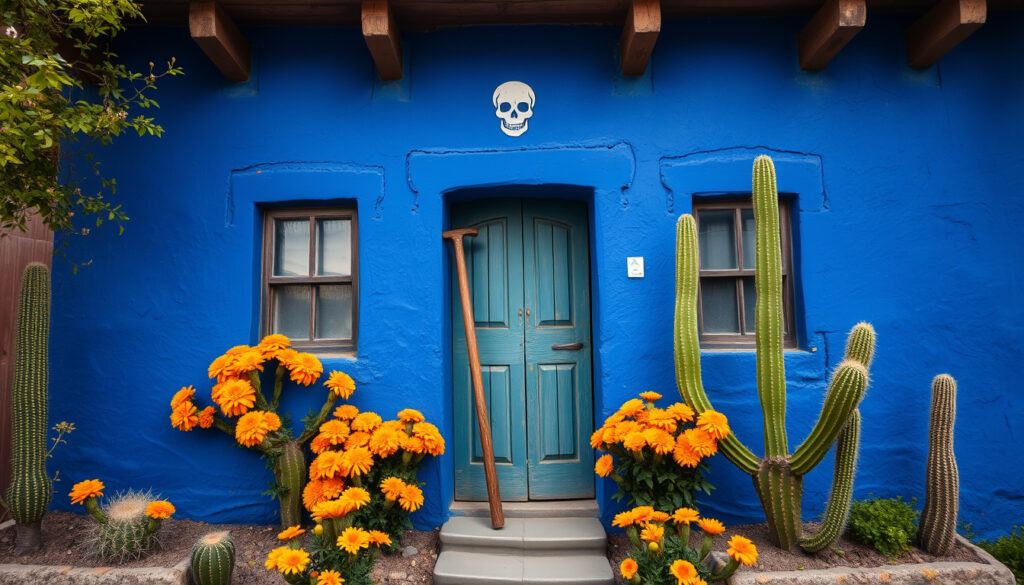
Frida Kahlo: Mexican Painter, Tragic Story & Death
There are few artists whose lives feel as fully painted as their canvases. For Frida Kahlo, the line between living and making art was always blurred — her most iconic works emerged directly from a body that refused to cooperate and a heart that refused to settle. Born in 1907 in Coyoacán, Mexico, she contracted polio at six and survived a catastrophic bus accident at 18 that left her in chronic pain for the rest of her life (Encyclopaedia Britannica (encyclopedic reference)). This article traces how Kahlo turned that pain into a visual language that still speaks to questions of identity, gender, and resilience.
Full Name: Frida Kahlo de Rivera ·
Born: July 6, 1907, Coyoacán, Mexico ·
Died: July 13, 1954, Coyoacán, Mexico ·
Known For: Self-portraits and vibrant folk art ·
Spouse: Diego Rivera (m.1929–1940, 1940–1954)
Quick snapshot
- Born July 6, 1907 in Coyoacán (Britannica)
- Polio at age 6 (Biography.com)
- Bus accident in September 1925 (Britannica)
- Married Diego Rivera August 21, 1929 (Writers Theatre)
- Exact last words (multiple versions recorded) (Britannica acknowledges ambiguity)
- Cause of death: official pulmonary embolism vs. possible suicide (Writers Theatre)
- Full list of love affairs (some speculated, not documented) (The Gay & Lesbian Review)
- 1913: Polio diagnosis (Biography.com)
- 1925: Bus accident (Britannica)
- 1932: Miscarriage (Britannica)
- 1954: Death (Writers Theatre)
- Frida Kahlo Museum opened in 1958 (Britannica)
- Continued posthumous fame as feminist and LGBTQ icon (The Gay & Lesbian Review)
- Art market records continue to be broken (Britannica)
Six biographical facts, one pattern: every major life event — polio, accident, marriage, miscarriage — became raw material for her canvas. Here’s the timeline in detail.
| Label | Value |
|---|---|
| Full Name | Frida Kahlo de Rivera |
| Born | July 6, 1907, Coyoacán, Mexico |
| Died | July 13, 1954, Coyoacán, Mexico |
| Known For | Self-portraits and vibrant folk art |
| Spouse | Diego Rivera (married 1929–1940, 1940–1954) |
| Key Events | Polio at 6, bus accident at 18, miscarriage at 25 |
Who was Frida Kahlo?
What is Frida Kahlo’s biography?
- Born Magdalena Carmen Frida Kahlo y Calderón on July 6, 1907 in Coyoacán, Mexico (Frida Kahlo Foundation (official foundation))
- One of the first girls to enroll at the National Preparatory School in 1922 (Viva Frida Kahlo (biography site))
- Contracting polio at age six left her right leg weakened and thinner (Biography.com (biography publisher))
- In September 1925, a bus accident shattered her spine, pelvis, and collarbone, forcing her into months of bed rest (Encyclopaedia Britannica (encyclopedic reference))
- During recovery, she began painting, starting with self-portraits using a specially adapted easel (Biography.com)
- Married muralist Diego Rivera on August 21, 1929 (Writers Theatre (theatre arts organization))
The implication: Kahlo’s biography is not a prelude to her art — it is the art. The accident, the surgeries, the marriage — all fed a visual diary that never flinched.
Why is Frida Kahlo so famous?
Why is Frida Kahlo important?
- Her 55 self-portraits remain among the most recognizable images in modern art (Britannica)
- Vibrant colors and indigenous Mexican folk art elements distinguish her style (Britannica)
- She gave visual form to persistent pain, female experience, and miscarriage — subjects rarely seen in fine art (Biography.com)
- Posthumous fame rocketed after feminist scholars reclaimed her work in the 1970s (Britannica)
- She is now a global LGBTQ icon and disability rights symbol (The Gay & Lesbian Review (LGBTQ+ literary magazine))
The catch: fame arrived after her death. During her lifetime, she exhibited in Mexico only once (in 1953) and was often overshadowed by Rivera.
Kahlo painted pain obsessively, yet her commercial value now soars precisely because collectors see raw authenticity — a market that rewards the very suffering she documented.
What was Frida Kahlo’s tragic story?
What was the accident that changed her life?
- The September 1925 bus accident was catastrophic: a handrail pierced her abdomen and exited through her vagina; her spine broke in three places (Britannica)
- She underwent over 30 surgeries throughout her life (Biography.com)
- Polio left lifelong weakness and chronic pain in her right leg and foot (Disability Rights Florida (advocacy organization))
- Endured multiple miscarriages, the most traumatic in 1932 (Britannica)
- Her marriage to Rivera was marked by infidelities on both sides, including his affair with her own sister (Britannica)
- Chronic depression and heavy alcohol use worsened her health (Britannica)
Why was Frida Kahlo so unhappy?
- Pain was relentless; she used morphine and other painkillers, leading to addiction (Biography.com)
- Her desire to have children was never fulfilled — three pregnancies ended in miscarriage or abortion (Britannica)
- Divorced Rivera in 1940 before remarrying him later that year (Writers Theatre)
- Her diary entries reveal despair, repeated references to wanting to die (Britannica)
The pattern: suffering and creation were inseparable. Every operation, every heartbreak, every pregnancy loss migrated onto canvas. For Kahlo, unhappiness was fuel.
Who was Frida Kahlo’s female lover?
Why was Frida Kahlo LGBTQ?
- Kahlo is widely described as bisexual, though she never publicly labeled herself (The Gay & Lesbian Review)
- She had documented affairs with women, including Mexican singer Chavela Vargas and American artist Georgia O’Keeffe (The Gay & Lesbian Review)
- Her open marriage with Rivera allowed both partners to have extramarital relationships (Britannica)
- Visual cues in her work — androgynous self-portraits, multigender attire — suggest gender fluidity (Broken Walls and Narratives (academic blog))
- Early biographers often downplayed her same-sex relationships; later scholarship corrected the record (The Gay & Lesbian Review)
Much of the evidence for Kahlo’s bisexuality comes from letters and anecdotes, not public statements. Interpretations vary, and some sources — especially from the mid‑20th century — may reflect the biographers’ own biases.
The trade-off: claiming Kahlo as a straightforward LGBTQ icon risks oversimplifying a complex private life. Yet the weight of historical evidence supports reading her as a woman who loved women.
When did Frida lose her baby?
How did the miscarriage affect her art?
- In July 1932, while in Detroit, Kahlo experienced a miscarriage that nearly killed her (Britannica)
- The painting Henry Ford Hospital (1932) directly depicts her miscarrying on a blood‑stained hospital bed (Biography.com)
- She painted multiple works linking fertility, blood, and death — including My Birth (1932) and Without Hope (1945) (Britannica)
- The theme of the unborn child recurs symbolically: fetuses, umbilical cords, and bleeding bodies appear in about a dozen of her paintings (Britannica)
Why this matters: Kahlo transformed a deeply private grief into a public, political statement. At a time when female bodily experience was hidden, she displayed it unblinkingly — red blood, open wounds, exposed organs.
What were Frida Kahlo’s last words before she died?
How did Frida Kahlo die?
- Official cause of death: pulmonary embolism on July 13, 1954 (Writers Theatre)
- Her last known diary entry read: “I joyfully await the exit — and I hope never to return” (Britannica records this version)
- Suspicion of suicide persists: she had recently been hospitalized for depression and had taken morphine (Britannica)
- No autopsy was performed, leaving the question unresolved (Britannica)
Who inherited Frida Kahlo’s money?
- Her estate was left to Diego Rivera, who later donated the Casa Azul and its pre‑Hispanic art collection to the Mexican state (Britannica)
- The Frida Kahlo Museum opened in 1958 at her lifelong home in Coyoacán (Britannica)
- Posthumous royalties from her paintings are managed by the Frida Kahlo Corporation, a company founded by her niece (Frida Kahlo Foundation)
The pattern: even in death, Kahlo’s story resists a tidy ending. The unresolved caution about suicide, the contested inheritance, and the multiple versions of her last words all echo a life lived on her own terms — ambiguous to the last.
Timeline
The table below charts the key milestones in Kahlo’s life.
| Date | Event | Source |
|---|---|---|
| 1907 | Born in Coyoacán, Mexico | Britannica |
| 1913 | Contracts polio, leaving right leg weakened | Biography.com |
| 1925 | Bus accident causes severe injuries; begins painting | Britannica |
| 1929 | Marries muralist Diego Rivera | Writers Theatre |
| 1932 | Miscarriage depicted in painting ‘Henry Ford Hospital’ | Britannica |
| 1937 | Hosts Leon Trotsky at Casa Azul; alleged affair | Sutori (educational platform) |
| 1938 | First solo exhibition at Julien Levy Gallery in New York | Britannica |
| 1953 | Only solo exhibition in Mexico; health declining | Britannica |
| 1954 | Dies at age 47; official cause pulmonary embolism | Writers Theatre |
| 1958 | Casa Azul opens as the Frida Kahlo Museum | Britannica |
What we know — and what we don’t
Confirmed facts
- Birth and death dates: July 6, 1907 – July 13, 1954 (Britannica)
- Polio diagnosis at age 6 (Biography.com)
- Bus accident in September 1925 (Britannica)
- Marriage to Diego Rivera in 1929 (and remarriage in 1940) (Writers Theatre)
- Miscarriage in 1932, depicted in Henry Ford Hospital (Britannica)
- Estate passed to Rivera, then to the Mexican state (Britannica)
What’s unclear
- Exact last words — multiple versions exist in diaries (Britannica)
- Cause of death: pulmonary embolism vs. possible suicide (Writers Theatre)
- Full list of lovers — many relationships are speculated, not documented (The Gay & Lesbian Review)
- Whether she explicitly identified as bisexual or simply acted on desires (Broken Walls and Narratives)
- Exact number of miscarriages is not universally agreed upon (Britannica)
- Nature of her relationship with Diego Rivera after divorce remains subject to interpretation (Writers Theatre)
In their own words
“I paint self-portraits because I am so often alone, because I am the person I know best.”
— Frida Kahlo, from her diary (Britannica)
“Frida is the only artist in the history of art who tore open her chest to reveal her feelings.”
— Diego Rivera, quoted in biography (Biography.com)
“The accident forced her to stop being a student and become a painter. It was the pivot point.”
— Hayden Herrera, biographer (Britannica)
“Frida was a woman who knew no limits. She lived with such intensity that everything else seemed pale.”
— Chavela Vargas, singer and lover (The Gay & Lesbian Review)
For anyone studying 20th-century art, the trade-off is clear: embrace Kahlo’s full, unvarnished truth — the pain, the desire, the political fire — or risk flattening her into a marketable icon. Her work demands more than admiration; it demands that we sit with discomfort.
glreview.org, fridakahlostory.com, queerarthistory.com, library.ctstate.edu, disabilityrightsflorida.org, canadianstory.org
For a comprehensive overview of her most famous works and upcoming exhibitions, see Frida Kahlos biography and paintings.
Frequently asked questions
Where was Frida Kahlo buried?
She was buried in the “Casa Azul” (Blue House) in Coyoacán, now the Frida Kahlo Museum, after cremation (Britannica).
Did Frida Kahlo have any children?
No. She suffered multiple miscarriages and was unable to carry a pregnancy to term (Britannica).
What is Frida Kahlo’s most famous painting?
The Two Fridas (1939) is widely considered her masterpiece, along with The Broken Column (1944) (Biography.com).
How many paintings did Frida Kahlo create?
Approximately 200 paintings, of which about 55 are self-portraits (Britannica).
What is the Frida Kahlo Museum?
The Casa Azul in Coyoacán, her lifelong home, was turned into a museum in 1958, containing her belongings, art, and pre-Hispanic collection (Britannica).
What was Frida Kahlo’s relationship with communism?
She was a committed communist and hosted Leon Trotsky in 1937 after he fled Stalin (Britannica).
Did Frida Kahlo speak English?
She spoke some English but conducted most conversations and correspondence in Spanish (Frida Kahlo Foundation).
What is the meaning of ‘The Two Fridas’?
The painting shows two versions of Kahlo — one loved, one unloved — reflecting her split identity after divorce from Rivera (Britannica).
Related reading
- Paul Stanley: Biography, Disability & Personal Life – A parallel story of living with a lifelong condition that shaped identity.
- King George III: Madness, Illness & Historical Facts – Another biography where physical and mental illness are central to the narrative.
More related posts
 On the Beach Discount Code – Latest Deals for 2026 Holidays
 Jeremy Wade: Disease, Net Worth, Children, and Life After River Monsters
 Biggie Smalls: Death, Tupac Feud, and Unresolved Mysteries
 Women’s Cardigan Guide: Where to Buy & Style in Ireland
 Sarah Arabic: Biography, Age, Height, Instagram, and Name Meaning
 Pete Postlethwaite: Death, Net Worth & Spielberg’s Quote
 Nat West Log In – Step-by-Step Online Banking Guide
 Jamie Campbell Bower: Relationships, Health & Career