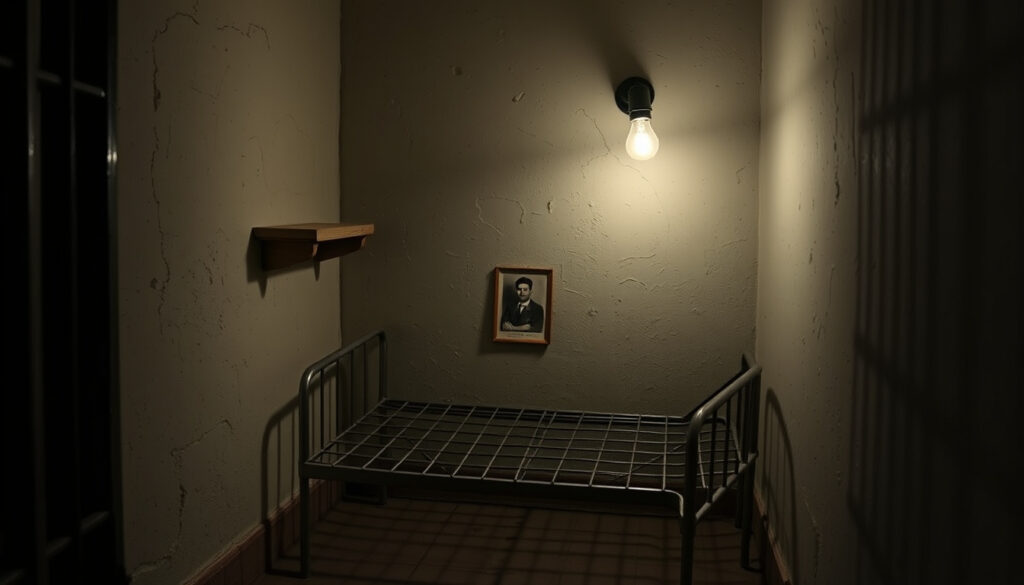
Al Capone: Life Story, Alcatraz Time, Death & Family Legacy
Few American names carry the instant weight of Al Capone’s: born in Brooklyn in 1899 to Italian immigrant parents, he rose to run the Chicago Outfit during Prohibition — a federal income-tax conviction and a four-year stay at Alcatraz ended that run. The parts people still argue about are the parts the record leaves messiest: his money, his health, his family, and his death.
Born: January 17, 1899, Brooklyn, NY ·
Died: January 25, 1947, Palm Island, Miami Beach, FL ·
Chicago dominance: 1925–1931 ·
Alcatraz stay: August 1934–January 1939 (about 4 years, 4 months) ·
Conviction: Federal income tax evasion, 1931
Quick snapshot
- Alphonse Gabriel Capone was born in Brooklyn, New York, in 1899, to Italian immigrant parents (EBSCO Research Starters, academic reference database).
- He controlled organized crime in Chicago from 1925 to 1931 (Encyclopaedia Britannica, reference publisher).
- He was convicted of federal income-tax evasion in 1931 (Federal Bureau of Investigation, federal law-enforcement archive).
- He died of cardiac arrest after a stroke at his Palm Island home in Miami Beach on January 25, 1947 (Click Americana, vintage-news archive).
- Exact age at which Capone contracted syphilis — not documented in the public record (Encyclopaedia Britannica, reference publisher).
- Real net worth at death — disputed; profits were hidden and no reliable ledgers exist (Gentleman’s Gazette, style-history publication).
- Whether Capone personally ordered the St. Valentine’s Day Massacre — never charged, still debated (Federal Bureau of Investigation, federal law-enforcement archive).
- Claims about any single rival Capone feared — no confirmed name in the record (A&E, historical documentary network).
- Transferred to Alcatraz in August 1934; left January 6, 1939; released from federal custody in November 1939 (The Mob Museum, organized-crime history museum).
- Died at Palm Island, Miami Beach, on January 25, 1947 (Click Americana, vintage-news archive).
- Son Albert Francis “Sonny” Capone lived quietly, stayed out of the crime world, and died in 2004 (Wikipedia, community-compiled reference).
- The cultural afterlife — films, the armored Cadillac, the Scarface image — still outruns the family’s deliberately low profile (The Mob Museum, organized-crime history museum).
Seven rows, one pattern: the public record is exact on dates and charges, and almost deliberately blurry on anything that involved money.
| Label | Value |
|---|---|
| Full name | Alphonse Gabriel Capone |
| Born | January 17, 1899, Brooklyn, NY |
| Died | January 25, 1947, Palm Island, Miami Beach, FL |
| Nickname | Scarface |
| Criminal role | Boss of the Chicago Outfit, 1925–1931 |
| Federal conviction | Income tax evasion, 1931 |
| Recorded son | Albert Francis ‘Sonny’ Capone (1918–2004) |
What is Al Capone most famous for?
Capone is famous for three overlapping things: turning bootlegging into an industrial-scale business, being blamed for the bloodiest gangland massacre of the era, and looking the part so completely that Hollywood never had to invent him.
How did Al Capone become a gangster?
- Born Alphonse Gabriel Capone in Brooklyn, New York, in 1899, to Italian immigrant parents; he ran with Brooklyn criminal networks before moving to Chicago, reportedly around 1919, to work for crime boss Johnny Torrio (EBSCO Research Starters, academic reference database).
- One of nine children; he left school around age 14 after an altercation with a teacher. The Scarface nickname came later, from a knife slash during his bouncer days in Brooklyn (A&E, historical documentary network).
The move to Chicago turned out to be the most important career decision he ever made. Once there, Capone became associated with the Chicago Outfit and profited from illegal alcohol trafficking during Prohibition, building a criminal enterprise that also touched gambling, prostitution, bribery, protection, and narcotics (Encyclopaedia Britannica, reference publisher). The business grew because it solved a supply problem Prohibition had created — and because Capone was willing to enforce every deal with violence.
What was the St. Valentine’s Day Massacre?
The massacre is the reason Capone is remembered as a killer — and it is also the crime he was never charged with.
On February 14, 1929, seven men linked to Chicago’s North Side gang were shot to death in a garage. Capone was the public’s favorite suspect: the killings looked like his crew clearing a rival, and the FBI’s institutional history treats the event as the era’s defining act of gang violence (Federal Bureau of Investigation, federal law-enforcement archive). No charge ever stuck, and historians still argue over whether he ordered it. The gap between blame and proof is why “most famous” and “most proven” are different questions.
What car did Al Capone drive?
- The armored 1928 Cadillac: a seven-passenger sedan fitted with bullet-resistant glass and armor plating, central to Capone’s public image (Gentleman’s Gazette, style-history publication).
The armor was not vanity. Rival mobsters had already tried to kill Capone, and the Cadillac — plus a rotating set of bodyguards — was his answer. The car still does most of the work in his visual legend: the fedora hat, the cigar, the scar, the armor underneath.
What movies are about Al Capone?
- Al Capone (1959) with Rod Steiger — the first major studio portrait.
- The Untouchables (1987) with Robert De Niro — the version most people picture.
Both films lean on the same iconography: the fedora, the machine gun, the perfectly tailored suit. The movie Capone was built from the same press photos and court sketches the FBI and the newspapers handed down, which means the fictional version has a real documentary core — and a great deal of added myth.
How long was Al Capone in Alcatraz?
The short answer: about four years and four months, from August 1934 to January 1939 — long enough to cut a crime boss off from his organization.
Why was Al Capone sent to Alcatraz?
- Convicted of federal income-tax evasion in 1931 and sentenced to 11 years in federal prison (Encyclopaedia Britannica, reference publisher).
- Held first at the U.S. Penitentiary in Atlanta, then transferred to Alcatraz specifically to sever his ability to run the Chicago Outfit from a cell (A&E, historical documentary network).
Alcatraz was the federal government’s way of saying the usual rules didn’t apply. As a maximum-security island prison, it gave Capone no friendly guards to bribe, no reporters to charm, and no phone access to his organization. The Mob Museum’s prison-history records note that staff logged him as inmate number 85 (The Mob Museum, organized-crime history museum).
When did Capone leave Alcatraz?
- Arrived: August 22, 1934 · Left: January 6, 1939 · Total: about 4 years, 4 months (The Mob Museum, organized-crime history museum).
After Alcatraz, Capone was moved to the Federal Correctional Institution at Terminal Island, California, and released from federal custody in November 1939. He then went to Baltimore for medical treatment before settling in Florida — a final act that reads more like a patient transfer than a gangster’s release.
How did Alcatraz affect Capone’s health?
Alcatraz didn’t create Capone’s illness, but it made the illness impossible to hide.
According to Wikipedia’s consolidated biography, Capone spent part of his Alcatraz incarceration in the prison hospital (Wikipedia, community-compiled reference). His behavior had begun to worry guards and other inmates, and the strict regimentation of prison life left no room for the protective routines he had once controlled. By the time he left, his health was failing badly enough that medical care, not prison discipline, shaped his remaining years.
The implication: Alcatraz is remembered as Capone’s fall from power, but the record shows a slower, sadder process — a boss isolated from his empire while his body quietly collapsed.
What happened to Al Capone before he died?
The last chapter of Capone’s life was not a crime story. It was a medical one.
At what age did Al Capone get syphilis?
- No documented date. Biographers place the likely exposure in late adolescence or early adulthood, before he became Chicago’s crime boss.
No medical record in the public archive pins down the exact date. What the biographical record does show is the consequence: by his late 30s, the disease had progressed far enough to alter his behavior and to fill his prison files with notes about disorientation, memory problems, and physical decline (Encyclopaedia Britannica, reference publisher).
How did syphilis affect Capone?
The man who built an empire on intimidation spent his final years unable to manage his own care.
Late-stage syphilis and paresis — a form of neurological damage — progressively eroded Capone’s mental and physical condition, according to Encyclopaedia Britannica’s biography. After his release, he received medical treatment in Baltimore, then returned to his Palm Island estate in Miami Beach, where his family supervised his care. The public Capone, the one who gave interviews and posed for photographers, was gone.
How did Capone spend his last years?
- Secluded at Palm Island, out of public view, supervised by family.
- No longer running the Chicago Outfit; the organization had moved on without him.
There is no credible record of Capone directing crime after Alcatraz. His final years were spent in a large house with round-the-clock care, a shrinking fortune, and a name that was now being managed by the people closest to him.
What this means: Capone’s decline rewrites the ending of his own myth. The empire didn’t fall to rivals or bullets; it dissolved while its founder was being nursed in Florida.
Where was Al Capone found dead?
Where did Capone die?
- At his home on Palm Island, Miami Beach, Florida, on January 25, 1947 (Click Americana, vintage-news archive).
- He was 48 years old.
The death happened at the same estate where he had spent his final years in seclusion — a detail that fits the larger pattern: the most famous gangster in America died at home, in bed, surrounded by family rather than enemies.
What was Capone’s cause of death?
The official cause — cardiac arrest after a stroke — ended the life. The untreated syphilis is what had ended the man years earlier.
According to Encyclopaedia Britannica’s biography, the cause of death was cardiac arrest after a stroke. By that point, his physical and mental decline from late-stage syphilis had been visible for the better part of a decade.
Where is Capone buried?
- Mount Carmel Cemetery, Hillside, Illinois — on the outskirts of Chicago.
His grave remains a stop for true-crime pilgrims, and it sits close to the city where his name became a headline. The irony: after decades of courtroom escapes, the file on Capone’s death is the least disputed document he left behind.
Was Al Capone still rich when he died?
What was Al Capone’s net worth?
- Prohibition-era bootlegging, gambling, and protection rackets produced tens of millions of dollars.
- Exact net-worth figures are disputed: profits were hidden, unrecorded, and partly spent as fast as they came in.
The honest answer is that no one knows, because the money was never in a ledger. Capone’s wealth was real enough to buy armored cars, lawyers, and political protection, but it was also the kind of cash that evaporates when a boss goes to prison and the lawyers start billing. Historical estimates of his peak income vary wildly, and every number should be read as a guess wrapped in a headline.
Who was the richest mobster?
- Most historical comparisons rank Meyer Lansky above Capone: Lansky laundered money through casinos and banks and kept his profile deliberately low.
- Capone’s spending was conspicuous — tailored suits, the armored Cadillac, bodyguards — which inflated his legend more than his ledger (Gentleman’s Gazette, style-history publication).
The reason Lansky tops those lists is structural. His money went through casinos in Cuba and bank accounts abroad, while Capone’s went through suits, cars, and legal fees. Capone was richer in fame; Lansky was richer in the assets that outlived the era.
What happened to Capone’s money after his death?
- Public records show the family did not maintain a visible inherited fortune after Capone died.
- His widow Mae Coughlin Capone and son Albert Francis “Sonny” Capone were the primary heirs and kept an intentionally low profile.
The family finances after 1947 are part of the public record, and they tell a clear story: the spectacular wealth belonged to the Prohibition years, not to the estate. What survived was the name — and the name came with a cost.
Was Al Capone a nice guy in real life?
The “nice guy” version of Capone comes from the same publicity machinery that turned him into a celebrity. The court files and police histories tell a different story.
Did Al Capone do charity work?
- Yes: a Chicago-area soup kitchen and donations to local causes during the Depression.
- But the generosity ran alongside — not instead of — the violence that funded it.
Capone worked the public-relations side hard, and analysts of his public image note that his visibility, wealth, and media persona were part of his power strategy (Gentleman’s Gazette, style-history publication). The soup kitchen made the newspapers; the protection rackets paid for it. In that light, the charity reads less like kindness and more like a business expense.
How violent was Capone’s criminal enterprise?
- The business model included bootlegging, gambling, prostitution, bribery, protection, and narcotics.
- The violence wasn’t a side effect; it was the enforcement system that kept competitors, witnesses, and officials in line.
Federal and local investigations from the period describe an operation where murder was one tool among several. The St. Valentine’s Day Massacre fits that picture: whether or not Capone personally ordered it, the style of the crime — military precision, no witnesses, no charges — was the style of his organization.
Who was Al Capone afraid of?
- No verified answer. Historians have not confirmed a specific person Capone feared; he traveled with bodyguards because rival mobsters had already tried to kill him.
The honest answer to the “who scared Capone” question is that the record doesn’t support a name. The armored Cadillac and the bodyguards tell us he feared assassination attempts, not that a single rival haunted him. Fear, in his case, appears to have been professional rather than personal.
The trade-off: Capone bought loyalty with soup kitchens and enforced it with murders. The two facts are not contradictions; they were the same business model.
Is Al Capone’s son still living?
Who was Al Capone’s son?
- Albert Francis “Sonny” Capone, born in 1918 to Al and Mae Coughlin Capone.
- He died in 2004 — decades after his father, and far from the crime world (Wikipedia, community-compiled reference).
Capone’s only recorded child, Sonny was 13 when his father took over Chicago and 13 when the public first read his name in the papers. He grew up inside a legend he never asked for.
What did Capone’s son do after his father died?
- Worked as a funeral-home employee and florist, and used the surname Brown to reduce attention (Wikipedia, community-compiled reference).
Sonny deliberately avoided the criminal world. He lived quietly, changed his name for practical reasons, and stayed out of the headlines — the exact opposite of his father’s instinct for the spotlight. The distance he kept from the family business is one of the clearest signs of how heavy the Capone name actually was.
How old would Capone be today if he was alive?
- Born January 17, 1899; if he were alive in 2026, he would be 127 years old.
The arithmetic is straightforward; the thought experiment isn’t. Capone died at 48, and his name still shows up on modern lists of history’s famous people. What this means for the family ledger is almost boring: a widow, a son who changed his name, a quiet life in Florida — after all the chaos, the Capone family chose anonymity.
How Capone’s money compares with other mob fortunes
Three financial profiles, one pattern: the less visible the money, the longer it lasted.
| Subject | Wealth profile | Why the true number is hard to verify |
|---|---|---|
| Al Capone | Tens of millions at his peak, from bootlegging, gambling, and protection | Cash business; no reliable ledgers; visible spending on cars, lawyers, and security |
| Meyer Lansky | Casino and banking interests across several countries | Money moved offshore and deliberately hidden through financial networks |
| Capone estate after 1947 | No large documented inheritance | Public records show the family did not maintain a visible inherited fortune |
The pattern: Capone’s problem was never making money — it was that everyone could see it. Lansky’s fortune survived because nobody could find it, while Capone’s went the way of the Prohibition-era cash economy that produced it.
Timeline: from Brooklyn to Palm Island
This chronology follows the dates documented in the sources cited throughout this article.
- 1899 — Born in Brooklyn, New York.
- 1918 — Married Mae Coughlin; son Albert was born.
- 1925 — Became the effective boss of the Chicago Outfit.
- 1929 — St. Valentine’s Day Massacre occurred in Chicago.
- 1931 — Convicted of federal income-tax evasion and sentenced to 11 years.
- 1934 — Transferred to Alcatraz.
- 1939 — Left Alcatraz; released from federal custody in November.
- 1947 — Died at his Palm Island home in Miami Beach.
The pattern across those dates: Capone’s rise took barely a decade, his imprisonment took four more years, and his decline — the part that interests historians most — stretched out quietly in Florida until 1947.
What we know for sure, and what we don’t
Confirmed facts
- Born in Brooklyn in 1899 to Italian immigrant parents.
- Controlled Chicago organized crime from 1925 to 1931.
- Convicted of federal income-tax evasion in 1931.
- Served at Alcatraz from August 1934 to January 1939 (The Mob Museum, organized-crime history museum).
- Died of cardiac arrest after a stroke at his Palm Island home in 1947.
Not confirmed / disputed
- The exact age at which Capone contracted syphilis.
- His true net worth at death.
- Whether he personally ordered the St. Valentine’s Day Massacre.
- Claims that he feared a specific rival.
- Whether he spent significant time in Alcatraz’s prison hospital.
- Whether he still directed the Outfit from prison or after release.
The split between the two lists is the whole lesson: Capone’s legend runs on the unproven column, while the proven column is what actually sent him to prison.
Voices from the record
Two institutional accounts, one consistent finding: the real Capone was less romantic and more destructive than the legend.
The FBI’s institutional history describes Capone as the most infamous gangster of the Prohibition era — a man whose combination of bootlegging, corruption, and public bravado made him a federal priority.
Federal Bureau of Investigation, federal law-enforcement archive
A&E’s biography frames Capone’s career as a rise built on bootlegging, bribery, and violence, followed by a collapse tied to tax evasion and disease — with the Alcatraz years as the hinge between the two.
The agreement across these sources matters because they reached their conclusions independently — one from federal enforcement files, one from documentary historical research. When institutional accounts converge on the sequence of conviction, imprisonment, and decline, the legend has to give way to the ledger.
Capone’s story is usually told as a rise and fall. The fuller version is a ledger: money earned invisibly, spent visibly, and gone by the time the FBI and the disease finished their separate cases. The massacre made him famous, the tax case made him federal property, and the syphilis made him a patient. For anyone researching Capone today, the choice is clear: follow the dated court records, prison registers, and institutional histories, or keep repeating a legend that was built for the front page.
Frequently asked questions
Why did Al Capone get the nickname Scarface?
Capone got the scar while working as a bouncer and brawler in Brooklyn, before he became Chicago’s crime boss. A knife slash across his face produced the Scarface nickname, and it stayed with him for the rest of his life.
How many children did Al Capone have?
The record shows one child: Albert Francis “Sonny” Capone (1918–2004), born to Al and Mae Coughlin Capone. Sonny distanced himself from the criminal world, worked as a florist and funeral-home employee, and used the surname Brown to stay out of the spotlight.
What happened to Al Capone’s wife after his death?
Mae Coughlin Capone survived her husband by decades. After 1947, she and Sonny lived quietly outside the headlines, and the family name faded from the crime pages.
Was Al Capone ever convicted of murder?
No. Capone was blamed for the St. Valentine’s Day Massacre and other gang killings, but he was never convicted of murder. His only major federal conviction was for income-tax evasion in 1931.
How tall was Al Capone?
There is no verified height in the sources reviewed for this article; the reliable biographical record does not include a formal measurement. The consistent point in historical accounts is that his size and physical presence were part of his intimidating style.
Did Al Capone have any legitimate businesses?
Capone presented himself as a businessman, but the federal tax case was built on the gap between his reported income and his actual spending. The conviction in 1931 was for evading taxes on illegal earnings, not for running a legitimate enterprise.
More related posts
 Josh Acheampong: Height, Age, Position & Transfer News
 Rita Wilson: Biography, Cancer Diagnosis, Family, and Career
 Sam Thompson: Relationship, ADHD, and Net Worth
 Cast of the Recruit – Full Actors and Characters Guide
 Skirting Boards: Cost, Profiles & Modern Alternatives
 Hannah Onslow: Biography, Height, Movies, and Facts
 NS and I Premium Bonds – How They Work, Odds and Value
 Xander Schauffele: Ethnicity, Wife, Children, Net Worth & More