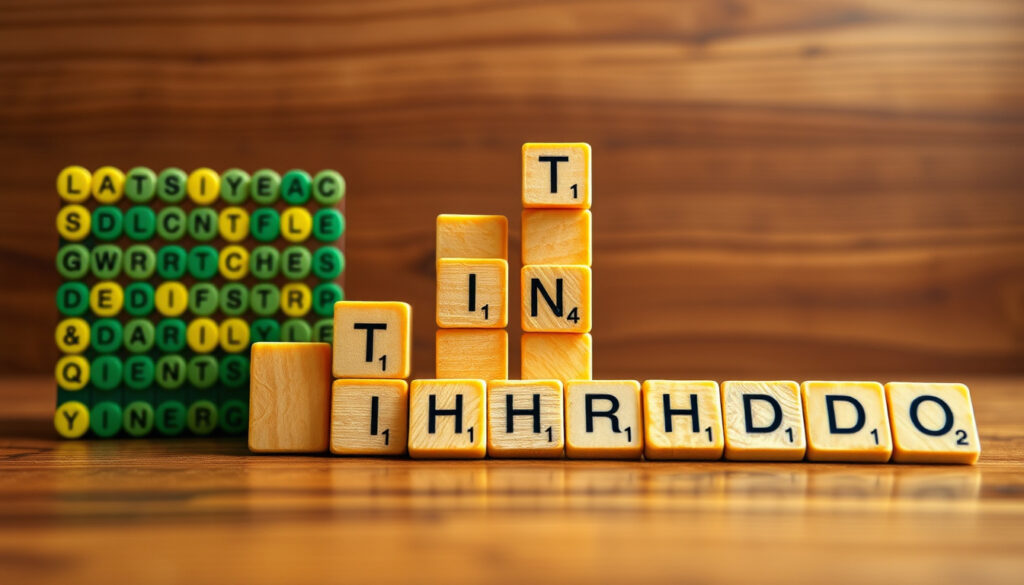
Most Common Letters in English: Top 10 Frequencies + Wordle Stats
If you’ve ever wondered why your opponent always seems to guess the same letters first in Wordle, the answer lives in a quiet hierarchy most of us never think about: the alphabet itself has a popularity contest going on. E wins by a landslide, appearing roughly 11–12% of the time across English texts, while Z barely registers at 0.07%.
Most common letter: E (11.16%) · 2nd most common: A (8.50%) · 3rd most common: R (7.58%) · Rarest letter: Z (0.07%) · Wordle top 5 starter letters: S, L, E, R, A
Quick snapshot
- E: 11.16% (Reader’s Digest)
- A: 8.50% (Reader’s Digest)
- R: 7.58% (Reader’s Digest)
- I: 7.54% (Reader’s Digest)
- O: 7.16% (Reader’s Digest)
- Z: 0.07% (Dictionary.com)
- Q: 0.10% (Dictionary.com)
- J: 0.15% (Dictionary.com)
- X: 0.40% (Dictionary.com)
- K: 0.77% (Dictionary.com)
- Over 15% of Wordle targets start with S (Art of Problem Solving)
- E dominates the fourth position: 1 in 7 words (Art of Problem Solving)
- Best opening trio: slice, tried, crane (WGBH)
- TH: 3.56% of all letter pairs (Dictionary.com)
- HE: 3.07% (Dictionary.com)
- AN: 2.73% (Dictionary.com)
- IN: 2.43% (Dictionary.com)
Across academic analyses, dictionary counts, and game-specific datasets, the same letters keep claiming the top spots—but the exact order shifts depending on how you measure.
| Metric | Value | Source |
|---|---|---|
| Most common letter | E (11.1607% in dictionary) | Reader’s Digest |
| 40,000-word corpus | E: 12.02%, T: 9.10%, A: 8.12% | Cornell University Mathematics |
| Bigrams leader | TH (3.56%) | Dictionary.com |
| Wordle dictionary size | 2,315 target words | Real Statistics Using Excel |
| Wordle E count | 1,233 occurrences | Real Statistics Using Excel |
| Dictionary vs. Wordle N gap | 6.95% general, under 4% in Wordle | The Why Axis |
What’s the Most Common Letter Used in English?
Three independent sources—Cornell University’s cryptography lecture notes (40,000-word sample), Reader’s Digest’s analysis of the Concise Oxford English Dictionary, and Dictionary.com’s corpus work—all put E at the top. The exact percentage varies slightly by source: Cornell found E at 12.02%, while the dictionary analysis put it at 11.16%. The gap comes from methodology differences—one measures letters within words, the other counts how many dictionary entries contain each letter. Cornell’s mathematics department (cryptography education) uses raw frequency across texts; Reader’s Digest (editorial analysis) counted 240,000 dictionary entries.
E’s dominance extends to keyboard usage—it’s the most-struck letter and ranks second only to the space bar. That ubiquity isn’t accidental; it’s baked into how English evolved phonetically and how word endings cluster.
E isn’t just common—it’s nearly twice as frequent as the #2 letter (A at 8.5%). In any random English text, roughly 1 in 8 characters will be E.
Frequency data from English texts
The cryptographic ordering known as ETAOIN SHRDLU—derived from the most common letters in 1930s Linotype keyboards—has guided codebreakers for decades. That ordering remains broadly valid: E and T consistently rank 1-2 across all datasets, and the top 10 letters (E, T, A, O, I, N, S, R, H, L, D, C) show remarkably stable rankings across sources. Dictionary.com’s analysis (language reference publication) places the 15th letter as U at roughly 2.8%—confirming that beyond the top 14 letters, frequencies drop into single-digit territory.
Comparison across sources
When you line up Cornell (academic corpus), RD.com (dictionary entries), and Dictionary.com (language platform), the top 5 stays consistent: E, T, A, O, I—or E, A, R, I, O depending on ranking criteria. The order shifts slightly between “frequency by appearance” and “number of words containing the letter,” but E never leaves the top spot.
What are the top 10 most commonly used letters?
Across sources, the top 10 most common letters in English form a remarkably stable hierarchy. Reader’s Digest’s analysis of the Concise Oxford English Dictionary (language reference publication) gives precise percentages:
Wheel of Fortune gives away R, S, T, L, N, and E as free letters in its final puzzle—five of those six appear in the top 7. The show’s designers built this feature around frequency data that has stayed consistent for 40+ years.
- 1. E — 11.16%
- 2. A — 8.50%
- 3. R — 7.58%
- 4. I — 7.54%
- 5. O — 7.16%
- 6. T — 6.95%
- 7. N — 6.65%
- 8. S — 5.74%
- 9. L — 5.49%
- 10. C — 4.54%
Cornell University’s 40,000-word sample (cryptography education source) shows slightly different percentages—E at 12.02%, T at 9.10%, A at 8.12%—because it measures raw character frequency in running text rather than dictionary entry coverage. Dictionary.com (language reference platform) lists the order as E, T, A, O, I, N, S, R, H, L, D, C, M, F, U for the full top 15.
Ranked list with percentages
The slight ordering differences between sources boil down to one question: Are you measuring how often a letter appears in text, or how many dictionary words contain it? E leads both metrics, but T vs. A trades places depending on methodology. For practical applications—word games, password strength analysis, crossword solving—the Cornell text-frequency data tends to be more useful.
“The 10 most common letter pairs in English are: TH, HE, AN, IN, ER, ON, RE, ED, ND, HA.” — Dictionary.com
What this means: if you’re solving a cryptogram or playing a word game, betting on TH, HE, or AN as starting combinations pays off more often than not.
What are the 5 most common letters in Wordle?
Wordle operates on a specific dictionary of 2,315 target words—and that constraint creates a frequency distribution distinct from general English. Real Statistics Using Excel (statistical analysis platform) analyzed all 2,315 words to find: E dominates with 1,233 appearances, followed by A, R, O, T, L, I, S, N, and C.
The interesting wrinkle: The Why Axis (independent analysis) found that E is slightly under-represented in Wordle relative to general English, while letters like B, Y, and G appear more often in solutions than their general frequency would predict. The Wordle dictionary simply doesn’t mirror everyday text.
5-letter word frequencies
Position matters enormously in Wordle. Art of Problem Solving (educational platform) found that S opens over 15% of Wordle words—far more than any other starting letter. Only C, B, T, P, A, and F crack 5% as first letters. Meanwhile, A dominates the second and third positions, and E owns the fourth and fifth slots, appearing as the fourth letter in 1 in 7 Wordle answers.
“Over 15% of Wordle words of the day start with S.” — Art of Problem Solving
The pattern: Wordle’s answer pool skews toward words that feel common but have specific positional quirks. Starting words like slice, tried, and crane—recommended by WGBH (public media outlet)—hit these high-frequency positions directly.
N makes up nearly 7% of dictionary letters but appears in less than 4% of Wordle answers. Players who lean on general English intuition will overvalue N and undervalue B, Y, and G in Wordle-specific play.
Real stats from Excel analyses
Dr. Drang’s analysis on Leancrew (technical blog) of approximately 8,500 five-letter words found frequencies of A at 10.5%, E at 10.0%, R at 7.2%, O at 6.6%, and I at 6.1%. The convergence with Wordle data is striking: the game inherits five-letter word patterns from the broader corpus.
What is the rarest letter in English?
Z is the undisputed heavyweight champion of rarity. Dictionary.com (language reference platform) puts Z at just 0.07% of all letter occurrences, with Q close behind at 0.10%, J at 0.15%, and X at 0.40%. In practical terms, you might encounter Z once every 1,400 characters—roughly every 250 words on average.
This scarcity makes Z and Q potent tools in word games. In Wordle, the tiny pool of Z/Q words (zaffer, quaff, quiz, etc.) can suddenly appear, and players who’ve eliminated those letters from consideration face a nasty surprise. Reader’s Digest notes that E appears in roughly 6,000 more words than A—the runner-up—which means A is to E what Z is to the rest of the alphabet: present but rare.
Least frequent letters ranked
The bottom five (Z, Q, J, X, K) cluster below 0.8% combined. K sits at 0.77%—still less than 1%—but appears in 66 words in the Wordle dictionary, making it more useful in the game than its frequency suggests. The paradox: rarity in general English doesn’t always translate to rarity in specific word lists.
The implication: if you’re writing a crossword clue, Z and Q deserve high point values. If you’re playing Wordle, never assume Z or Q are impossible—even if they’re rare overall, the game specifically chose words that make elimination tricky.
What are the most common letters in 5 letter words?
Five-letter words follow distinct patterns that differ from general English. Dr. Drang’s analysis (technical blog) of 8,500 five-letter words found A at 10.5%, E at 10.0%, R at 7.2%, O at 6.6%, I at 6.1%, and S, T, L each at 5.6%. The big shift: S and T become proportionally stronger in five-letter contexts, while E’s dominance softens.
This matters for Wordle because the game only uses five-letter words. Real Statistics Using Excel (statistical analysis platform) found that 39.3% of Wordle answers contain A—the single highest word-inclusion rate for any letter in the game.
Bigrams and patterns
Dictionary.com’s top 10 letter pairs (TH, HE, AN, IN, ER, ON, RE, ED, ND, HA) show how consonants and vowels cluster. In five-letter words specifically, patterns like -TION, -ED, -ING, -ERE, -ATE dominate because they combine a high-frequency bigram with a high-frequency ending.
Double letters also concentrate in five-letter words: EE, LL, and SS appear far more often than their general frequency would suggest because five-letter constraints force phonetic compression. Words like “creep,” “grass,” and “still” exploit these clusters.
The five-letter word constraint redistributes letter value. S and T gain positional prominence even though E remains the overall frequency leader. Wordle players who internalize five-letter-specific patterns (not general English patterns) will make faster elimination progress.
Double letters like EE, LL
Double letters in five-letter words follow predictable rules: they almost never appear at word boundaries (not at positions 1+5 or 2+5), and they concentrate in middle positions where phonetic stress falls. EE typically lands in positions 3-4, LL in positions 2-3, and SS in positions 2-3 or 3-4. The pattern: doubles cluster where the word’s stress lands.
The practical upshot: when you see a double letter confirmed in Wordle, you can often deduce its position range immediately. An SS in a five-letter word almost certainly sits at 2-3 or 3-4, leaving narrow options for the remaining letters.
Upsides
- E dominates both general English and Wordle—making it the safest first guess
- Wordle’s specific frequencies (S starts >15% of answers) give game-specific edge over general-frequency assumptions
- Position data (E peaks at position 4, A at positions 2-3) enables sharper elimination mid-game
- Double-letter patterns in five-letter words follow learnable rules
Downsides
- General English frequency and Wordle frequency diverge meaningfully—applying the wrong dataset wastes guesses
- Letters like N and I appear frequently in dictionaries but underperform in Wordle, creating false confidence
- Z, Q, and J are rare enough that players often eliminate them prematurely
- The “top 10 letters” ranking shifts slightly depending on whether you measure by word count or character frequency
Related reading: European Country Crossword Clue: Answers by Letter Count · What Is an Adjective – Definition, Examples, Types & Usage
Frequently asked questions
What are the 15 most common letters in English?
The 15 most common letters in order are E, T, A, O, I, N, S, R, H, L, D, C, M, F, U. E leads at approximately 11–12% depending on measurement method; U rounds out the top 15 at roughly 2.8%. Dictionary.com maintains this ranking across multiple corpus analyses.
Which letter is the most common in English?
E is the most common letter in English, appearing in approximately 11.16% of dictionary entries and 12.02% of character occurrences in text samples. Cornell University and Reader’s Digest both confirm this ranking across different analysis methodologies.
What is the probability of winning Wordle?
Letter frequency analysis doesn’t directly translate to win probability, but starting with high-frequency letters (S, L, E, R, A) gives the best elimination odds. Art of Problem Solving found that positional frequency data—knowing S starts >15% of answers, E dominates position 4—improves decision-making at every guess step.
Is Wordle getting harder?
Wordle’s difficulty is fixed by its answer dictionary—2,315 target words—but difficulty perception shifts as players learn the frequency patterns. New players find the game harder because they don’t yet know that S dominates starts or that E peaks at position 4. Once players internalize these patterns, the game becomes more solvable, not less.
What are the most common double letters in English?
In five-letter words specifically, EE, LL, and SS appear most frequently. Dr. Drang’s analysis confirms these doubles concentrate in middle positions rather than at word boundaries. General English also features TT, OO, and AA commonly, but the five-letter word constraint shifts double-letter distribution.
What 5 words use all 25 letters?
The challenge of finding five-letter words that collectively use every letter of the alphabet (excluding one) or a pangram in five letters is technically impossible—a five-letter word contains exactly five letters, meaning at least 20 letters of the alphabet cannot appear in a single word. However, Wordle’s 2,315-word dictionary contains several pangram-adjacent words like “crane” and “slice” that use 4-5 distinct high-value letters efficiently.
For Wordle players and word-game enthusiasts, the data is clear: E dominates, S starts strong, and position matters more than overall frequency once you’re past the opening guess. General English frequency gives you a starting map, but Wordle-specific data—where E is actually under-represented compared to A’s inclusion rate—gives you the edge you need to solve in four guesses or fewer.
More related posts
 200 Pounds in kg – Exact NIST Conversion Guide
 Heather Watson: Illness, Partner, Ranking & Career
 Contact Admiral Car Insurance: Phone Numbers & Support
 Duvet vs Comforter: What’s the Difference? Which is Better?
 Dirk Bogarde: Partner, Legacy Battle, and Private Life
 Nico Paz: Age, Club, Stats, and Biography
 Is Ralph Lauren a Luxury? Brand Tiers & More
 Princess and the Frog – Plot, Cast, Facts and Streaming Guide