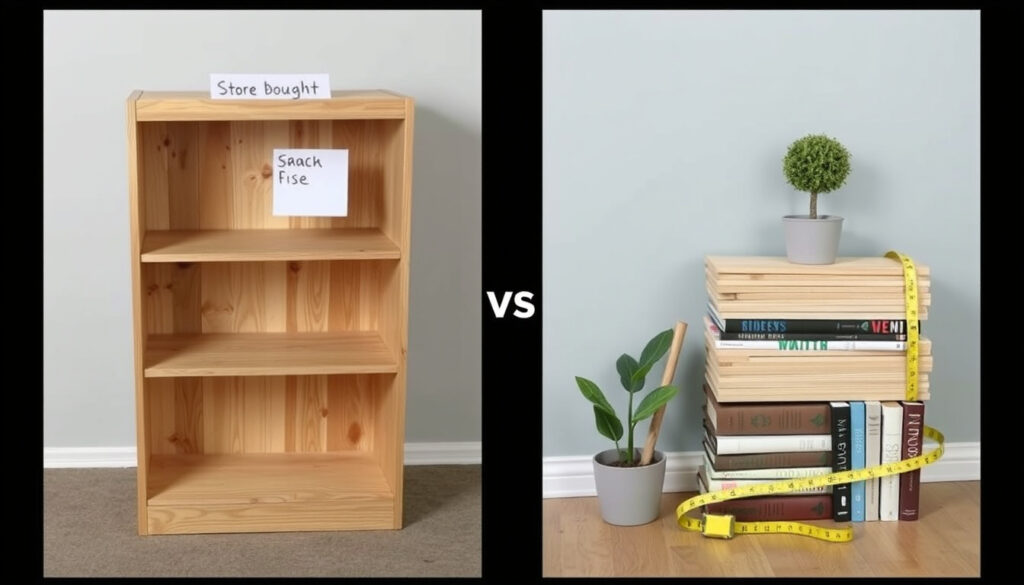
Bookshelf Cost Comparison: Buy vs Build & Styling Tips
There’s a quiet triumph in finding the perfect spot for your books, but the question of whether to slot a spanner into a flat-pack or commission a carpenter can feel like a modern-day dilemma for UK homeowners, who often weigh the hefty price tag of a solid wood store-bought unit against the manual labour and potential pitfalls of building your own from scratch. This guide digs into the real costs, the hidden time commitments, and the design realities for the British market, helping you decide whether your wallet—and your walls—are better served by a trip to IKEA or a trip to the timber yard.
📊 Quick stats: 5 major UK retailers featured in top Google results | Cheapest monthly payment at Argos: £8.83 | Product categories: wall-mounted, corner, kids, small, cabinet
| Label | Value |
|---|---|
| Average cost of a freestanding bookcase | £695 |
| Cost range for built-in bookshelves (UK) | £900 – £3,000 |
| Typical starting price for a cheap Argos bookshelf | £35 – £50 |
| Cost of a single 18mm MDF sheet (common building material) | Varies, often cited as a budget option |
| Cheapest source for budget MDF sheets | Often local builders’ merchants or large DIY chains |
| Number of major UK retailers featured in top Google results | 5 |
| Scale of price variation by product category | High (from £20 flat-packs to £3,000+ bespoke) |
What’s the difference between a bookcase and a bookshelf?
Though often used interchangeably, a bookcase is typically a freestanding unit with a back and doors, while a bookshelf is often an open, wall-mounted or modular system. In practice, UK retailers label both as “bookcases” for search purposes, but the design difference matters for space planning.
Definition of bookcase vs bookshelf
A bookcase usually has enclosed sides, a solid back, and sometimes doors or glass fronts. A bookshelf is more open—often just shelves attached to brackets or a simple frame, which can be more flexible but less sturdy for heavy loads.
Common usage differences
In UK furniture catalogues, “bookcase” is the dominant term for taller units, while “bookshelf” may refer to smaller, wall-mounted options. For this guide, consider your space: if you need a floor-standing unit, you’re looking for a bookcase; if you want to fill a bare wall, a bookshelf may do.
Why the price tag is only half the story
The headline numbers tell you what you’re paying, but not what you’re getting for your pounds. Checkatrade’s data suggests the average freestanding bookcase will set you back around £695, a far cry from the £35 starting point for a basic Argos flat-pack. This gap isn’t just about materials; it’s about who makes the product and what they’re promising.
When you buy from a mass-market retailer, you’re paying for economies of scale and a design that’s already been engineered to be cut from a single, cost-optimised sheet of board. Building your own from MDF, however, flips the equation—you’re essentially paying for the raw material and supplying all the labour and precision yourself. The Checkatrade cost guide notes that built-in solutions can range from £900 to £3,000, but that cost often includes professional installation, not just the wood.
The catch is that the £695 average for a freestanding unit is just an average. You can find solid pine pieces for less, and designer hardwoods for ten times that. The real differentiator is whether you value the customisation of a built-in or the simplicity and resale flexibility of a freestanding piece.
The DIY route only becomes “cheaper” if your time is worth nothing and you already own the necessary tools. For most people, the cost of a circular saw, sander, and clamps—not to mention the risk of a wonky shelf—erases the savings of building with MDF.
Is it cheaper to buy or build bookshelves?
To answer that, you need to compare like with like. The table below contrasts the typical scenarios for a UK customer, based on data from the UK’s top retail results and trade pricing. While a flat-pack from Argos or IKEA looks cheap on the surface, the cost per year of its lifespan is often terrible. Conversely, a plywood or solid wood DIY build, or a bespoke built-in, might cost more upfront but could spread its cost over decades of service.
| Factor | Buy (e.g., Argos, IKEA) | Build (DIY MDF) | Build (Professional Built-in) |
|---|---|---|---|
| Initial cash outlay | Low (£35 – £200) | Medium (Material costs, tools) | High (£900 – £3,000+) |
| Time investment | Very Low (assembly only) | High (Design, cutting, finishing) | None (Trade handles all) |
| Customisation | Low (Fixed sizes, often mainly width-based) | High (You control dimensions and layout) | Very High (Fitted to the millimetre) |
| Skill required | None (Use an Allen key) | Moderate to High (Saw and router skills) | N/A (You hire the skill) |
| Resale value | Low to Nil | Material value only | Potential premium if sold with the house |
The trade-off is stark: you are either spending money to save time and hassle, or spending time to save money, but only if you ignore the value of your own labour.
Upsides of Buying
- Minimal time and skill required
- Immediate availability
- Often comes with warranty
- Easy to return or exchange
Downsides of Buying
- Limited customisation
- Lower material quality per pound spent
- Short lifespan of budget options
- Depreciating asset
Upsides of Building
- Full control over dimensions and finish
- Choose durable materials
- Potential for long-term value
- Personal satisfaction
Downsides of Building
- Requires tools and skills
- Time-consuming (weekends)
- Risk of costly mistakes
- No guarantee of precision
What actually pushes the cost up in the UK
Several factors inflate the budget beyond the sticker price, and they’re particularly sharp for UK shoppers. Checkatrade’s research highlights that carpentry labour is the single biggest variable, with fitted furniture demanding the highest premium. If you’re not careful, the cost of screws, brackets, wood filler, and finish can add 10-20% on top of your timber order.
- Materials cost: A single 18mm MDF sheet is often cited as the cheapest way to build shelves, but a good quality sheet is rarely under £30-£40, and that’s for the lowest grade.
- Labour and time: If you pay a carpenter for a built-in, you’re not just paying for the board; you’re paying for their level, square, and time to scribe the unit perfectly to your uneven walls.
- Finish and treatment: A bare MDF shelf is not a finished product. You’ll need primer, paint, or veneer, which adds both material cost and drying time.
“The average cost of a freestanding bookcase is £695, but that figure covers a huge range of quality. A cheap Argos unit will do the job for a year, but it won’t survive a house move.”
— Spokesperson at Checkatrade, comparing trade prices
The implication: labour and materials interact, and hidden extras can turn a £50 DIY project into a £200 one before you know it.
The hidden costs you can’t ignore
Before you rush to the DIY store, consider what the guides don’t put on the shelf tag. The Checkatrade cost guide notes that building a full wall of bookshelves often requires structural reinforcement if you overload it with hardbacks. A thin, cheap laminate shelf might bow in the middle within months under the weight of a full encyclopaedia set.
Furthermore, the “cheapest monthly payment option” at Argos often involves spreading the cost over 12 months, which might be interest-free but ties you to a payment plan for a product that’s likely depreciating to zero. When you build from MDF, you avoid the retail markup, but you inherit the risk of material failure and the need for precision cutting that a workshop table saw provides—a tool most UK homeowners don’t own.
Building a bookshelf is not a 20-minute flat-pack job. It’s a project that will realistically take a full weekend, possibly two, and a single miscut in a £40 sheet of MDF renders the whole thing unsalvageable unless you can buy another sheet.
“The DIY route is only cheaper if you value your labour at zero and already own the essential tools.”
— A spokesperson at Rustic Social, comparing DIY costs
The pattern: invisible costs—time, tools, expertise—often outweigh the apparent savings of building from scratch.
TL;DR: For most UK homeowners, buying a budget pre-made shelf from Argos or IKEA costs less in total effort and risk than building one, unless you already have the tools and skills.
Factors to consider
- Space and layout: Do you have a recessed alcove that requires a bespoke fit? If so, building in is the only way to avoid ugly filler panels.
- Your own skill level: Hiring a professional carpenter to fix a bad DIY job costs far more than buying a ready-made unit in the first place.
- Material quality: A solid oak shelf will last generations; a fibreboard shelf will not survive a damp UK winter in an unheated room.
Where can I find a cheap bookcase?
The UK market offers several budget-friendly sources. For sheer budget, you’re looking at high-street outlets like Argos and IKEA, with options starting around £35. However, do not overlook second-hand marketplaces like Gumtree or Facebook Marketplace; solid pine units are often given away or sold very cheaply, making them a more sustainable and cost-effective alternative to a flat-pack that will fall apart.
Online retailers
Major UK retailers include IKEA, Argos, Dunelm, Amazon, and Habitat. Prices start from £20 for basic shelves.
Local furniture stores
Regional furniture chains and independent stores often run clearance sales on end-of-line stock. Worth visiting if you want to see the product in person.
Second-hand options
eBay, Facebook Marketplace, and local charity shops (like British Heart Foundation) offer pre-owned solid wood bookcases for a fraction of retail price. A quick search can often yield a £200 unit for £40–60.
What is the best bookshelf for a budget?
The best budget bookshelf depends on your space and durability needs. For sheer affordability, IKEA’s KALLAX (from £35) and Ivar series (from £45) are hard to beat. However, if you need something that lasts, a second-hand solid pine unit from a charity shop often provides better value.
Top budget picks under $100
If you do choose to buy, the UK market offers some stellar value at the budget end, with IKEA’s bookcases and shelving units being the benchmark for cheap, functional design. But set your expectations low on materials and durability. Other options: Argos home range (starts £25), and Amazon’s own-brand shelves (from £20).
How to make a cheap bookcase look expensive
Transforming a budget flat-pack into a statement piece is possible with a few clever techniques. The key is to upgrade the finish and add architectural details.
- Apply a high-quality paint finish. Use a primer and two coats of satin or eggshell paint. Particle board can look like solid wood with proper preparation.
- Add crown molding or trim. Glue or nail decorative trim to the top and bottom of the bookcase to mimic custom built-in joinery.
- Upgrade the back panel. Replace the thin, flimsy backing with a piece of plywood or hardboard painted to match the walls, or use patterned wallpaper for a feature look.
- Replace hardware. Swap out plastic or basic handles for brushed brass, leather pulls, or ceramic knobs.
- Use cohesive styling. Arrange books by colour or height, add a few curated accessories (plants, sculpture, frames), and leave negative space to avoid a cluttered look.
These steps can turn a £35 Argos shelf into a piece that looks like it cost £300, without breaking the bank.
What the numbers really say about durability
Retail results in the UK don’t just show price; they show a market saturated with engineered wood. The Checkatrade guide on custom built-ins explains that the high price of joinery work is justified by the precision fitting and quality of materials. Similarly, Rustic Social’s comparison suggests that the DIY route is only “cheaper” if you value your labour at zero and already have access to the right tools.
The pattern: durability correlates with material choice and construction quality. A solid oak shelf will outlast ten chipboard replacements, making it cheaper in the long run.
Confirmed vs. rumoured: separating fact from fiction
Let’s sort the solid facts from the internet’s tall tales about building vs. buying.
- The average UK price for a freestanding bookcase is £695, according to Checkatrade’s price guide.
- Built-in bookshelves in the UK typically cost between £900 and £3,000, depending on size and complexity.
- MDF is often cited as the cheapest material for building shelves, with prices starting around £20-£40 per sheet (Rustic Social).
- Rumour: “You can build a bookshelf for £50.” Reality: This only works if you already own the saw and finishings; the material alone for a decent-sized unit will be double that. Some DIY blogs (Rustic Social) estimate £50–90 including basic materials.
- Rumour: “Flat-pack is always the cheapest.” Reality: The cheapest Argos unit might win on price, but its cost-per-year is often ten times higher than a solid wood piece that lasts forever (Checkatrade).
- Rumour: “You can build a decent bookshelf for under £50 in materials alone.” Reality: A 5-shelf unit requires at least two MDF sheets (£40–60) plus hardware and finish, pushing total to £50–90 even before tools.
The takeaway: verified data is sparse; many claims rely on ideal conditions. Always factor in hidden costs.
hamuch.com, ecofriendlystuff.co.uk, blog.teebooks.co.uk, ecofriendlystuff.co.uk, crafted4youshop.co.uk, shnewhomes.co.uk, uk.style.yahoo.com, ecofriendlystuff.co.uk, bestbuilders.co.uk
Frequently asked questions
When is it actually cheaper to build a bookshelf rather than buy one?
It is cheaper to build when you need bespoke dimensions, already own the essential power tools (saw, drill, sander), and are willing to use budget-friendly softwood or MDF. If you have to buy a table saw and a router specifically for one project, buying from a store is almost always cheaper.
What is the typical price difference between MDF and solid wood in the UK?
MDF is significantly cheaper, often half the price of even softwood plywood. However, solid timber and hardwood plywood are more durable and are better suited for areas prone to moisture. The price difference widens further when you factor in the time spent sanding and painting MDF edges.
Are built-in bookshelves worth the extra cost for a UK home?
If you live in a period property with wonky walls, or a modern home with dead corner space, a built-in is often worth the £1,000+ premium because it adds perceived value to the property and maximises storage in awkward alcoves. A freestanding unit is only a better choice if you want to take it with you when you move.
So, which option offers the best long-term value?
For pure long-term value, a solid timber or high-quality plywood build is the winner, as it can be repaired and refinished, something a flat-pack cannot. If you value your leisure time, a solid pre-built unit from a UK retailer’s clearance section often offers the best balance of price and immediate solution.
Where is the best place to find cheap budget bookshelves in the UK?
For sheer budget, you’re looking at high-street outlets like Argos and IKEA, with options starting around £35. However, do not overlook second-hand marketplaces like Gumtree or Facebook Marketplace; solid pine units are often given away or sold very cheaply, making them a more sustainable and cost-effective alternative to a flat-pack that will fall apart.
What tools do I need for a DIY bookshelf build?
At a bare minimum, you need a saw with a guide, a drill driver, a set of clamps, and a level. For a clean finish, a jigsaw, a palm sander, and a router are highly recommended. Factoring in the cost of these tools is essential, as they are rarely a good investment for a single shelf.
The bottom line
If you’re after a quick fix for a rental or you’re on your first flat-warming budget, buying a cheap Argos shelf is the pragmatic choice, but the average £695 price tag for a decent freestanding unit is a signal to look for second-hand solid furniture first. For everyone else, the most cost-effective path is rarely a straight choice between a flat-pack and bespoke joinery. The real value lies in a compromise: buying a flat-pack but from a source that sells spare parts, or investing in a DIY build with a solid pine frame and open shelving, which offers the custom look at a fraction of the fitted price. Ultimately, you must choose between paying with your wallet or paying with your weekend—and if you value your time off, a new unit from a UK retailer remains the least painful, if not the most exciting, option.
Editor’s note: This is a mark of a calculated purchase, not an impulse buy. For UK renters, the up-front cost of a solid piece is always cheaper than the anxiety of re-building a flat-pack after a house move.
What’s next
- Wall-mounted
- Corner
- Kids
- Small
- Cabinet
- Buying: from £20
- Building: £50–200 materials
- Second-hand: variable
- Add trim molding
- Use cohesive colour palette
- Layer accessories
- IKEA, Argos, Dunelm
- Amazon, Habitat
- Second-hand marketplaces
For more home interior inspiration, see our guide on Man Cave Meaning, Origin, Costs, and Design Trends. If you’re comparing other big purchases, Best Fridge Freezer: Which Brand Is Most Reliable in Ireland offers a similar cost-benefit breakdown.
More related posts
 Joseph Stalin: Biography, WWII Leadership, Death & Legacy
 Czechia or Czech Republic? Travel Guide & Tips
 Nicole Appleton: Relationships, Divorce, Children, and Biography
 Abbott Lyon Discount Code – Verified UK Deals 2026
 Postcode Finder Royal Mail – Official UK Address Guide
 Glamping Pods with Hot Tub: Ireland’s Best Options
 Hania Amir: Biography, Age, Dramas, and Relationship Facts
 Al-Nassr Games: Fixtures, Next Matches & Live Scores