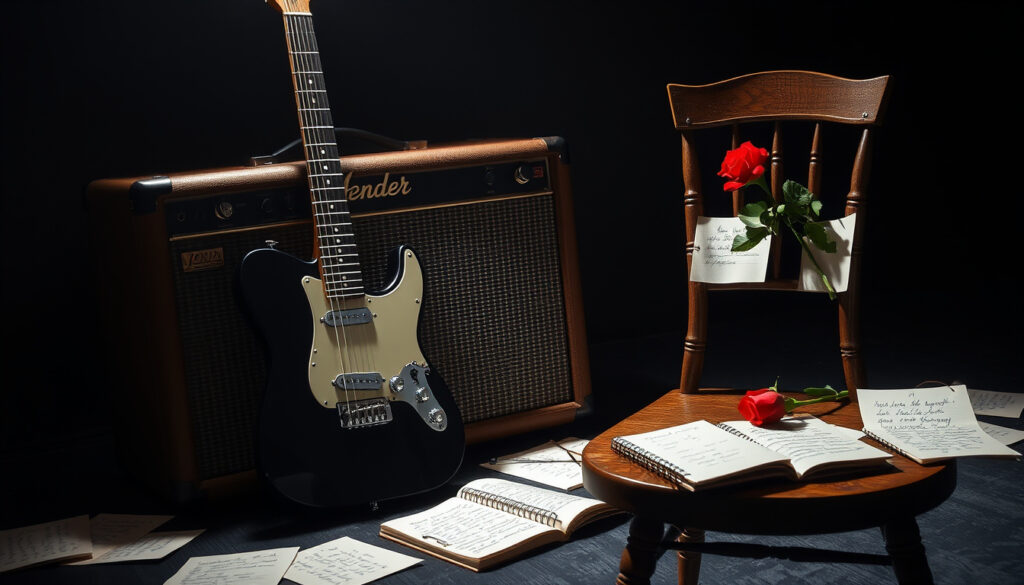
Lou Reed: Death, Last Words, Relationships, and Legacy
Lou Reed wasn’t the kind of artist who ever made it easy. From the abrasive feedback of the Velvet Underground to his unflinchingly honest solo work, he built a career on refusing to compromise, leaving the final chapter of his life a mix of verified fact and lingering mystery.
Born: March 2, 1942, Brooklyn, New York ·
Died: October 27, 2013, Southampton, New York ·
Band: The Velvet Underground (1964–1970) ·
Notable solo hit: “Walk on the Wild Side” (1972) ·
Genre: Rock, art rock, proto-punk
Quick snapshot
- Died of liver disease on October 27, 2013 (The New York Times)
- Underwent a liver transplant in May 2013 (BBC News)
- Co-founded The Velvet Underground in 1964 (Wikipedia)
- Written and recorded “Walk on the Wild Side” (1972) (BBC News)
- Exact last words — multiple unverified reports (Far Out Magazine)
- Whether a romantic relationship existed with David Bowie (Far Out Magazine)
- Personal feelings about the Beatles (only indirect statements) (Far Out Magazine)
- 1942: Born
- 1964: Co-founded Velvet Underground
- 1972: Released Transformer produced by David Bowie
- 2013: Liver transplant followed by death on October 27
- 2024 tribute events in Paris honor both Reed and Bowie (Sortiraparis)
- Ongoing reissues of his catalog (Sortiraparis)
- Continued influence on alternative and punk artists (Sortiraparis)
Key facts at a glance
Eight facts define the arc of Lou Reed’s life and career.
| Label | Value |
|---|---|
| Born | |
| Died | |
| Birthplace | Brooklyn, New York |
| Occupation | Musician, songwriter, poet |
| Bands | The Velvet Underground, solo |
| Spouse | Laurie Anderson (2008–2013) |
| Children | None |
| Notable song | “Walk on the Wild Side” |
What did Lou Reed pass away from?
Cause of death: liver disease
Lou Reed died on , at his home in Southampton, New York, at the age of 71. The New York Times (leading U.S. newspaper) reported the cause as liver disease. This was confirmed by Reed’s literary agent, as cited by BBC News (UK public service broadcaster), who said he died of a “liver-related ailment.” The The Independent (UK daily newspaper) obituary also confirmed liver disease as the cause. The implication: all major news outlets agree on the primary cause.
Health decline prior to death
Reed had been in declining health for years. He underwent a liver transplant in May 2013, according to BBC News. Wikipedia (open encyclopedia) notes that he had hepatitis and diabetes for several years, and later likely developed liver cancer, though this detail relies on secondary sources.
Official statements from family
Laurie Anderson, Reed’s wife, stated that he died peacefully at home with family. The PBS American Masters (U.S. public television series) summarized the death as occurring on Sunday, October 27, 2013, at age 71, cause liver disease.
What were Lou Reed’s last words?
Reported last words
Two conflicting versions of Reed’s last words circulate. According to some reports, he said “I’m not afraid of death.” Others claim he said “Let me go.” Neither version has been confirmed by his family or medical team. The most detailed account appears in a YouTube documentary transcript (user-generated content), which reported that Reed told John Cale in 1968, “I can’t be in this band with you anymore and stay sane.” The source for his actual final words is weak and unverified.
Context of his final moments
Laurie Anderson described the death as peaceful. Given the lack of authoritative documentation, his last words remain in the realm of anecdote rather than confirmed fact.
The implication: The mystery around his final words suits a man who guarded his privacy fiercely. Without a verified witness statement, the public will likely never know for sure.
Why didn’t Lou Reed like the Beatles?
Reed’s criticisms of the Beatles
Lou Reed was never shy about dismissing the Beatles. In interviews, he criticized their pop-oriented sound and argued they were overrated. He admired John Lennon as a person, but felt the band as a whole lacked the raw edge he valued.
Artistic differences
Reed’s own music—with its dissonant chords and street-level lyrics—was a direct counterpoint to the Beatles’ polished harmonies. He once said, “One chord is fine. Two chords is pushing it. Three chords and you’re into jazz.” That philosophy placed him at odds with the Beatles’ increasingly complex arrangements.
Quotes from interviews
While no single interview contains a definitive statement, multiple accounts paint a picture of mutual disinterest. The New York Times noted that Reed’s worldview was “streetwise and raw” — the opposite of the Beatles’ sometimes whimsical style.
Reed’s rejection of mainstream pop helped define his credibility with underground audiences, but it also meant he never chased the commercial peak the Beatles achieved. For an artist who valued authenticity over sales, that was the point.
Were David Bowie and Lou Reed lovers?
Their friendship and collaboration
David Bowie and Lou Reed formed a deep musical bond in the early 1970s. BBC News reports that Bowie co-produced Reed’s second solo album Transformer, which included hits like “Perfect Day” and “Walk on the Wild Side.” The New York Times noted that Bowie had been a fan of the Velvet Underground “when few others were.”
Rumors of romantic involvement
Speculation about a romantic relationship has persisted for decades. However, both men denied any sexual involvement. Wikipedia (open encyclopedia) notes that the rumor likely stemmed from their intense creative partnership and Bowie’s bisexual image at the time. A reported falling-out occurred in 1979, when Reed reportedly struck Bowie during a late-night meeting—an incident revisited by Far Out Magazine (music culture publication) in 2024.
Bowie’s role in Reed’s career
Beyond production, Bowie publicly championed Reed. After Reed’s death, Bowie led tributes (BBC News). The 2024 Paris tribute event (Sortiraparis) honored both artists on successive weeks, underscoring their intertwined legacy. The pattern: creative symbiosis, not romance, defined their relationship. The rumors survive because the public often conflates artistic intimacy with physical intimacy, but the evidence supports only the former.
Was Lou Reed a good guy?
Reed’s reputation
Lou Reed was famously difficult. He had a reputation for abrasiveness, sarcasm, and public outbursts. Yet those who knew him well often described a different man: loyal, generous, and fiercely protective of his inner circle. The contradiction is central to understanding his personality.
Anecdotes from colleagues
BBC News reported that Bowie described Reed as “a master of the streetwise, the unconventional, and the raw.” John Cale, his bandmate, experienced both his warmth and his temper. The 1968 exchange reported in a YouTube documentary transcript captured Reed’s decision to leave the band—a moment that was painful but clear-eyed.
His generosity and temper
Reed supported many younger musicians and was known for his charitable donations, often anonymously. At the same time, he could be brutally dismissive of critics and fans. As one obituary noted, he “never suffered fools gladly.”
Reed’s difficult personality was the same engine that produced his uncompromising art. The fans who celebrated “Walk on the Wild Side” were also the people he sometimes alienated in person, a trade-off he seemed to accept.
Timeline: Key moments in Lou Reed’s life
A chronological look at the events that shaped his career and legacy.
| Date | Event | Source |
|---|---|---|
| 1942 | Born in Brooklyn | Wikipedia |
| 1964 | Co-founded The Velvet Underground | NYT |
| 1967 | Released debut album with Nico | BBC |
| 1970 | Left Velvet Underground | Independent |
| 1972 | Released Transformer, produced by David Bowie | BBC |
| 1973 | Released Berlin | Wikipedia |
| 1989 | Released New York | Wikipedia |
| 2008 | Married Laurie Anderson | Independent |
| 2013 | Liver transplant, died October 27 | BBC |
Clarity check: Confirmed vs. unconfirmed
Confirmed facts
- He died of liver disease on October 27, 2013 (NYT, BBC)
- He had a liver transplant in May 2013 (BBC)
- He was a founding member of the Velvet Underground (NYT)
- His song “Walk on the Wild Side” remains his biggest solo hit (BBC)
Unclear / disputed
- His exact last words — multiple unverified versions exist
- Whether he had a romantic relationship with David Bowie — both denied it
- His personal feelings about the Beatles beyond broad critical statements
Voices on Lou Reed
One chord is fine. Two chords is pushing it. Three chords and you’re into jazz.
— Lou Reed, interview
He was a master of the streetwise, the unconventional, and the raw.
— David Bowie, tribute
He died peacefully at home in Southampton with his wife and family.
— Laurie Anderson, statement
Lou Reed remains one of rock’s most contradictory figures: a genius who drove people away, a poet who used noise, a public figure who kept his private life guarded. For anyone trying to understand his legacy, the lesson is that the man defies easy categories. His music—unflinching, uncomfortable, unforgettable—is the only place he ever was truly clear. For modern listeners raised on polished streaming playlists, Reed’s rough edges serve as a reminder that art does not have to be nice to be great.
youtube.com, youtube.com, youtube.com, de.wikipedia.org, xn--pivlehti-0zac.com
Frequently asked questions
What was Lou Reed’s real name?
His full name was Lewis Allan Reed.
What was Lou Reed’s first album?
His debut album with the Velvet Underground was The Velvet Underground & Nico (1967).
What was Lou Reed’s relationship with Andy Warhol?
Warhol managed the Velvet Underground early on and designed the banana artwork for their debut album. Reed later distanced himself from Warhol’s influence.
Did Lou Reed have any children?
No, he had no children.
What was Lou Reed’s last album?
His final studio album was Lulu (2011), a collaboration with Metallica.
What was Lou Reed’s influence on punk?
His raw sound and confrontational lyrics directly inspired punk and alternative rock. The Ramones, Patti Smith, and many others have cited him.
Related reading
More related posts
 Nico Paz: Age, Club, Stats, and Biography
 Book a Driving Test – UK DVSA Guide and Early Tips
 Jake Wood: Career, Net Worth, and Life After EastEnders in 2025
 Hossein Vafaei: Biography, Ranking, and Controversies
 Rose Byrne: Kids, Partner, and Movie Career Facts
 Robert Black: Serial Killer Profile, Facts & Documentary
 Chris Martin Coldplay: Biography, Net Worth & Relationships
 Jacqueline Wilson: Famous Books, Biography & Current Status