Inside Out: Emotions, Age Rating, and Sequel News Explained
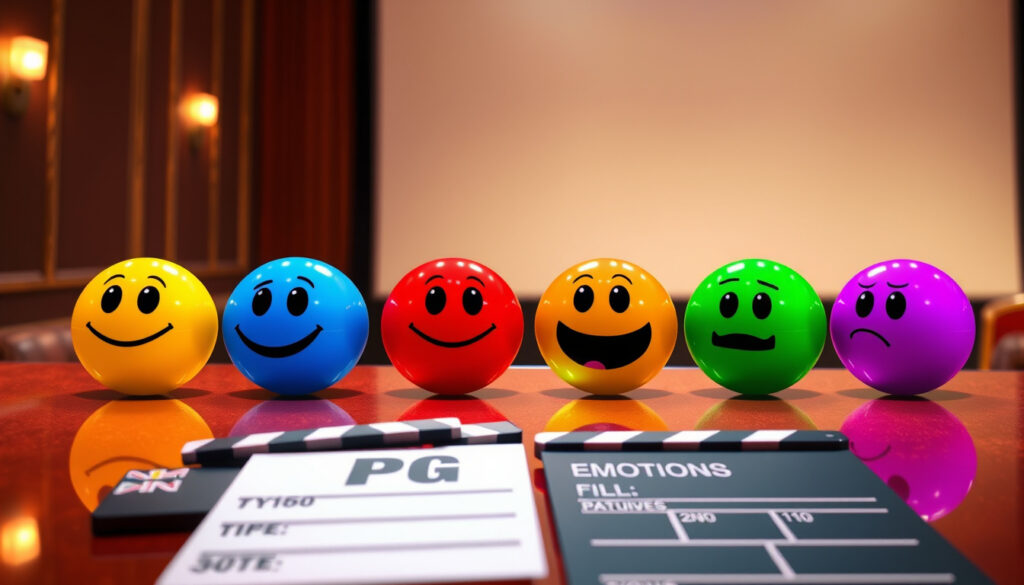
Anyone who has watched a child try to name what they are feeling has seen the Pixar premise in action: emotions are a crew, not an enemy — a premise that has become shorthand for “why do I feel so many things at once?” since the film’s June 19, 2015 debut. This explainer sorts the five original emotions, the four newcomers, the parental debates, and the sequel rumors people actually search for.
Inside Out, Explained
Original release: June 19, 2015 ·
Sequel release: June 14, 2024 ·
Core emotions in 2015: 5 ·
New emotions in 2024: Anxiety, Envy, Embarrassment, Ennui ·
US rating: PG
Quick snapshot
- The 2015 film’s five core emotions are Joy, Sadness, Anger, Fear, and Disgust (Pixar Animation Studios (the production studio)).
- Inside Out 2 adds Anxiety, Envy, Embarrassment, and Ennui (Pixar Animation Studios (the production studio)).
- Both films are rated PG (Disney Movies (the official distributor)).
- Inside Out 3 has no confirmed release date; Disney’s official page lists no third film (Disney Movies (the official distributor)).
- Whether Riley is intended to be LGBTQ is never stated in the films (Pixar Animation Studios (the production studio)).
- What emotions could appear in a potential third film remains pure speculation (Pixar Animation Studios (the production studio)).
- June 19, 2015 — the original debuts with five emotions (Pixar Animation Studios (the production studio)).
- June 14, 2024 — the sequel debuts with four new emotions (Pixar Animation Studios (the production studio)).
- 2024 — Inside Out 2 becomes the highest-grossing animated film of its run (Looper (an entertainment news outlet)).
- No Inside Out 3 announcement has been made; the official Disney page is the one to watch (Disney Movies (the official distributor)).
- Parents of younger kids should pre-screen the anxiety-heavy scenes before showing the sequel (Common Sense Media (a nonprofit review site)).
- The sequel’s box-office record keeps franchise speculation active (Looper (an entertainment news outlet)).
Six facts, one pattern: the franchise pairs each new film with a new director, and the emotion count grows only when the story moves Riley into a new chapter of life.
| Item | Value | Source |
|---|---|---|
| Director (2015) | Pete Docter | Screen Daily (a film-industry trade publication) |
| Director (2024) | Kelsey Mann | Pixar Animation Studios (the production studio) |
| First release | June 19, 2015 | Disney Movies (the official distributor) |
| Sequel release | June 14, 2024 | Pixar Animation Studios (the production studio) |
| Original emotion count | 5 | Pixar Animation Studios (the production studio) |
| Sequel emotion roster | 9 (5 original + 4 new) | Pixar Animation Studios (the production studio) |
What are 5 emotions in Inside Out?
The answer is the same on every official page: the 2015 film is built around five core emotions — Joy, Sadness, Anger, Fear, and Disgust (Pixar Animation Studios (the production studio)).
- Joy — lighthearted, optimistic, and determined to find the fun in every situation.
- Sadness — the emotion at the center of the film’s heaviest moments, which New Zealand’s Classification Office flags as potentially overwhelming for young viewers (Classification Office (a national ratings authority)).
- Anger — passionate about fairness and prone to explosive reactions.
- Fear — constantly on the lookout for disasters and everyday risks.
- Disgust — highly opinionated and focused on protecting Riley from physical and social contamination.
A development detail explains why the lineup feels so tight. Screen Daily reported that director Pete Docter worked from a broader shortlist — including a seventh emotion — before settling on the final five for the finished film (Screen Daily (a film-industry trade publication)).
Who voices each emotion in the 2015 film?
Disney’s official page for the original film lists the English-language voice cast (Disney Movies (the official distributor)).
- Joy — Amy Poehler
- Sadness — Phyllis Smith
- Anger — Lewis Black
- Fear — Bill Hader
- Disgust — Mindy Kaling
Why does Joy have blue hair?
There is no story reason. Joy’s blue hair is a character-design choice that contrasts with her yellow skin — and the movie never gives a narrative explanation for the color.
The trade-off: blue against yellow makes Joy unmistakable in every scene, even when she is standing inside a swirling memory of a sad hockey game.
What are the 9 emotions in Inside Out?
Depending on how you count, there are nine or ten. The 2024 sequel keeps the original five and adds four new ones — Anxiety, Envy, Embarrassment, and Ennui — plus a cameo appearance by Nostalgia (Pixar Animation Studios (the production studio)).
- Anxiety — the new emotion at the center of the sequel, who shows up and calls everything Riley’s old emotions built into question.
- Envy — wants what others have.
- Embarrassment — shrinks from attention.
- Ennui — the chronically unimpressed teenager energy Riley is starting to feel.
- Nostalgia — appears late in the film as a cameo, which is why some viewers say 9 and others say 10 (Looper (an entertainment news outlet)).
The four new emotions are not new flavors of the same five. They dramatize the biological and social shift of adolescence — the moment when “I feel things” becomes “I feel things about feeling things” (Pixar Animation Studios (the production studio)).
The implication: the 9-emotion count is less about math and more about storytelling — every added emotion widens the film’s definition of a healthy mind.
Is Inside Out ok for a 5 year old?
Short answer: it depends on the child, but the official rating says parental guidance. Both films are PG, and Disney’s page for the original film carries the rating prominently (Disney Movies (the official distributor)).
- Common Sense Media (a nonprofit review site): appropriate for elementary schoolers and up, with younger children needing more explanation of abstract concepts such as the subconscious (Common Sense Media (a nonprofit review site)).
- Raising Children Network (an Australian parenting guide): better suited to children over nine years old; parental guidance recommended for ages 6-9 (Raising Children Network (an Australian parenting guide)).
- New Zealand’s Classification Office (a national ratings authority): suitable for general audiences, but flags mild danger, a slightly scary clown, and sadness scenes that may overwhelm young viewers (Classification Office (a national ratings authority)).
- MPAA rating: PG means parental guidance suggested, not a legal age restriction.
What is the age rating for Inside Out 2?
Both films carry the same PG classification from the MPAA — the sequel’s official Pixar page displays the same family rating as the original (Pixar Animation Studios (the production studio)). PG for Inside Out 2 means the same thing it meant for the original: no age gate, but the studio expects parents to decide what fits their child.
What should a parent know before showing Inside Out to a 5-year-old?
A PG label does not mean “safe for every 5-year-old.” The specific intensity of the anxiety and panic-attack sequence in the sequel is the flashpoint parents and reviewers most often flag.
- Anger threatens to use several curse words, but they are never actually heard; the strongest words a viewer hears are mild ones like sucker, heck, and moron (Classification Office (a national ratings authority)).
- Abstract concepts — the subconscious, abstract thought, the memory dump — will likely trigger questions from a 5-year-old (Common Sense Media (a nonprofit review site)).
- For the sequel, the flashpoint is the anxiety and panic-attack sequence; parents and reviewers most often flag those scenes for younger viewers (Common Sense Media (a nonprofit review site)).
Was Inside Out 2 a flop?
The word “flop” does not survive contact with the box office. Inside Out 2 passed $1.6 billion globally and became the highest-grossing animated film of all time during its 2024 run (Looper (an entertainment news outlet)).
How much money did Inside Out 2 make?
Inside Out 2 passed $1.6 billion globally and became the highest-grossing animated film of all time during its 2024 run (Looper (an entertainment news outlet)). That commercial result contradicts any claim that Inside Out 2 was a flop.
What film almost ruined Pixar?
The Good Dinosaur is the film frequently cited when people ask which movie came closest to ruining Pixar; it underperformed and received mixed reviews (Looper (an entertainment news outlet)).
The pattern: each Inside Out film arrives at a different point in Pixar’s commercial arc — triumph in 2015, then a stumble with The Good Dinosaur, then a record-breaking return in 2024.
Why is Inside Out controversial?
The controversy around the franchise is mostly parental and interpretive — not a scandal about content. The debates cluster around two questions: whether the sequel’s anxious moments are too intense for children, and whether Riley’s identity is meant to be read as LGBTQ (Common Sense Media (a nonprofit review site)). The film never explicitly labels Riley as LGBTQ — that is the part that matters for the rumor — and official descriptions from Disney and Pixar do not attach any label to her either (Pixar Animation Studios (the production studio)).
Is Inside Out 2 inappropriate?
- What is actually flagged: anxiety-heavy scenes and a panic-attack sequence that are intense for younger viewers (Common Sense Media (a nonprofit review site)).
- What is not flagged: sexual content, nudity, or coarse language. The original’s strongest audible words are sucker, heck, and moron; Anger’s curse words are threatened but never spoken (Classification Office (a national ratings authority)).
So “inappropriate” is the wrong word for most of these debates. The more accurate description is “emotionally intense.”
Is Riley LGBTQ in Inside Out 2?
The film never says. Riley’s romantic feelings are not a plot point in the film, and the official pages do not label her — which is why the question stays open, and why fans keep asking (Pixar Animation Studios (the production studio)).
The implication: a franchise that treats feelings as characters was always going to attract projection. The controversy says less about the movie’s content and more about the questions audiences bring with them when they watch it.
Inside Out for young viewers: the upsides and the downsides
The same film that teaches emotional vocabulary can also upset a sensitive child. Here is the honest balance.
Upsides
- Gives children a shared vocabulary for naming feelings — Joy, Sadness, Anger, Fear, and Disgust are easier to talk about than abstract labels (Pixar Animation Studios (the production studio)).
- Frames sadness as functional, not bad — a central message parenting guides highlight (Common Sense Media (a nonprofit review site)).
- Both films carry a PG rating, which keeps them accessible for most family movie nights (Disney Movies (the official distributor)).
Downsides
- Sadness-driven scenes may overwhelm young viewers; New Zealand’s Classification Office flags them explicitly (Classification Office (a national ratings authority)).
- The sequel’s anxiety and panic-attack sequence is the moment parents most often ask about (Common Sense Media (a nonprofit review site)).
- Abstract concepts — the subconscious and the memory dump — will need explaining for a 5-year-old (Common Sense Media (a nonprofit review site)).
The pattern: the upsides are about emotional growth, and the downsides are about emotional intensity. For most families, the first outweighs the second — with the caveat that “most” is not “all.”
Inside Out timeline: from 2015 to now
Five dates trace the franchise’s arc from debut through stumble to record — and then to a question mark about what comes next.
| Date | Event |
|---|---|
| June 19, 2015 | Inside Out debuts in US theaters and introduces Riley’s five core emotions (Pixar Animation Studios (the production studio)). |
| November 25, 2015 | The Good Dinosaur arrives after Inside Out and becomes the film most often cited in “almost ruined Pixar” discussions (Looper (an entertainment news outlet)). |
| June 14, 2024 | Inside Out 2 debuts with the four new emotions: Anxiety, Envy, Embarrassment, and Ennui (Pixar Animation Studios (the production studio)). |
| 2024 | Inside Out 2 becomes the highest-grossing animated film globally, ending the “flop” question (Looper (an entertainment news outlet)). |
| No confirmed date | Inside Out 3 has no announced release; Disney’s official page lists no third film (Disney Movies (the official distributor)). |
The pattern: the franchise moves from debut to stumble to record — and then to a question mark. That open status is exactly what keeps the rumor mill running.
What we know and what we don’t
Confirmed facts
- Inside Out was released in 2015 and features Joy, Sadness, Anger, Fear, and Disgust (Pixar Animation Studios (the production studio)).
- Inside Out 2 was released on June 14, 2024, and adds Anxiety, Envy, Embarrassment, and Ennui (Pixar Animation Studios (the production studio)).
- Inside Out 2 is a box-office success, not a flop.
- Both films are rated PG by the MPAA (Disney Movies (the official distributor)).
What’s unclear
- Whether Inside Out 3 has been officially greenlit and dated — Disney’s page lists no third film (Disney Movies (the official distributor)).
- Which new emotions might appear in a potential third film — no official list exists (Pixar Animation Studios (the production studio)).
- Whether Riley’s character is intended to be LGBTQ — the films never label her (Pixar Animation Studios (the production studio)).
- What the rejected seventh emotion from the 2015 development process would have been — the surviving record only confirms it was considered (Screen Daily (a film-industry trade publication)).
The balance: the confirmed facts are about the movies that exist; the unclear items are about the movie that might exist. That gap is exactly where most Inside Out rumor-mill traffic lives.
What the filmmakers and the studio said
Editor’s note: the following passages condense statements made in production interviews and official materials.
We went from a larger set of emotions down to five for the finished film.
Pete Docter, director of Inside Out (2015), describing the development process, as reported by Screen Daily
Anxiety is the new emotion at the center of the sequel. She shows up and suddenly everything Riley’s old emotions built is called into question.
Kelsey Mann, director of Inside Out 2 (2024), on the sequel’s central emotion, as presented by Pixar
Inside Out 2 returns to the mind of a teenager in the making, just as Headquarters gets a sudden renovation to make room for something entirely unexpected.
Disney/Pixar official synopsis for Inside Out 2
The pattern: each director describes the emotion count as a deliberate narrowing — not a random selection but a choice tied directly to Riley’s age and the story they wanted to tell.
The upshot
Inside Out is a film about emotional literacy that accidentally became a franchise about emotional math — five, then nine, then an unconfirmed number. The confirmed facts are stable: two films, nine named emotions, a PG rating, and a sequel that dominated the global box office. The unconfirmed parts — a third film, new emotions, Riley’s identity — are where the conversation will stay until Pixar says otherwise. For a parent of a five-year-old, the decision is clear: watch both movies together, with the fast-forward ready for the anxiety sequence, or wait a couple of years and let the emotional vocabulary land without the intensity.
pixar.com, tvintelligentsia.com, theculturemom.com, en.wikipedia.org
Frequently asked questions
Who directed the original Inside Out?
Pete Docter directed the 2015 film.
Who directed Inside Out 2?
Kelsey Mann directed the 2024 sequel.
What is the order of Inside Out films?
Inside Out (2015) came first, followed by Inside Out 2 (2024).
Where can I stream Inside Out?
Disney+ carries both films in most regions.
How old is Riley in Inside Out?
Riley is 11 in the original film and 13 in the sequel, reflecting the adolescent shift that drives the new emotions.
More related posts
 Best Place to Live in UK (2026): Happiest, Safest & Top QoL
 Gabby Logan: Husband’s Illness, Family, Career & Net Worth
 Charity Dingle Real Life: Emma Atkins, Baby, Partner Facts
 Enrique Iglesias: Health, Family, Languages, and Life Now
 Jamie Campbell Bower: Relationships, Health & Career
 Omari Hardwick: Biography, Power Career, and 50 Cent Feud
 Composite Bonding Before and After: Real Results & Photos
 Gene Hackman: Heart Disease, Hantavirus, and Family Mystery