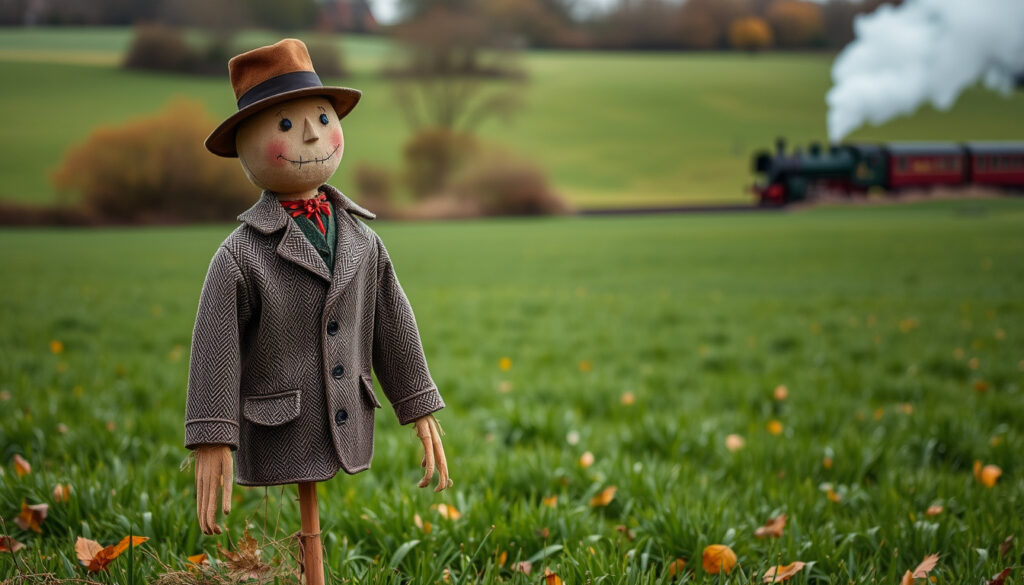
Worzel Gummidge: Quotes, Meaning, History & TV Series Guide
If you grew up in the UK in the late 1970s or early 1980s, there’s a good chance you knew a scarecrow named Worzel Gummidge – a tattered, turnip-headed optimist who became a children’s television icon. The character’s journey from a 1935 BBC radio sketch to a 2019 BBC revival is traced here, along with answers to the questions fans still ask today.
First appearance: 1935 (BBC Radio) ·
Original TV series: 1979–1981 (4 series) ·
Revived series: 2019–present (BBC One) ·
Creator: Barbara Euphan Todd ·
Original TV actor: Jon Pertwee ·
Modern TV actor: Mackenzie Crook
Quick snapshot
- First appearance on BBC Radio in 1935 (Wikipedia (encyclopedia reference))
- Original ITV series starring Jon Pertwee ran 1979–1981 (IMDb (film and TV database))
- BBC revival premiered December 26, 2019 (IMDb (series entry))
- Name derives from ‘wurzel’ meaning root or turnip (Wikipedia (etymology note))
- Exact etymology of the surname ‘Gummidge’
- Whether the 2019 revival will continue beyond its current two series
- Full list of all quotes from the original radio broadcasts
- 1935: First radio broadcast (Wikipedia (chronology))
- 1979–1981: ITV television series (Wikipedia (chronology))
- 2019: BBC revival launched (Wikipedia (chronology))
- 2021: Most recent new episode aired (Wikipedia (chronology))
- No official announcement of further series as of 2025
- Reruns available on streaming platforms
- Possible future specials if BBC renews interest
Key facts at a glance
Seven essential details capture the character’s identity across eight decades.
| Attribute | Value |
|---|---|
| Full name | Worzel Gummidge |
| Species | Scarecrow (magically animated) |
| First appearance | 10 December 1935 (BBC Radio) |
| Creator | Barbara Euphan Todd |
| Original TV actor | Jon Pertwee |
| Modern TV actor | Mackenzie Crook |
| Notable catchphrase | “I’ll be bound” |
The pattern: Every adaptation keeps the core scarecrow identity, but each era reimagines the character for its audience — from radio listener to ITV family viewer to BBC streaming audience.
Worzel Gummidge is not a single character frozen in time; he is a cultural template that gets refreshed every generation. The 2019 revival shifted from slapstick to gentle environmental comedy, proving the scarecrow can evolve without losing his roots.
What did Worzel Gummidge used to say?
Iconic catchphrases
- “I’ll be bound” – used after making a prediction or expressing certainty (Wikipedia (character quotes section))
- He often referred to himself in the third person, saying “Worzel knows” or “Worzel thinks”
- Another frequent line: “It’s a funny old world, isn’t it?”
Notable quotes from the original series
Jon Pertwee’s Worzel delivered lines with a distinctive rural accent and a knowing wink to the audience. According to Wikipedia (fan-compiled quote list), one of the most repeated is: “A scarecrow’s got to do what a scarecrow’s got to do.” This line captures his stubborn, principled nature.
Quotes from the 2019 revival
Mackenzie Crook’s version retained the catchphrases but added a gentler tone. In an interview with BBC Media Centre (broadcaster press office), Crook said Worzel’s philosophy is “to see the good in everything, even when things go wrong.” The character’s dialogue in the new series emphasizes friendship and environmental stewardship.
“To see the good in everything, even when things go wrong.”– Mackenzie Crook, on Worzel’s philosophy, as reported by BBC Media Centre
The implication: Catchphrases act as anchors across decades, allowing new audiences to connect with the same core personality.
What does Worzel Gummidge mean?
Etymology of ‘Worzel’ and ‘Gummidge’
The first name “Worzel” is a variant of “wurzel,” an English dialect word for a root vegetable, especially a turnip or mangelwurzel. This directly reflects the scarecrow’s appearance — a turnip-shaped head with straw hair. Wikipedia (etymology section) notes that Barbara Euphan Todd likely chose the name to evoke a rural, earthy character. The surname “Gummidge” is less clear; it may derive from a place name or an old English personal name. No definitive source exists.
Meaning of ‘Wurzel’ as a dialect word
In the West Country and other regions, “wurzel” has been used for centuries to mean “root.” The character’s full name thus literally means “Rooty Root” — a double reinforcement of his identity as a scarecrow rooted to the soil. This etymology was highlighted by Variety (entertainment industry publication) when announcing Crook’s adaptation.
How the name reflects the character
Worzel Gummidge is not just a scarecrow; he is a being who embodies the land. His name ties him to the farm, to nature, and to a tradition of English pastoral humour. The 2019 series leaned into this by making his connection to the environment a central theme.
Why this matters: The name is not arbitrary — it encodes the character’s very nature. Understanding its roots (pun intended) helps explain why a scarecrow named after a turnip has such enduring appeal across generations.
Did Worzel Gummidge marry Aunt Sally?
Relationship between Worzel and Aunt Sally
Aunt Sally is a fairground doll, a “she-doll” in the books, who serves as Worzel’s love interest. In the original stories by Barbara Euphan Todd, the two scarecrows eventually marry. But the television adaptations took a different path.
Marriage in the original books vs TV series
- Books (1936 onwards): Worzel and Aunt Sally marry, becoming a long-suffering couple (Wikipedia (plot summaries)).
- ITV series (1979–1981): They never marry. Instead, Aunt Sally is portrayed as an often exasperated companion rather than a wife. Una Stubbs played her as a “femme fatale” who keeps Worzel at arm’s length.
- BBC revival (2019–2021): The relationship is even more platonic. Aunt Sally (played by a different actress) appears as a wise friend, and the marriage plot is entirely absent.
Outcome in the 2019 revival
Mackenzie Crook’s version deliberately avoided the romance thread. In an interview with BBC Media Centre (press office), Crook explained he wanted the focus to be on Worzel’s relationship with nature and the children, not on a courtship. So the answer is: no, Worzel does not marry Aunt Sally in any television version — only in the original printed stories.
The trade-off: Book purists may miss the nuptials, but TV audiences got a more versatile Aunt Sally who could serve as a comic foil rather than a spouse. Each medium made a sensible choice for its format.
What is the origin of Worzel Gummidge?
Creation by Barbara Euphan Todd
Barbara Euphan Todd (1890–1976) was a British author who first introduced Worzel Gummidge in a radio play broadcast on BBC Radio (encyclopedia entry). She went on to write ten books about the character, starting with Worzel Gummidge (1936). Todd’s inspiration came from the traditional scarecrow folklore of the English countryside.
First appearance on BBC Radio in 1935
Worzel’s debut was on 10 December 1935, on the children’s programme The Children’s Hour. According to Wikipedia (timeline), the exact date is well-documented, though the original script is not publicly available. The radio play introduced the key elements: a scarecrow who could think, talk, and get into humorous scrapes.
Transition to television in 1979
Over forty years later, Southern Television adapted the stories for ITV. The series ran for four seasons (1979–1981) and starred Jon Pertwee, already famous for playing Doctor Who. IMDb (series news archive) confirms the production details. The show became a staple of British children’s programming and introduced Worzel to a mass audience.
What this means: Worzel Gummidge is a rare example of a character who successfully jumped from radio to page to television across four decades. His longevity owes less to a single format and more to Todd’s fundamentally playful, sympathetic creation.
Worzel is a scarecrow meant to frighten birds, yet he is one of the most lovable characters in British fiction. His creator’s gentle humour turned a farmyard stereotype into a mirror of human foibles.
Who played Worzel Gummidge in television adaptations?
Jon Pertwee (1979–1981)
Jon Pertwee brought physical comedy and a booming voice to the role. After his tenure as the Third Doctor on Doctor Who (1970–1974), Pertwee’s Worzel was mischievous, boastful, and full of self-importance. According to Wikipedia (cast section), he thoroughly enjoyed playing the scarecrow and even recorded a single as the character, “Worzel’s Song.”
Mackenzie Crook (2019–present)
Mackenzie Crook, best known for The Office and Detectorists, not only stars but also writes and directs the BBC revival. Variety (entertainment news outlet) reported in June 2019 that Crook would produce two one-hour specials. His Worzel is softer, more contemplative, and less manic than Pertwee’s, reflecting the gentler tone of modern family television.
Other actors in minor adaptations
There have been stage productions and audio dramas, but no other actors have played Worzel in a television format. The two actors — Pertwee and Crook — define the character for their respective eras.
The comparison: Pertwee’s Worzel was a schemer; Crook’s is a dreamer. Both work because each actor understood the core of the character: a scarecrow with a heart bigger than his straw-stuffed body.
Timeline: Worzel Gummidge through the decades
- 1935 – First radio broadcast on The Children’s Hour (BBC Radio)
- 1936 – First book Worzel Gummidge published by Barbara Euphan Todd
- 1979–1981 – ITV television series, 4 series, 31 episodes, starring Jon Pertwee
- 2019 – BBC One revival premieres 26 December, starring Mackenzie Crook
- 2020–2021 – Second series of the revival airs (Christmas specials)
Sources: Wikipedia (series timeline), BBC Media Centre (press releases), IMDb (revival episodes).
The pattern: Each major adaptation arrived roughly forty years after the previous one — 1935 to 1979 to 2019. That generational cycle suggests Worzel Gummidge may well return again in the 2060s.
The 2020s revival is the most accessible entry point for new viewers, but it abandons the original book’s marriage plot and many of Pertwee’s slapstick moments. For the full picture, watch both series.
What’s confirmed and what’s unclear
What’s confirmed
- Original TV series ran from 1979 to 1981 (IMDb)
- Mackenzie Crook revived the series in 2019 (Variety)
- The name ‘Worzel’ derives from ‘wurzel’ meaning root or turnip (Wikipedia)
What’s unclear
- Exact first appearance date – though widely cited as 10 December 1935, the original script is not publicly archived
- Exact etymology of ‘Gummidge’ – no authoritative source settles the matter
- Whether the 2019 revival will continue beyond two series – no official word from BBC as of 2025
- Full list of all quotes from the radio series – scripts are not publicly archived
Quotes from the scarecrow himself
Here are a few of Worzel’s most memorable sayings, drawn from the original TV series and the 2019 revival.
“I’ll be bound!”– Worzel Gummidge (1979 series, as recalled by Wikipedia (fansite compilation))
“A scarecrow’s got to do what a scarecrow’s got to do.”– Jon Pertwee era, cited on Wikipedia (notable quotes)
“There’s good in everyone, if you look hard enough.”– Mackenzie Crook’s Worzel, 2019 special, as reported by BBC Media Centre
“I may be a scarecrow, but I’m not stupid.”– Original series, per Wikipedia (character traits)
Why they endure: These quotes are simple, often comic, but they reveal a character who is humble yet proud, wise yet foolish — a perfect mix for a children’s favourite.
What does the future hold?
Worzel Gummidge remains in the cultural memory thanks to reruns and streaming. The BBC revival, though critically well-received, has not been renewed beyond its two specials. For families looking for gentle, imaginative television, both the 1979 and 2019 series offer something unique: a scarecrow who reminds us that being different is not a flaw, but a gift. For the BBC and its commissioning editors, the choice is clear: either let Worzel rest in the fields of nostalgia, or give him one more harvest.
The catch: The BBC’s decision will determine whether the scarecrow becomes a relic or a recurring seasonal treat.
eugenesmithwriting.com, room207press.com, tvtropes.org, en.wikipedia.org, andrewjamesspooner.com, murderiseverywhere.blogspot.com, en.wikipedia.org, facebook.com, finlanddaily.fi
Frequently asked questions about Worzel Gummidge
How did Worzel Gummidge come to life?
In the stories, Worzel is a scarecrow magically animated by the Crowman (or in the 2019 version, by The Green Man). No precise mechanism is given — it’s simply part of the enchantment of the farm.
What is Aunt Sally’s role in the series?
Aunt Sally is a fairground doll and Worzel’s love interest. In the books they marry, but in the TV series she is more of a companion.
Is Worzel Gummidge suitable for children?
Yes, both the original and revival are rated for family audiences. The original has mild slapstick; the revival is very gentle.
Where can I watch Worzel Gummidge episodes?
Original ITV episodes are available on DVD and sometimes on YouTube. The BBC revival is available on BBC iPlayer (UK) and some streaming services.
What are the differences between the 1979 and 2019 series?
The 1979 version is more comic and theatrical, with Jon Pertwee’s broad performance. The 2019 version is slower, more thoughtful, with environmental themes.
Who wrote the original Worzel Gummidge books?
Barbara Euphan Todd wrote ten books starting in 1936.
How many episodes are in the original series?
The original ITV series produced 31 episodes across four series (1979–1981).
Why is Worzel Gummidge called a scarecrow?
Because he is a scarecrow — a figure placed in fields to scare birds. In the stories, he is brought to life and given a personality.
More related posts
 Sean Strickland: Suspension, Record, Net Worth, and Next Fight
 How Much Is Kindle Unlimited – UK £9.49 US $11.99 Rates
 Moist Critical: Biography, Relationship, and Controversies (2025)
 King George VI: Life, Death, and Legacy
 Jesus on the Cross: Meaning, Bible Facts & Heaven Questions
 Ni-Ki (ENHYPEN) Profile: Age, Real Name, Nationality, and Facts
 Caroline Stanbury: Wealth, Husband, Ozempic Weight Loss