Martin Luther King Jr.: Biography, Facts, Arrests & Legacy
Martin Luther King Jr. is a name every schoolchild learns, but the details of his life still surprise adults. He was arrested 29 times, wrote a landmark letter from a Birmingham cell, and won the Nobel Peace Prize before being shot dead on a motel balcony. This article explores the confirmed facts, the lingering questions, and what King’s legacy means for today’s movements.
Born: January 15, 1929 · Died: April 4, 1968 · Arrests: 29 documented · Nobel Peace Prize: 1964 · Famous Speech: I Have a Dream · Age in 2026: 97
Quick snapshot
- Assassinated on April 4, 1968, by James Earl Ray (Stanford King Institute (university research center))
- Delivered “I Have a Dream” on August 28, 1963 (Stanford King Institute)
- Won Nobel Peace Prize in 1964 (Nobel Prize website (official foundation))
- Birth name was Michael King Jr. (NAACP (civil rights organization))
- Exact arrest count: 29 per Smithsonian NMAAHC (U.S. national museum), but some sources round to 30
- King’s personal stance on LGBTQ rights – no definitive public statement from him (The Advocate (LGBTQ news outlet))
- Last words: “I’ve been to the mountaintop” was said in a speech the night before, not at the moment of death (Stanford King Institute)
- Extent of James Earl Ray’s involvement in a wider conspiracy remains debated (U.S. Department of Justice (federal law enforcement))
- Total number of FBI documents on King still not fully declassified (National Archives (U.S. government archive))
- January 15, 1929 – Born in Atlanta (Britannica (encyclopedia))
- August 28, 1963 – “I Have a Dream” speech (Stanford King Institute)
- April 4, 1968 – Assassinated at Lorraine Motel (National Archives (U.S. government archive))
- MLK Day observed third Monday of January (Library of Congress (U.S. federal library))
- National Civil Rights Museum at Lorraine Motel preserves Room 306 (U.S. Department of Justice (federal law enforcement))
- King’s nonviolent strategy continues to inspire global movements (Stanford King Institute)
Eight key facts about Martin Luther King Jr.’s life, all sourced to official records:
| Attribute | Value |
|---|---|
| Full Name | Martin Luther King Jr. |
| Birth Name | Michael King Jr. |
| Born | January 15, 1929, Atlanta, Georgia |
| Died | April 4, 1968, Memphis, Tennessee |
| Occupation | Baptist minister, civil rights leader |
| Known For | Nonviolent resistance, “I Have a Dream” speech, Civil Rights Act of 1964 |
| Arrests | 29 documented |
| Awards | Nobel Peace Prize (1964), Presidential Medal of Freedom (posthumous, 1977) |
What was Martin Luther King so famous for?
What was King’s real name?
- Born Michael King Jr.; his father changed both their names to Martin Luther King after the Protestant reformer Martin Luther (NAACP (civil rights organization)).
How did Martin Luther King change the world?
- Led the Montgomery bus boycott (1955–1956) that ended racial segregation on city buses (Stanford King Institute (university research center)).
- Delivered the “I Have a Dream” speech during the March on Washington, pushing the Civil Rights Act of 1964 into law (National Archives (U.S. government archive)).
- Won the Nobel Peace Prize in 1964 for nonviolent resistance to racial injustice (Nobel Prize website (official foundation)).
When was Martin Luther King born and died?
- Born January 15, 1929, in Atlanta, Georgia (Britannica (encyclopedia)).
- Died April 4, 1968, in Memphis, Tennessee (National Archives (U.S. government archive)).
How old would Dr. King be in 2026?
- From his birth date, Martin Luther King Jr. would turn 97 on January 15, 2026 (Britannica (encyclopedia)).
Why was MLK jailed 29 times?
- His arrests resulted from civil disobedience actions such as sit-ins, marches, and protests (Smithsonian NMAAHC (U.S. national museum)).
- Most charges were for parading without a permit, trespassing, and other nonviolent infractions (Smithsonian NMAAHC).
- While imprisoned in Birmingham, Alabama, he wrote the famous “Letter from Birmingham Jail” (Stanford King Institute (university research center)).
- Many arrests resulted in dropped charges, reflecting the strategy of nonviolent civil disobedience (Smithsonian NMAAHC).
King’s 29 arrests were only part of the pressure he faced. The FBI’s COINTELPRO program surveilled, wiretapped, and attempted to discredit him, illustrating how the state targeted peaceful protest leaders (National Archives (U.S. government archive)).
What are 5 facts about Martin Luther King?
- Born January 15, 1929, in Atlanta, Georgia (Britannica (encyclopedia)).
- Assassinated on April 4, 1968, in Memphis, Tennessee (Stanford King Institute (university research center)).
- Birth name Michael King Jr., changed to Martin Luther King after his father (NAACP (civil rights organization)).
- Married Coretta Scott in 1953; they had four children (Stanford King Institute).
- Earned a Ph.D. in systematic theology from Boston University in 1955 (Stanford King Institute).
Did MLK support LGBTQ?
- King’s own public statements on LGBTQ issues were limited (Documenting the American South, UNC (academic oral history archive)).
- His wife Coretta Scott King became an outspoken LGBTQ rights advocate (The Advocate (LGBTQ news outlet)).
- Some scholars argue King’s belief in universal human dignity would logically extend to LGBTQ people (The Advocate).
- No definitive evidence King personally supported or opposed LGBTQ rights; the topic remains debated (Documenting the American South, UNC).
The ambiguity around King’s LGBTQ stance forces a reckoning with how we project today’s values onto historical figures. Civil rights leaders like Bayard Rustin, who was gay, worked alongside King but later felt erased from the movement’s mainstream memory.
The divide: King’s silence on the issue leaves a gap that modern activists must navigate honestly — without assuming his views mirrored contemporary standards.
Who is Martin Luther King and what happened to him?
What were MLK’s last words before he died?
- The night before his assassination, King told an audience at Memphis’s Mason Temple: “I’ve been to the mountaintop… I’ve seen the Promised Land.” Those are widely reported as his last public words (Stanford King Institute (university research center)).
- At the moment of the shooting, witnesses heard him yell or groan, but no recorded last words (National Archives (U.S. government archive)).
Who stayed in room 306?
- King and his colleague Ralph Abernathy were sharing Room 306 at the Lorraine Motel in Memphis (U.S. Department of Justice (federal law enforcement agency)).
- The room is now preserved as part of the National Civil Rights Museum (U.S. Department of Justice).
Timeline of Martin Luther King Jr.’s life and legacy
- – Born in Atlanta, Georgia (Britannica (encyclopedia))
- – Earns Ph.D. from Boston University; leads Montgomery bus boycott (Stanford King Institute (university research center); Stanford King Institute)
- – Founds Southern Christian Leadership Conference (SCLC) (Stanford King Institute)
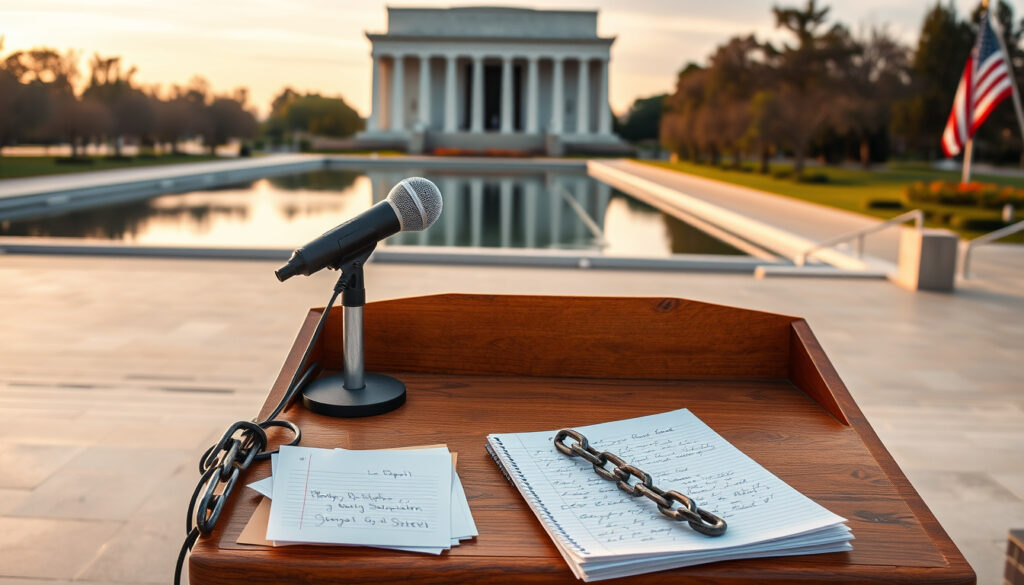
- – Delivers “I Have a Dream” speech at Lincoln Memorial (Stanford King Institute)
- – Awarded Nobel Peace Prize; Civil Rights Act signed (Nobel Prize website (official foundation); National Archives (U.S. government archive))
- – Leads Selma to Montgomery marches; Voting Rights Act passed (Stanford King Institute)
- – Assassinated at Lorraine Motel in Memphis (Stanford King Institute)
Confirmed facts and what remains unclear
Confirmed facts
- King was assassinated on April 4, 1968, by James Earl Ray (Stanford King Institute (university research center))
- He delivered the “I Have a Dream” speech on August 28, 1963 (Stanford King Institute)
- He won the Nobel Peace Prize in 1964 (Nobel Prize website (official foundation))
- His birth name was Michael King Jr. (NAACP (civil rights organization))
What remains unclear
- Exact number of arrests: some sources say 29, others 30 (Smithsonian NMAAHC (U.S. national museum))
- King’s personal stance on LGBTQ rights; no definitive public statement from him (The Advocate (LGBTQ news outlet))
- Whether King’s last words were exactly “I’ve been to the mountaintop” — he said that in a speech the night before, but no recorded final words (Stanford King Institute)
The balance: The confirmed facts are unshakeable; the unclear areas remind us that history retains a margin of uncertainty.
Key quotes from Martin Luther King Jr.
“I have a dream that my four little children will one day live in a nation where they will not be judged by the color of their skin but by the content of their character.”
Martin Luther King Jr., “I Have a Dream” speech, March on Washington, August 28, 1963 (Stanford King Institute (university research center))
“Injustice anywhere is a threat to justice everywhere.”
Martin Luther King Jr., “Letter from Birmingham Jail,” April 16, 1963 (Stanford King Institute)
“I’ve been to the mountaintop… And I’ve seen the Promised Land. I may not get there with you. But I want you to know tonight, that we, as a people, will get to the Promised Land.”
Martin Luther King Jr., final speech at Mason Temple, Memphis, April 3, 1968 (Stanford King Institute)
“Freedom is never really won. You earn it and win it in every generation.”
Coretta Scott King, civil rights activist and King’s widow (The King Center (primary institution))
For today’s activists, the lesson is clear: King succeeded because he paired moral conviction with strategic nonviolence, but the backlash he faced — from arrests to assassination — reminds us that progress exacts a cost. The question for future movements is whether they can sustain that discipline under similar pressure.
Related reading: **Martin Luther King Jr.’s 29 arrests** · **Room 306 at the Lorraine Motel**
facebook.com, equallywed.com, youtube.com, instagram.com, sciencedirect.com
Frequently asked questions
What was Martin Luther King Jr.’s education?
He earned a B.A. from Morehouse College, a B.D. from Crozer Theological Seminary, and a Ph.D. in systematic theology from Boston University in 1955 (Stanford King Institute (university research center)).
What is Martin Luther King Jr. Day?
A federal holiday in the U.S. observed on the third Monday of January each year, designated as a day of service and remembrance of King’s birthday (Library of Congress (U.S. federal library)).
What was the Montgomery bus boycott?
A 381-day mass protest against racial segregation on public buses in Montgomery, Alabama, triggered by Rosa Parks’ arrest and led by King (Stanford King Institute).
How did Martin Luther King Jr. die?
He was shot dead at 6:05 PM on April 4, 1968, while standing on a balcony outside Room 306 at the Lorraine Motel in Memphis, Tennessee (Stanford King Institute).
Who assassinated Martin Luther King Jr.?
James Earl Ray, a fugitive with a criminal record, pleaded guilty to the murder in 1969 and died in prison in 1998 (U.S. Department of Justice (federal law enforcement agency)).
What is the King Center?
The Martin Luther King Jr. Center for Nonviolent Social Change, founded by Coretta Scott King in Atlanta, Ga., serves as a memorial and educational resource (The King Center (primary institution)).
What is the Martin Luther King Jr. Memorial?
A national memorial on the National Mall in Washington, D.C., dedicated in 2011, featuring a 30-foot statue of King and inscriptions from his speeches (National Park Service (U.S. federal agency)).
More related posts
 Mawaan Rizwan: Biography, Career, Series, and Personal Life
 Grizzly Bear Facts: Aggression, Intelligence, and Survival
 Lance Reddick Death: Cause, Keanu Reeves Tribute & Legacy
 Cast of Tulsa King: Full Cast List for Seasons 1-3
 Leah Halton: Biography, Age, Relationship, Net Worth, and More
 Postman Pat: History, Characters, and Why the Show Ended
 Joy McAvoy: Biography, Movies, and Family
 Isle of Man: Status, Living, and Unique Facts (2025 Guide)