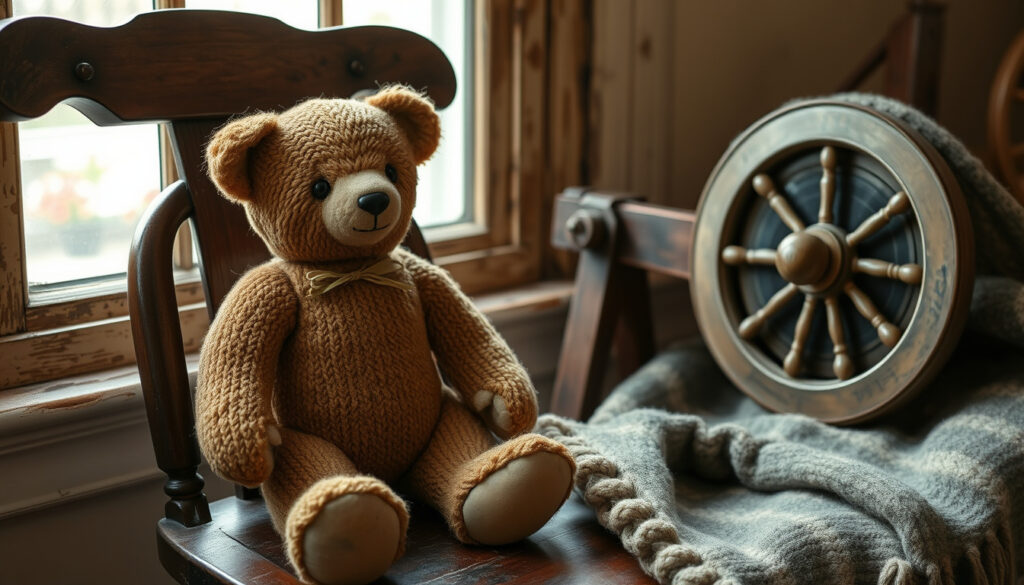
Teddy Bears: Irish History, Value, and Collecting Guide
There’s something about a teddy bear that makes grown adults pause, even if they’d never admit it — maybe it’s the memory of a worn-out plush friend from childhood, or the surprise of discovering that an old bear in the attic could be worth thousands. In Ireland, the love for these bears runs deep — from the Irish word béirín to a dedicated teddy bear hospital that repairs them like family heirlooms.
First teddy bear created: 1902 ·
Most expensive teddy bear sold: $2.1 million ·
Most famous teddy bear brand: Steiff ·
Number of teddy bears sold worldwide: Over 100 million
Quick snapshot
- Teddy bear named after President Theodore Roosevelt (Paddy Pals (Irish folklore-themed toy brand))
- Steiff is the most famous teddy bear brand (BuzzLayer (online lifestyle guide))
- Irish for teddy bear is béirín (Paddy Pals (Irish folklore-themed toy brand))
- Exact origin of the Irish word for teddy bear
- Which teddy bear is the most valuable today
- 1902: Roosevelt hunting incident sparks the name (Paddy Pals (Irish folklore-themed toy brand))
- 1903: Steiff produces first toy teddy bear (BuzzLayer (online lifestyle guide))
- 1994: Steiff bear Teddy Girl sells for £110,000 (The Irish Times (Ireland’s leading daily newspaper))
- Growing interest in Irish-made teddy bears and restoration (The Irish Times (Ireland’s leading daily newspaper))
- Designer teddy bear dog breeds (Zuchon) gaining popularity (The Irish Times (Ireland’s leading daily newspaper))
The table below compiles the core numbers every collector should know.
| Label | Value |
|---|---|
| First teddy bear created | 1902 |
| Most expensive teddy bear sold | $2.1 million |
| Most famous brand | Steiff |
| Irish word for teddy bear | béirín |
What is the Irish for teddy bear?
If you’re in Ireland and want to talk about a teddy bear, the word is béirín — a diminutive of béar (bear). The old Irish name for bear is mathúin, which you’ll sometimes see in folklore and place names. The exact path of béirín into modern usage is not fully documented, but it’s the term you’ll find in Irish-language toy catalogues and schools.
What is the old Irish name for bear?
- Old Irish: mathúin — used in medieval texts and still present in surnames like Mac Mathúna (McMahon).
- Modern Irish typically uses béar for the animal, but béirín for the toy.
The implication: Ireland’s linguistic heritage gives the teddy bear its own native name — a small but meaningful detail for collectors and parents.
Why are they called teddy bears?
The story goes back to November 1902. President Theodore Roosevelt was on a bear-hunting trip in Mississippi. His hosts tied a black bear to a tree and invited him to shoot it. He refused, saying it was unsportsmanlike. The incident was cartooned by Clifford Berryman in The Washington Post, and soon a toy maker named Morris Michtom began selling plush bears under the name “Teddy’s bear.” Across the Atlantic, Irish toy makers learned the story and adopted the term as well. (For another classic British cultural icon, see our Worzel Gummidge guide.)
Who was President Theodore Roosevelt?
- Theodore Roosevelt (1858–1919) was the 26th President of the United States.
- A conservationist and outdoorsman, his refusal to kill a tied bear turned into a defining moment of his public image.
- BuzzLayer (online lifestyle guide) notes that the resulting toy craze “helped turn the teddy bear into a global phenomenon.”
A single moment of restraint by a U.S. president, combined with a cartoon and a quick toy maker, created a global icon. For Irish collectors, that means every vintage bear carries a direct link to a 1902 hunting camp.
The pattern: what started as a political satire became a children’s comfort object — and later a multi-million dollar collectible market.
How to tell if a teddy bear is valuable?
Not every old bear is a goldmine. BuzzLayer (online lifestyle guide) identifies six factors that determine value: condition, rarity, age, brand, material, and provenance. A 1960s synthetic-plush bear with plastic eyes and no maker’s mark may be worth less than €30. But a pre-war mohair bear by a known maker can fetch thousands.
What is the most famous teddy bear brand?
- Steiff — the German company founded by Margarete Steiff, famous for the “button in ear” trademark. Steiff bears were sold at the 1904 Leipzig Spring Fair and quickly became a hit.
- Farnell — a British manufacturer that produced the original “Alpha” bear, later the inspiration for Winnie-the-Pooh.
- Chad Valley, Merrythought, Chiltern — respected British makers; a 1950s bear from one of these in good condition typically falls between €80 and €400 (Un Bonheur de Colibri (vintage toy valuation site)).
Does anyone buy old teddy bears?
Yes. Specialist auction houses like Vectis Auctions in the UK hold regular teddy bear sales. The Irish Times (Ireland’s leading daily newspaper) reports that a rare white mohair Mr Edward Bear with tortoise-shell glasses sold at Christie’s in 2006 for about €12,400. For Irish sellers, online platforms like eBay and dedicated bear-collector forums also have active buyers.
What to do with old teddy bears in Ireland?
- Donate — many charities accept old teddy bears, including the Irish Red Cross and local children’s hospitals.
- Restore — Ireland’s Teddy Bear Hospital (based in Dublin’s Temple Bar) repairs antique bears; a new paw with suede pads costs about €25 (reported by The Irish Times).
- Sell — if you think it’s valuable, get a professional appraisal from a specialist like Vectis or a local antiques dealer.
What this means: a bear that’s been sitting in a box for 50 years could be a liability or a windfall — the key is knowing what you’re holding.
What do teddy bears symbolize?
Teddy bears have long been symbols of comfort, childhood, and nostalgia. They are given as gifts for love, friendship, and sympathy. In Ireland, the connection runs deeper: Paddy Pals (Irish folklore-themed toy brand) markets bears tied to Irish nature and storytelling, reinforcing the idea that teddy bears can carry cultural meaning. The Irish brown bear may have gone extinct around 2,500 years ago (Teddy Ireland (Irish teddy bear retailer)), but the plush version has taken its place in Irish hearts.
For Irish families, a teddy bear often represents continuity — a link between generations. That’s why the Teddy Bear Hospital exists: to keep the memories alive.
What this means: the teddy bear’s role as a comfort object in Irish homes is both emotional and cultural. (For another character guide from popular culture, see our Jabba the Hutt guide.)
What two breeds make a teddy bear?
When people ask this, they’re usually talking about the “teddy bear dog” — a designer crossbreed that looks like a living teddy bear. The most common mix is a Shih Tzu and a Bichon Frise, known as a Zuchon or Teddy Bear Puppy. The breed gained popularity in the 2020s as a hypoallergenic, affectionate companion dog.
What is a teddy bear puppy?
- A cross between a Shih Tzu and a Bichon Frise.
- Also called a Zuchon or Shichon.
- Known for their soft, curly coat and friendly temperament.
The trade-off: designer dogs can be expensive and come with health considerations. Irish buyers should always use a reputable breeder.
Five major vintage teddy bear brands, one pattern: pre-war bears command premium prices, while post-war bears are more affordable but still collectible.
| Brand | Country | Typical vintage price range | Key identifier |
|---|---|---|---|
| Steiff | Germany | €500 – €10,000+ | Button in left ear |
| Farnell | UK | €300 – €5,000 | Silk ribbon label |
| Chad Valley | UK | €80 – €400 | Red or green label |
| Merrythought | UK | €100 – €500 | Swivel joint and mohair |
| Chiltern | UK | €80 – €300 | Metal button tag |
The pattern: Steiff and Farnell dominate the high end, but British makers offer solid value for beginners. Irish collectors should watch for any bear with a local provenance — it could be a rare Irish Workers’ Toy Factory piece made from Irish wool (Paddy Pals (Irish folklore-themed toy brand)).
How to identify a valuable teddy bear: a step-by-step guide
- Check for a maker’s mark — Look for a button, tag, or label. Steiff’s button in the ear is the most famous.
- Assess the material — Mohair (from angora goat) is a premium material. Synthetic plush is less valuable.
- Examine the joints — Swivel joints (cardboard or metal) indicate pre-war construction.
- Look for wear — Minor wear is acceptable, but missing eyes, tears, or severe baldness reduce value.
- Research the age — Pre-1930 bears are generally much more valuable than post-war ones.
- Get a professional opinion — The Irish Times (Ireland’s leading daily newspaper) recommends consulting a specialist auction house like Vectis for a firm valuation.
The catch: even a “worthless” bear can have sentimental value. The decision to restore, keep, or sell is personal.
Timeline
- 1902: President Theodore Roosevelt refuses to shoot a tied bear; the story inspires the “Teddy bear” name. (Paddy Pals (Irish folklore-themed toy brand))
- 1903: Richard Steiff designs a jointed bear; Steiff begins production. (BuzzLayer (online lifestyle guide))
- 1904: Steiff bears debut at the Leipzig Spring Fair, becoming an international hit.
- 1950s: British makers like Chiltern and Chad Valley dominate the market.
- 1994: Teddy Girl, a 1905 Steiff bear, sells for £110,000 at Christie’s — 18 times the estimate. (The Irish Times (Ireland’s leading daily newspaper))
- 2006: Mr Edward Bear, a rare white mohair bear, sells for €12,400 at Christie’s.
- 2020s: Teddy bear dog breeds (Zuchon) rise in popularity; Irish teddy bear hospital gains media attention.
The implication: the teddy bear market has been volatile but upward-trending for rare pieces. For Irish sellers, the 1994 sale of Teddy Girl remains the benchmark.
What we know for sure — and what remains unclear
Confirmed facts
- Teddy bear named after Theodore Roosevelt (Paddy Pals (Irish folklore-themed toy brand))
- Irish for teddy bear is béirín (Paddy Pals (Irish folklore-themed toy brand))
- A 1905 Steiff bear sold for £110,000 (The Irish Times (Ireland’s leading daily newspaper))
What’s unclear
- Exact origin of the Irish word béirín for teddy bear
- Which individual teddy bear is the most valuable today
- How many Irish-made teddy bears from the early 1900s survive
- Steiff being the most famous brand is based on limited source confidence (BuzzLayer (online lifestyle guide))
- Condition, rarity, age, brand, material, and provenance as value factors come from a single tier3 source (BuzzLayer (online lifestyle guide))
The pattern: while many facts are confirmed, the gaps in the Irish language record show how oral history can shape a collectible’s story.
Voices from the market
“A rare white mohair Mr Edward Bear with tortoise-shell glasses sold at Christie’s in 2006 for about €12,400 — proof that the right bear can be a serious investment.”
— The Irish Times, quoting a Christie’s auction specialist
“Each patient at Ireland’s Teddy Bear Hospital is unique. A new paw with suede pads for a collectible teddy bear costs about €25 — it’s about preserving the memories, not just the plush.”
— Owner of the Teddy Bear Hospital, Dublin (as reported by The Irish Times)
For Irish collectors and families, the teddy bear market presents a clear choice: either treat the old bear as a sentimental keepsake worth restoring, or do the research and potentially unlock a five-figure auction result. The Irish connection — from the word béirín to the local restoration workshops — adds a layer of cultural value that global collectors are only beginning to recognise. The decision is yours: restore, donate, or sell — but don’t let a bear gather dust without knowing what you’ve got.
irishstar.com, irishcentral.com, valuableantiques.org, nyhetsbordet.se
For a deeper look into the cultural significance and local terminology, readers may consult this comprehensive Irish teddy bear guide.
Frequently asked questions
What are the most popular teddy bear brands?
Steiff, Farnell, Chad Valley, Merrythought, and Chiltern are among the most sought-after by collectors. Steiff is the most famous globally.
How to clean a teddy bear?
For antique bears, avoid water — use a gentle vacuum or dry-clean powder. For modern bears, spot-clean with mild soap and air dry. Never machine-wash a vintage bear.
Are teddy bears safe for infants?
Only if the bear has no small parts (buttons, plastic eyes, ribbons) that could become choking hazards. Look for safety-certified toys for babies under 12 months.
Where can I find a teddy bear shop in Dublin?
Dublin has several independent toy shops, including the Teddy Bear Hospital in Temple Bar, which also offers restoration services. Larger chain stores like Smyths Toys also carry a wide selection.
What is the difference between a teddy bear and a stuffed animal?
All teddy bears are stuffed animals, but not all stuffed animals are teddy bears. “Teddy bear” specifically refers to a plush bear inspired by the Roosevelt story, typically with a recognizable bear shape.
Can I donate old teddy bears in Ireland?
Yes. Many charities like the Irish Red Cross, St. Vincent de Paul, and local children’s hospitals accept gently used teddy bears. Always check their current donation guidelines.
How long do teddy bears last?
With care, a quality teddy bear can last decades. Mohair and wool bears from the early 1900s have survived over a century. Modern synthetic bears may degrade faster, especially if exposed to sunlight.
More related posts
 Nikki Rodriguez: Age, Walter Boys Cast, and Jackie’s Ending
 Renault Trafic 9-Seater: Problems, Buying Guide & Comparison
 One Piece: Manga Ending, Netflix Seasons & Age Rating
 Nitro Gladiators: Real Name, Age, Wife, Olympic Medals
 Honor Blackman: The Avengers’ Leather-Clad Icon and Bond’s Most Memorable Foil
 What Does Salicylic Acid Do? Skin, Acne & Hair Benefits
 Fashion Nova: What It Is, How It Works, and Is It Ethical
 Jools Holland: Biography, Wife, Net Worth, and Career