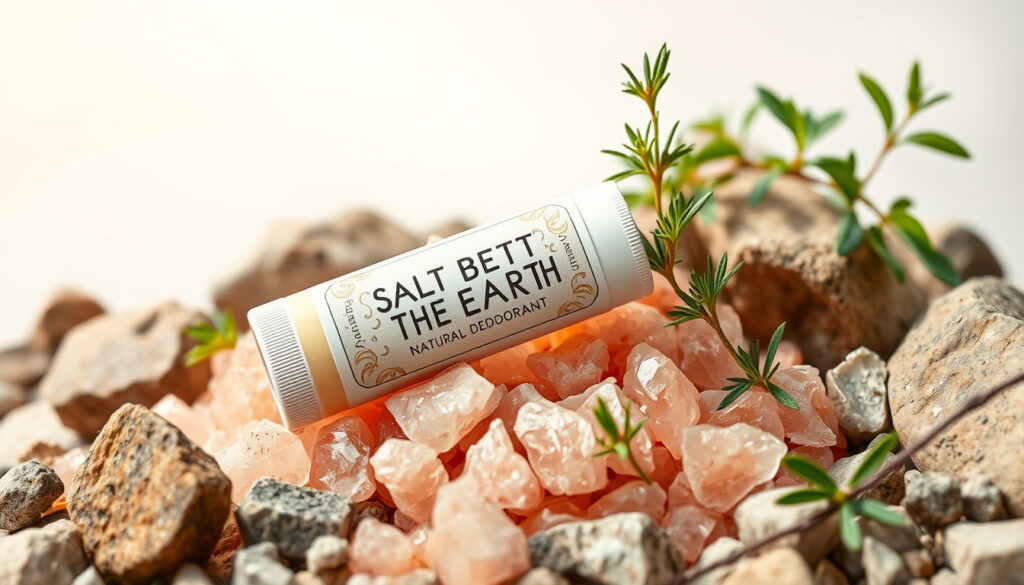
Salt of the Earth Deodorant: Reviews and Facts
Salt of the Earth keeps appearing in natural deodorant threads — with fans swearing by it and a few users noting they had to reapply more than expected. I dug into what actually makes it work, what the certifications actually mean, and whether real-world performance matches the brand’s claims.
Certification: 100% COSMOS natural · Ingredients: Aluminum-free · Vegan Status: Yes · Cruelty-Free: Yes · Formats Available: Roll-on, spray, crystal
Quick snapshot
- 100% COSMOS Natural certified by the Soil Association (Salt of the Earth Official Blog)
- Vegan Society and Leaping Bunny approved (Salt of the Earth Official Blog)
- Effectiveness duration varies for heavy sweaters (YouTube Review)
- Allergy rates compared to competitors remain unquantified (YouTube Review)
- Approximately 99% positive reviews on Holland & Barrett (YouTube Review)
- Some users report needing reapplication 2-3 times daily (YouTube Review)
- Application must be on wet underarms for the salt to adhere (YouTube Review)
- No white marks on clothing — a common complaint with sprays (YouTube Review)
| Attribute | Details |
|---|---|
| Brand Origin | Natural deodorant specialist |
| Main Ingredient | Potassium Alum (mineral salts) |
| Aluminum Content | None (aluminium chlorohydrate-free) |
| Certifications | COSMOS Natural, Vegan Society, Leaping Bunny |
| Sustainability | Refillable packaging available |
| Manufacturing | UK-made |
| Formats | Roll-on (75ml), Crystal (90g), Spray options |
| Availability | Holland & Barrett, Boots, online retailers |
Is Salt of the Earth good deodorant?
Salt of the Earth occupies a specific niche: it’s not an antiperspirant that blocks sweat glands — it’s a deodorant that neutralises odour-causing bacteria. The brand holds 100% COSMOS Natural certification from the Soil Association, which audits every formula, ingredient, and supplier (Salt of the Earth Official Blog). This means no GM ingredients, no parabens, no synthetic fragrances, and no triclosan — a cleaner ingredient list than most conventional options.
User reviews on retail platforms skew heavily positive. One YouTube reviewer noted seeing approximately 99% positive feedback on Holland & Barrett product pages (YouTube Review). The product offers 24-hour protection according to the brand, is unscented, unisex, and economical — with users reporting a single stick lasting months with regular use.
User reviews and ratings
Real-world feedback centres on a few consistent themes. The potassium alum base — a natural mineral salt — creates an invisible barrier on the skin that inhibits bacteria without blocking pores (Salt of the Earth Official Blog). This means you still sweat, but without the associated odour. One reviewer on YouTube highlighted that the formula leaves no white marks — a common complaint with aerosol sprays that leave powdery residue on clothing (YouTube Review).
Performance in daily use
The application method matters. Unlike standard deodorants, Salt of the Earth crystal formats require wet underarms for the salt to adhere and provide protection — dry application is ineffective (YouTube Review). Some users report reapplication 2-3 times daily based on personal preference, even though the brand markets 24-hour protection. This isn’t necessarily a failure — it reflects the difference between blocking sweat (antiperspirants) and neutralising bacteria (mineral salt deodorants).
Salt of the Earth works by letting you sweat naturally while killing the bacteria that cause odour. If you need to stop sweating entirely, this product isn’t designed for that. But for odour control, users generally report it holds up through a standard workday.
Comparison to conventional deodorants
Conventional antiperspirants typically use aluminium chlorohydrate to plug sweat ducts. Salt of the Earth deliberately avoids this ingredient — it’s aluminium-chlorohydrate-free by formulation (Salt of the Earth Official Blog). The trade-off is philosophical as much as practical: you choose whether preventing all sweat matters more to you than using a product with a shorter, natural ingredient list.
Is there aluminum in salt of the earth deodorant?
This is the question that surfaces most in search results, and the answer requires some chemistry context. Salt of the Earth uses potassium alum as its primary active ingredient — not the aluminium compounds found in antiperspirants. Potassium alum is a natural mineral salt that functions as an astringent, temporarily tightening skin cells to create a less hospitable environment for odour-causing bacteria (Salt of the Earth Official Blog). It is technically an aluminium compound, but it’s chemically distinct from the aluminium chlorohydrate used in most antiperspirants.
Ingredients breakdown
The complete ingredient list for the Crystal Deodorant Classic includes Tapioca Starch, Caprylic/Capric Triglyceride, Cetyl Alcohol, Carnauba Wax, and Rosemary Extract, among others (INCI Decoder ingredient analysis). Each serves a specific function: Tapioca Starch acts as a talc replacement with oil-absorbing properties; Caprylic/Capric Triglyceride (derived from coconut oil and glycerin) makes skin feel smooth and non-greasy; Rosemary Extract provides antioxidant, anti-inflammatory, and antibacterial properties.
| Ingredient | Function |
|---|---|
| Potassium Alum | Primary active — natural odour neutraliser |
| Tapioca Starch | Oil absorber, talc replacement |
| Caprylic/Capric Triglyceride | Emollient from coconut oil |
| Cetyl Alcohol | Emollient, thickener, emulsifier |
| Carnauba Wax | Emulsion stabiliser |
| Rosemary Extract | Antioxidant, antibacterial |
| Aloe Vera | Soothing, hydrating |
Safety and health benefits
The brand explicitly states Salt of the Earth contains no aluminium chlorohydrate, synthetic fragrances, parabens, or triclosan (Salt of the Earth Official Blog). The COSMOS certification, administered by the Soil Association, requires formulas to meet specific natural and organic standards — with no GM ingredients or harmful chemicals allowed (Salt of the Earth Official Blog). For consumers concerned about specific chemical ingredients, this certification provides third-party verification rather than relying solely on brand claims.
COSMOS Natural certification isn’t self-awarded. The Soil Association audits formulas, ingredients, and suppliers to verify compliance with their natural and organic standards — including provisions for careful natural resource use and wildlife protection.
Certification details
Salt of the Earth holds three key certifications: 100% COSMOS Natural (from the Soil Association), Vegan Society approval, and Leaping Bunny certification for cruelty-free status (Salt of the Earth Official Blog). The Vegan Society verifies that no animal-derived ingredients are used; Leaping Bunny, administered by Cruelty Free International, confirms no animal testing occurs at any stage of production.
What is the healthiest deodorant to use?
“Healthiest” depends on what health concerns matter most to you. If your priority is avoiding synthetic chemicals, mineral salt-based deodorants like Salt of the Earth offer a short, transparent ingredient list. If you’re concerned about sweat management, conventional antiperspirants remain more effective at reducing perspiration. Salt of the Earth positions itself at the intersection of natural ingredients and proven odour control — the active ingredient (potassium alum) has been used for centuries in crystal deodorants.
Criteria for healthy deodorants
Dermatologists generally recommend looking for deodorants that avoid known irritants: synthetic fragrances, parabens, and aluminium chlorohydrate if you prefer to avoid aluminium compounds entirely. Salt of the Earth meets these criteria by formulation, with the brand’s ingredient education page explicitly listing what’s not in their products (Salt of the Earth Official Blog). Botanical extracts like aloe vera and lavender provide soothing and hydrating properties, which the brand highlights as beneficial for sensitive skin.
Salt of the Earth vs alternatives
Compared to conventional antiperspirants, Salt of the Earth offers a fundamentally different mechanism. Rather than blocking sweat glands with aluminium chlorohydrate, it creates an invisible mineral barrier that inhibits bacteria — allowing your body to sweat naturally while reducing odour (Salt of the Earth Official Blog). This approach aligns with “cleaner” beauty preferences but requires adjusting expectations: you will still sweat, just without the associated smell.
Compared to other natural deodorants, Salt of the Earth differentiates through its COSMOS certification depth and the range of formats (roll-on, crystal, spray). The brand’s refillable packaging options also address sustainability concerns that increasingly influence purchasing decisions.
Are there any natural deodorants that actually work?
Yes — but “work” requires definition. Natural deodorants prevent odour without blocking sweat, which is a different function than antiperspirants. Salt of the Earth is one of the more consistently reviewed natural options, with approximately 99% positive feedback on retailer platforms (YouTube Review). The caveat: effectiveness varies based on individual body chemistry, activity levels, and climate.
Testing real-world effectiveness
User testimonials consistently mention a transition period when switching from conventional deodorants — your body adjusts to the mineral salt approach after a few days. YouTube reviewers testing Salt of the Earth reported that the formula holds up through standard daily activities without reapplication, though some noted they preferred to reapply 2-3 times daily for personal comfort (YouTube Review). The product is described as “long-lasting” with “no white marks” by reviewers, contrasting favourably with aerosol spray options that can leave residue on clothing (YouTube Review).
Salt of the Earth performance
The performance profile for Salt of the Earth looks like this: works through a standard workday for most users, may require reapplication for heavy sweaters or intense physical activity, leaves no residue on clothing, and allows natural sweating. The brand’s 24-hour protection claim is backed by the potassium alum mechanism — but individual experiences vary, as they do with any personal care product.
If you’ve been using antiperspirants for years, your sweat glands have adapted. Switching to a mineral salt deodorant means your body will sweat more initially while rebalancing. Most users report this transition takes 1-2 weeks — patience here determines whether you stick with natural options or revert to conventional products.
Common natural deodorant pitfalls
The most frequently reported issues with natural deodorants generally — and Salt of the Earth specifically — include: irritation if applied immediately post-shaving (the salt content can sting), the need for wet application which feels unfamiliar at first, and potential underarm staining during the transition period. One reviewer noted potential irritation after shaving due to the salt content, describing it as “the body responding naturally” (YouTube Review). Waiting 30-60 minutes after shaving before applying Salt of the Earth can reduce this discomfort.
What deodorant do dermatologists recommend?
Dermatologists typically prioritise two factors when recommending deodorants: ingredient safety and suitability for sensitive skin. Salt of the Earth appears in roundups of dermatologist-recommended natural options due to its absence of common irritants — no synthetic fragrances, parabens, or aluminium chlorohydrate — combined with soothing ingredients like aloe vera. The COSMOS Natural certification provides third-party validation that isn’t available for many “natural” competitors making similar claims.
Dermatologist picks for natural options
Dermatologists generally recommend looking for fragrance-free formulations with minimal ingredients when sensitivity is a concern. Salt of the Earth’s classic crystal formula contains fewer ingredients than most conventional deodorants, with INCI Decoder cataloguing the full breakdown with functional explanations for each component (INCI Decoder ingredient database). Rosemary extract provides anti-inflammatory properties; coconut-derived ingredients (Caprylic/Capric Triglyceride) keep the formula smooth without irritation.
Salt of the Earth endorsements
While no specific dermatologists are quoted in available reviews, Salt of the Earth’s certification portfolio — COSMOS Natural, Vegan Society, Leaping Bunny — serves as institutional backing. The Soil Association’s rigorous auditing process means a third party has verified the brand’s natural claims (Salt of the Earth Official Blog). For consumers who want credible third-party validation rather than relying on brand marketing, these certifications matter.
Ingredients to avoid
The brand’s own ingredient education page lists what Salt of the Earth deliberately excludes: aluminium chlorohydrate, synthetic fragrances, parabens, and triclosan (Salt of the Earth Official Blog). For consumers concerned about specific ingredients, the brand provides clear documentation of its exclusions — framed within the broader context of mineral salt functionality rather than fear-based marketing.
Comparing Salt of the Earth to alternatives
Six key attributes differentiate natural and conventional deodorants, with Salt of the Earth positioning itself on the natural side of most comparisons.
| Attribute | Salt of the Earth | Conventional Antiperspirants |
|---|---|---|
| Active mechanism | Potassium alum (mineral salt) | Aluminium chlorohydrate |
| Sweat blocking | No — allows natural sweating | Yes — plugs sweat ducts |
| White marks | None reported | Common with sprays |
| Ingredient transparency | Short list, COSMOS certified | Longer lists, proprietary blends |
| Certification depth | COSMOS, Vegan, Leaping Bunny | Varies — rarely certified natural |
| Application method | Wet underarms required | Apply to dry skin |
The implication: this comparison highlights a fundamental product philosophy divide rather than quality hierarchy. Salt of the Earth works with your body’s natural sweating process rather than against it, accepting that you’ll sweat while neutralising the bacteria that cause odour.
Upsides
- 100% COSMOS Natural certified — third-party verified natural ingredients
- No aluminium chlorohydrate, parabens, or synthetic fragrances
- Vegan Society and Leaping Bunny certified cruelty-free
- No white marks on clothing
- Refillable packaging available for sustainability
- Approximately 99% positive user reviews on major UK retailers
Downsides
- Does not block sweat — only controls odour
- Requires wet underarm application, which feels unfamiliar
- May cause irritation immediately post-shaving
- Some users report needing reapplication 2-3 times daily
- Transition period of 1-2 weeks when switching from antiperspirants
- Effectiveness varies more than conventional products for heavy sweaters
Every ingredient in Salt of the Earth deodorants is carefully selected to meet our high standards for safety, efficacy, and sustainability.
— Salt of the Earth Official Blog
This just is made from a natural mineral salt — that’s it. No white marks, long-lasting protection.
— YouTube Review
Our Salt of the Earth deodorants proudly hold the 100% COSMOS Natural certification from the Soil Association.
— Salt of the Earth Official Blog
Related reading: Apple Cider Vinegar Benefits · How to Make Ginger Shots
Salt of the Earth deodorant draws praise for its aluminum-free crystal salts, as explored in this detailed UK reviews and formats highlighting botanical blends and user experiences.
Frequently asked questions
Where can I buy Salt of the Earth deodorant?
Salt of the Earth deodorants are widely available in the UK at Holland & Barrett, Boots, and major online retailers. The brand’s website also offers direct purchasing with their full product range including refill options.
What are Salt of the Earth deodorant ingredients?
The primary active ingredient is potassium alum, a natural mineral salt. The Crystal Deodorant Classic also contains Tapioca Starch, Caprylic/Capric Triglyceride, Cetyl Alcohol, Carnauba Wax, Rosemary Extract, and Aloe Vera. The full ingredient list is available on INCI Decoder with functional explanations for each component.
Does Salt of the Earth deodorant work all day?
Most users report the product holds up through a standard workday. The brand markets 24-hour protection, though some users with heavier sweating prefer to reapply 2-3 times daily based on personal preference. Effectiveness varies based on individual body chemistry, activity level, and climate.
Is Salt of the Earth deodorant suitable for sensitive skin?
The formula includes Aloe Vera for soothing properties and avoids common irritants like synthetic fragrances and parabens. However, the salt content can cause stinging if applied immediately post-shaving. Waiting 30-60 minutes after shaving before application is recommended for those with sensitive underarm skin.
How do you use Salt of the Earth crystal deodorant?
Unlike conventional stick deodorants, crystal formats require wet underarms for the mineral salt to adhere properly. Wet the crystal and apply to damp underarm skin — dry application is ineffective. Allow a few seconds for the product to dry before dressing.
What scents does Salt of the Earth offer?
The brand uses natural essential oils to create scents including Ocean & Coconut and Oud & Bergamot. A fragrance-free classic option is also available for those with scent sensitivities or who prefer unscented products.
Is Salt of the Earth deodorant refillable?
Yes, Salt of the Earth offers refillable packaging options as part of their sustainability commitment. Roll-on formats specifically have refill pods available, reducing plastic waste compared to disposable alternatives.
Salt of the Earth earns its reputation through verifiable certifications and consistent user satisfaction rather than marketing superlatives. The 100% COSMOS Natural certification from the Soil Association, combined with Vegan Society and Leaping Bunny approvals, means three independent bodies have verified different aspects of the brand’s claims. For buyers prioritising ingredient transparency and ethical production over sweat-blocking power, Salt of the Earth delivers what it promises — natural odour control with credible third-party backing.
More related posts
 Billy Hargrove Character Analysis: Death, Abuse, and Redemption
 Victor McGuire: Biography, Bread, Haribo & eBay Advert Roles
 Penélope Cruz: Spanish Nationality, Children & Tom Cruise
 Nick Knowles: Life, Career, and Family Story
 Jameela Jamil: Disability, Fame, and Personal Life
 Andre Braugher Cause of Death, Career Highlights, and Legacy
 Perrie Edwards: Biography, Children, Husband, Condition & More
 Cassie Ventura: Diddy Lawsuit, Husband Alex Fine, Net Worth