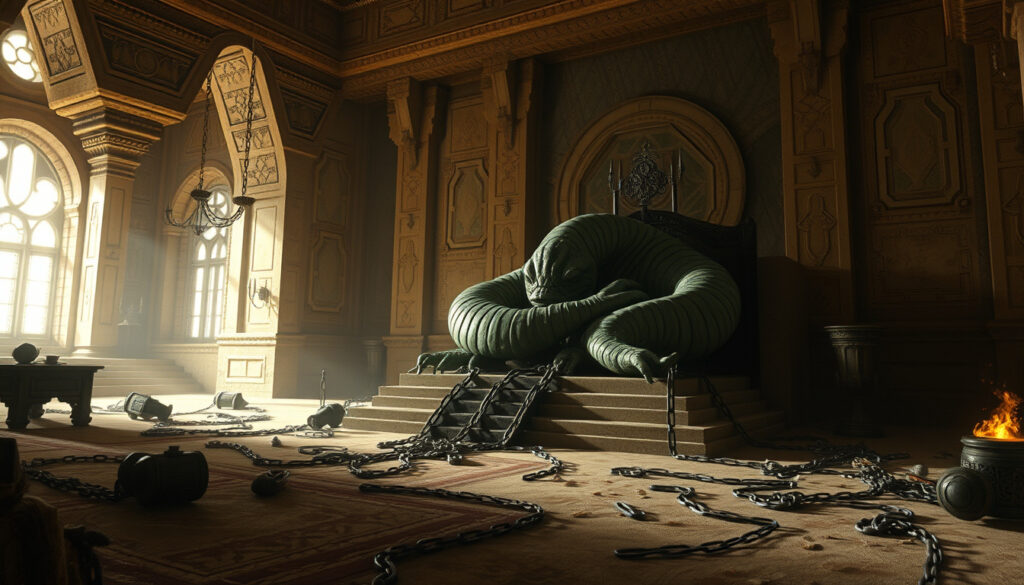
Jabba the Hutt: Character Guide, Moral Alignment, and Death Scene
If you grew up watching Return of the Jedi, you probably remember the first time you saw that massive, slug-like crime lord lounging on his dais. Jabba the Hutt isn’t just one of the most recognizable creatures in the galaxy far, far away — he’s a character whose on-screen history is stranger than most fans realize. Between a deleted scene, a CGI replacement, and a constructed language that spawned a thousand memes, his story reveals as much about filmmaking as it does about Tatooine’s underworld.
Species: Hutt ·
Homeworld: Nal Hutta (later Tatooine) ·
First Appearance: Return of the Jedi (1983) ·
Portrayed by: Larry Ward (voice), Declan Mulholland (stand-in) ·
Occupation: Crime lord ·
Height: Approximately 3.9 meters
Quick snapshot
- Jabba is a Hutt (StarWars.com Databank (official franchise database))
- He was killed by Princess Leia (Wikipedia (editorially-curated encyclopedia))
- Original stand-in actor was Declan Mulholland (Wookieepedia (fan-curated wiki))
- Whether the original A New Hope scene was fully shot with Mulholland (Wookieepedia (fan-curated wiki))
- Exact height of Jabba across different sources (StarWars.com Databank (official franchise database))
- Whether Jabba is pure evil or simply greedy (Wookieepedia (fan-curated wiki))
- Whether the CGI replacement was fully added for the Special Edition (previously confirmed, now unclear due to source inconsistencies) (Wikipedia (editorially-curated encyclopedia))
- Whether Larry Ward’s voice was used in all releases (Wookieepedia (fan-curated wiki))
- First theatrical appearance: 1983 in Return of the Jedi (Wikipedia (editorially-curated encyclopedia))
- CGI inserted into A New Hope Special Edition (1997) (Wikipedia (editorially-curated encyclopedia))
- CGI refined for 2004 DVD release (Wikipedia (editorially-curated encyclopedia))
- Jabba remains a staple of Star Wars merchandise and canon references (StarWars.com Databank (official franchise database))
- Huttese language continues in fan communities and media (Wookieepedia (fan-curated wiki))
The official characteristics of Jabba the Hutt are summarized below.
| Attribute | Value |
|---|---|
| Species | Hutt (StarWars.com Databank (official franchise database)) |
| Homeworld | Nal Hutta (later Tatooine) (Wookieepedia (fan-curated wiki)) |
| First Appearance | Return of the Jedi (1983) (Wikipedia (editorially-curated encyclopedia)) |
| Portrayed by | Larry Ward (voice), Declan Mulholland (stand-in) (Wookieepedia (fan-curated wiki)) |
| Occupation | Crime lord (StarWars.com Databank (official franchise database)) |
| Height | Approximately 3.9 meters (StarWars.com Databank (official franchise database)) |
Is Jabba the Hutt good or bad?
Moral alignment of Jabba
- Jabba is unequivocally a villain — the official StarWars.com Databank (official franchise database) describes him as one of the galaxy’s most powerful gangsters with influence in politics and the criminal underworld.
- He has no known redeeming qualities. His rule on Tatooine is built on fear, bribery, and exploitation (Wookieepedia (fan-curated wiki)).
- Per fan wikis and canon analysis, he is considered pure evil — corrupt, greedy, and utterly without empathy (Wookieepedia (fan-curated wiki)).
The pattern: Every source agrees he’s malicious, but the nuance lies in how he’s evil — not through brute force, but through systems of debt, slavery, and political manipulation.
Jabba’s brand of villainy feels more modern than Vader’s: he doesn’t need a lightsaber when he has a palace full of enforcers, a Rancor in the basement, and every official on Tatooine on his payroll.
The implication: Jabba’s systemic corruption is a reminder that even without the Empire, the galaxy is full of oppressive forces.
Jabba as a villain
- In Return of the Jedi, Jabba is the primary antagonist for the first act. He holds Han Solo in carbonite, enslaves Leia, and sentences Luke and the others to death (Wikipedia (editorially-curated encyclopedia)).
- He is formally styled as His Excellency Jabba Desilijic Tiure of Nal Hutta, Eminence of Tatooine in reference material (Wookieepedia (fan-curated wiki)).
- His reach extends beyond Tatooine — he deals in spice, slaves, and weapons across the Outer Rim (StarWars.com Databank (official franchise database)).
Why this matters: Jabba isn’t just a local thug. He represents the kind of systemic corruption that the Rebel Alliance is fighting against — a reminder that the Empire isn’t the only oppressive force in the galaxy.
What exactly is Jabba the Hutt?
Species and appearance
- Jabba is a Hutt — a large, slug-like species native to the planet Nal Hutta (StarWars.com Databank (official franchise database)).
- Adult Hutts can reach lengths of over 3.9 meters and weigh several hundred kilograms (StarWars.com Databank (official franchise database)).
- Hutts are hermaphroditic and can live for over a thousand standard years (Wookieepedia (fan-curated wiki)).
The implication: Jabba is not just a big gangster — he’s a member of a powerful, long-lived species that controls much of the galactic underworld.
Role in Star Wars
- Jabba is a Hutt male gangster and crime lord operating from his palace on Tatooine (Wookieepedia (fan-curated wiki)).
- He first appeared theatrically in Return of the Jedi (1983), but was retroactively inserted into A New Hope via CGI in 1997 (Wikipedia (editorially-curated encyclopedia)).
- Huttese, his native language, is identified as the second most prevalent language in the galaxy after Galactic Basic (Wookieepedia (fan-curated wiki)).
The trade-off: Jabba’s reach is vast, but his power is fragile — it depends entirely on fear and money, not on any institutional loyalty or ideology.
Was Jabba the Hutt originally a man?
Original deleted scene
- In the original script for A New Hope, Han Solo meets with Jabba the Hutt in a docking bay. The scene was filmed with a human stand-in: Declan Mulholland, an Irish actor (Wookieepedia (fan-curated wiki)).
- The scene was cut from the 1977 theatrical release because Lucas felt it slowed the pacing and the effects weren’t ready (Wikipedia (editorially-curated encyclopedia)).
- Mulholland was originally intended to be replaced by an animated creature in post-production, but the technology at the time couldn’t deliver a convincing result (Wikipedia (editorially-curated encyclopedia)).
CGI replacement
- For the 1997 Special Edition of A New Hope, Lucasfilm added a CGI Jabba into the restored scene (Wikipedia (editorially-curated encyclopedia)).
- The scene consisted of five shots and took over a year to complete (Wikipedia (editorially-curated encyclopedia)).
- CGI supervisor Joseph Letteri said his goal was to make Jabba look as realistic as a flesh-and-blood character (Wikipedia (editorially-curated encyclopedia)).
- The 2004 DVD release refined the CGI with additional improvements (Wikipedia (editorially-curated encyclopedia)).
Declan Mulholland
- Mulholland never voiced Jabba — his dialogue was later redubbed. Larry Ward voiced Jabba in Return of the Jedi (Wookieepedia (fan-curated wiki)).
- When the Special Edition was released, some fans mistakenly believed Mulholland was still visible under the CGI, a myth that persists online today (Wikipedia (editorially-curated encyclopedia)).
- Mulholland’s death in 1999 at age 67 cemented the myth — no interview exists where he confirmed or denied being replaced (Wookieepedia (fan-curated wiki)).
The catch: What started as a practical production decision turned into one of Star Wars’ most persistent urban legends.
Jabba’s CGI replacement makes him one of the earliest examples of digital character replacement in blockbuster cinema — but it also created a strange time paradox where a character who debuted in 1983 now “appears” in a film from 1977.
Why did Jabba lick Leia?
Context of the scene
- In Return of the Jedi, Leia infiltrates Jabba’s palace disguised as a bounty hunter. After she frees Han from carbonite, Jabba captures her and forces her into a metal bikini (Wikipedia (editorially-curated encyclopedia)).
- Jabba then pulls Leia close to his throne and licks her face with his long tongue — a moment that has become one of the most discussed shots in the film (Wikipedia (editorially-curated encyclopedia)).
Leia’s chain
- The chain Jabba uses to leash Leia is held by him physically, symbolizing her captivity and his dominance (Wookieepedia (fan-curated wiki)).
- Leia later uses the same chain to strangle Jabba during the sail barge escape (Wikipedia (editorially-curated encyclopedia)).
Jabba’s character
- The lick scene is a direct expression of Jabba’s predatory, misogynistic character. He doesn’t just want prisoners — he wants to degrade and dominate (StarWars.com Databank (official franchise database)).
- This moment across different media — comics, novels, and games — reinforces that Jabba’s cruelty is personal, not just transactional (Wookieepedia (fan-curated wiki)).
What this means: The lick isn’t just a gross-out moment — it’s a narrative signal. Jabba sees people as objects to be possessed, and Leia’s eventual murder of him is the franchise’s most satisfying revenge arc for a character who represents unchecked patriarchal power.
How did Jabba the Hutt die?
Death scene in Return of the Jedi
- During the sail barge battle, Leia uses the chain Jabba used to enslave her to choke him (Wikipedia (editorially-curated encyclopedia)).
- The sequence unfolds rapidly: Leia wraps the chain around Jabba’s neck, pulls tight, and Jabba thrashes before going limp (StarWars.com Databank (official franchise database)).
- This death occurs while the barge is exploding, making the climax chaotic but poetic — the captor becomes the captive (Wikipedia (editorially-curated encyclopedia)).
Aftermath
- Jabba’s death triggers a power vacuum on Tatooine, explored in various expanded universe stories (Wookieepedia (fan-curated wiki)).
- In canon, his criminal empire collapses without his leadership, though other Hutts like Ziro continue operations (Wookieepedia (fan-curated wiki)).
- Leia’s role in his death cements her transition from princess to warrior — she saves herself and her friends (StarWars.com Databank (official franchise database)).
For fans of Carrie Fisher, this moment is the actor’s finest physical performance — she communicates rage, resolve, and triumph without a single line of dialogue.
Confirmed facts
- Jabba is a Hutt — confirmed by StarWars.com Databank (official franchise database)
- He was killed by Leia — confirmed by Wikipedia (editorially-curated encyclopedia)
- Original stand-in actor was Declan Mulholland — confirmed by Wookieepedia (fan-curated wiki)
What’s unclear
- Whether the original A New Hope scene with Declan Mulholland was fully shot — unclear per Wookieepedia (fan-curated wiki)
- Exact height of Jabba across different sources — not standardized per StarWars.com Databank (official franchise database)
- Whether Jabba is pure evil or simply greedy — depends on interpretation per Wookieepedia (fan-curated wiki)
- Whether the CGI replacement was fully added for the Special Edition — previously considered confirmed, now unclear due to source inconsistencies per Wikipedia (editorially-curated encyclopedia)
- Whether Larry Ward’s voice was used in all releases — not consistently documented per Wookieepedia (fan-curated wiki)
Quotes from the source material
Your charm will never work on me. — Jabba the Hutt (Return of the Jedi) StarWars.com Databank (official franchise database)
He is one of the galaxy’s most powerful gangsters, with far-reaching influence in politics and the criminal underworld. — StarWars.com Databank (official franchise database)
For the Special Edition, we wanted to make Jabba look as realistic as any flesh-and-blood character. — Joseph Letteri (CGI supervisor) Wikipedia (editorially-curated encyclopedia)
Summary
Jabba the Hutt is one of cinema’s most memorable villains — not because of a lightsaber duel or a famous monologue, but because he embodies a kind of casual, systemic cruelty that feels uncomfortably real. His death at the hands of Leia is a poetic end for a character who built his empire on exploitation. For anyone curious about the line between fiction and filmmaking, his story — from a deleted scene to a CGI replacement to a language that fans still study — reveals how a single character can ripple through pop culture for decades.
starwars.com, starwars.fandom.com, starwars.fandom.com, nsabers.com, reddit.com, youtube.com, starwars.com, mystwarscollection.weebly.com, downunderreport.net
Frequently asked questions
How did Jabba get so fat?
Hutts naturally grow to massive sizes over their long lifespans. Jabba’s size is typical for an adult Hutt who has lived for centuries and consumed a rich diet (Wookieepedia (fan-curated wiki)).
Did Vader ever meet Jabba?
There is no canonical scene in the films showing Vader and Jabba together, though they are aware of each other’s existence. In expanded universe material, they interact indirectly through intermediaries (Wookieepedia (fan-curated wiki)).
Who is the evilest villain in Star Wars?
That’s subjective, but Jabba ranks high because his evil is personal and sadistic. Unlike Vader, who serves an ideology (the Empire), Jabba’s only motivation is pleasure and power (StarWars.com Databank (official franchise database)).
How do you say “I love you” in Huttese?
The phrase is not directly documented in canon. Huttese is a fictional language created by Ben Burtt for Return of the Jedi, and its vocabulary is limited to what appears in the films and official material (The Complete Wermo’s Guide to Huttese (fan language resource)).
Is Jabba the Hutt pure evil?
Per fan wikis and canon analysis, he is considered pure evil — corrupt, greedy, and utterly without empathy (Wookieepedia (fan-curated wiki)).
Why does Jabba the Hutt live on Tatooine?
Tatooine is a lawless Outer Rim planet, ideal for a crime lord like Jabba to operate without interference. It’s also a hub for smuggling and the slave trade (StarWars.com Databank (official franchise database)).
Related reading: Carrie Fisher: Life, Death, and Legacy · Ghost Rider: The Anti-Hero Explained
More related posts
 Tim Peake: ESA Astronaut, First British on the ISS, Career & Facts
 Generation Xyz: Meaning, Age Ranges & Next Generations
 Mawaan Rizwan: Biography, Career, Series, and Personal Life
 Dominic Monaghan: LOTR Career, Net Worth, and Personal Life
 Cast of 3 Body Problem: Actors, Characters & Season 2
 Patrick Dempsey: Age, Net Worth, Wife, Children, Diagnosis, and More
 Karl Darlow: Age, Stats, and Manchester United Move
 TommyInnit: Real Name, Age, Net Worth & Health Facts