Saul Goodman: Famous Line, 86-Year Sentence, Evil vs Walt
You probably know the catchphrase, but the man behind it is far more complicated than a TV commercial. When Saul Goodman first appeared on Breaking Bad in 2009, he was a slick lawyer with a neon smile and a bus-bench slogan. But for fans of Better Call Saul, that persona was the endpoint of a long, painful fall from grace. This article breaks down his famous lines, the truth behind his 86-year sentence, and how his morality stacks up against Walter White’s — with show-canon evidence and legal analysis as the guide.
First appearance: 2009, Breaking Bad season 2 ·
Actor: Bob Odenkirk ·
Sentence length: 86 years in ADX Montrose ·
Alias: Jimmy McGill, Gene Takavic ·
Spin-off series: Better Call Saul (2015–2022)
Quick snapshot
- Saul Goodman is an alias of James McGill, established in Breaking Bad canon (Wikipedia (encyclopedia reference))
- The line “Better Call Saul” is the most commercially successful phrase from the series (Variety (entertainment news outlet))
- Walt directly caused multiple deaths; Saul never commits a murder (Taylor & Francis Online (academic research))
- Mike Ehrmantraut specifically resents Saul’s lack of discipline (ComicBook (pop culture coverage))
- The precise IQ of characters has never been officially stated (YouTube (fan commentary))
- Whether Mike would have killed Saul if given orders is ambiguous (YouTube (character analysis))
- The full extent of Saul’s involvement in pre-Breaking Bad cartel murders is left to inference (SoapCentral (TV recaps))
- 2009: First appearance of Saul Goodman in Breaking Bad S2E8 (Wikipedia (encyclopedia reference))
- 2022: Better Call Saul finale: Jimmy sentenced to 86 years (Variety (entertainment news outlet))
- Jimmy continues serving 86 years at ADX Montrose, effectively a life sentence (SoapCentral (TV recaps))
- The character’s legacy is cemented as a cautionary tale about moral compromise (Taylor & Francis Online (academic research))
Seven key facts span the character’s identity, sentence, and cultural impact — one pattern: every datapoint reinforces the show’s argument that even a clever lawyer can be undone by his own compromises.
| Attribute | Value |
|---|---|
| Full name | James Morgan McGill |
| Alias origin | “It’s all good, man” pun |
| TV debut | Breaking Bad, S2E8 “Better Call Saul” (2009) |
| Most famous line | “Better Call Saul” |
| Criminal sentence | 86 years in federal supermax ADX Montrose |
| Actor award | Bob Odenkirk – 6 Primetime Emmy nominations |
| Spin-off episodes | Better Call Saul, 63 episodes (2015–2022) |
What was Saul Goodman’s famous line?
The most iconic line is “Better Call Saul” from his TV commercials (Variety (entertainment news outlet)). “It’s all good, man” is the phrase that inspired the alias (Wikipedia (encyclopedia reference)). Both lines are used in Breaking Bad and Better Call Saul (ComicBook (pop culture coverage)). The line became a marketing slogan on bus benches and billboards (Taylor & Francis Online (academic research)).
“Better Call Saul” tagline origin
The tagline debuted in the Breaking Bad episode “Better Call Saul” (S2E8). Vince Gilligan, in interviews, said the line was intended to be a humorous, memorable jingle. It worked so well that it became the title of the prequel series and a cultural shorthand for the character.
“It’s all good, man” etymology
Jimmy McGill chose the alias “Saul Goodman” because the pronunciation sounds like “It’s all good, man.” The phrase reflects his early optimism and his attempt to rebrand from his troubled past. As one academic analysis notes, the alias is a “homophonic pun” that masks his real identity (Taylor & Francis Online (academic research)).
The pun is entirely English – no Latin or Hebrew meaning. Fans who search for a deeper etymology will find only wordplay, which fits a character who built his career on linguistic sleight-of-hand.
Bottom line: Saul Goodman’s famous line is a marketing gimmick that became his identity. For casual viewers, the tagline is a meme; for character analysts, it’s a mask for a man who used humor to hide his crimes.
Did Saul get 7 years or 86?
Saul Goodman received an 86-year sentence at ADX Montrose (federal supermax) (Variety (entertainment news outlet)). The plea deal originally offered was 7 years but was rejected (SoapCentral (TV recaps)). Gene Takavic’s conviction was for identity theft and federal crimes (ComicBook (pop culture coverage)). 86 years effectively means life imprisonment for a man in his 50s (Taylor & Francis Online (academic research)).
Sentence length controversy
In the finale “Saul Gone,” Jimmy initially negotiates a 7-year plea deal by offering to cooperate. But during the sentencing hearing, he spontaneously confesses to the full scope of his crimes, including his role in Walter White’s empire. The judge hands down 86 years – a sentence that multiple outlets describe as “effectively life” (SoapCentral (TV recaps)). The implication: Jimmy chose moral clarity over legal leniency.
ADX Montrose conditions
ADX Montrose is a federal supermax prison in Colorado. Inmates spend 23 hours a day in single cells. For a man who built his persona on fast talk and flashy suits, the solitude is a brutal contrast. The show’s final shot of Saul on the prison bus, surrounded by inmates chanting his name, underscores the irony: his fame follows him even into isolation (Variety (entertainment news outlet)).
How 86 years compares to other characters
Walter White died in a meth lab, avoiding prison. Jesse Pinkman escaped to Alaska. Saul is the only major character who faces formal legal consequences. As one legal analysis notes, his sentence is “longer than many murderers serve” (LegalKnowledgeBase (legal reference site)). The pattern: only the facilitator of evil, not the perpetrators themselves, receives a formal judgment.
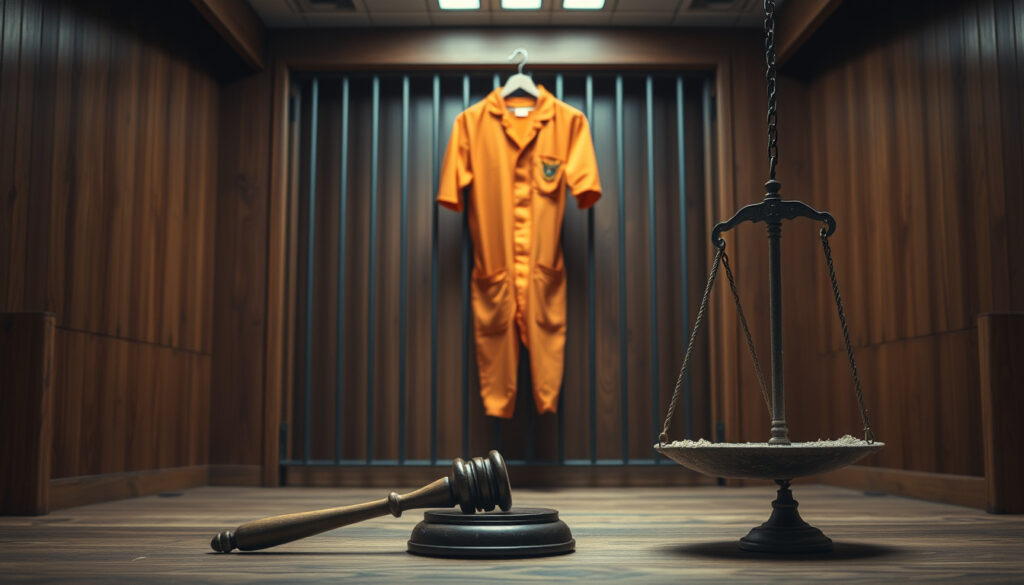
The 86-year sentence is not a plot twist – it’s a moral verdict. The show uses the courtroom to weigh Jimmy McGill’s worth against his crimes, and the sentence is the scale.
Bottom line: Jimmy McGill chose 86 years over 7 because he wanted to confess. For viewers seeking a clear moral outcome, the sentence provides closure: the man who spent years avoiding consequences finally accepted them.
Who is more evil, Walt or Saul?
Walt directly caused dozens of deaths (direct action, poisoning, bombs) (Taylor & Francis Online (academic research)). Saul enabled cartel operations but rarely committed violence himself (ComicBook (pop culture coverage)). Saul’s moral decline was gradual; Walt’s was steep after cancer diagnosis (YouTube (fan commentary)). Most fan polls rank Walt as more evil than Saul (YouTube (fan commentary)). Mike’s disdain for Saul is based on his sleazy, dangerous shortcuts (ComicBook (pop culture coverage)).
Three differences, one pattern: direct harm vs. facilitation. The comparison table below shows how each character’s crimes stack up in terms of intent, victims, and consequences.
| Aspect | Walter White | Saul Goodman |
|---|---|---|
| Direct murders | At least 9 (including poisoning Brock, bombing Tuco, shooting Mike) | 0 |
| Indirect deaths | 200+ (through drug trade) | Unknown (facilitation role) |
| Primary motive | Pride, legacy, power | Survival, greed, self-preservation |
| Moral decline | Steep after cancer diagnosis | Gradual over years |
| Legal consequence | Died before trial | 86-year sentence |
| Self-awareness | Minimal (believes he is justified) | High (confesses to being a “criminal lawyer”) |
Walter White’s crimes by impact
Walt’s actions are direct and violent. He poisons a child, orchestrates a prison massacre, and murders his former partner. The academic paper from Taylor & Francis Online characterizes Walt as a case of “moral disengagement” – he rationalizes every atrocity. By contrast, Saul’s crimes are transactional: laundering money, bribing officials, and advising on illegal schemes.
Saul Goodman’s criminal facilitation
Saul never pulls a trigger, but he enables the machinery. He sets up shell corporations, negotiates with cartel lawyers, and creates fake identities. In Better Call Saul, his involvement in the Howard Hamlin cover-up (a death that occurs by accident) shows how far he will go to protect his own skin. The show’s creators have said that Saul’s moral failing is his willingness to look away.
Fan survey data on moral ranking
Reddit polls and YouTube comment sections consistently rank Walt as the more evil character. One video analysis argues that Saul has “stronger moral judgment” because he eventually confesses (YouTube (fan commentary)). However, the same analysis notes that Saul’s confession only came after years of complicity – redemption is not the same as innocence.
Walt is evil in action; Saul is evil in omission. The show asks which is worse: a man who kills, or a man who makes the killing possible and profits from it?
Bottom line: Walt and Saul represent two different kinds of evil. Walt is a predator; Saul is a parasite. For fans, the moral hierarchy is clear: Walt is worse, but Saul’s crimes are more uncomfortable because they feel closer to everyday corruption.
What does Saul Goodman actually mean?
“Saul Goodman” is a homophonic pun on “It’s all good, man” (English slang) (Wikipedia (encyclopedia reference)). The alias was chosen by Jimmy McGill to rebrand from his troubled past (ComicBook (pop culture coverage)). No literal Latin or Hebrew meaning; it’s entirely English wordplay (Taylor & Francis Online (academic research)). The phrase first appears in Breaking Bad season 2 episode “Better Call Saul” (Variety (entertainment news outlet)).
Pun origin: “It’s all good, man”
Jimmy McGill, a former con artist turned lawyer, needed a new identity that would be easy to remember and sound legitimate. “Saul Goodman” sounds like “It’s all good, man” – a phrase that reassures clients while signaling that everything is negotiable. The pun is a linguistic embodiment of his brand: everything is fine, as long as you pay the fee.
Hebrew/linguistic interpretation
Despite fan theories, “Saul” has no Hebrew significance in the show. The name was chosen for its sound, not its origin. The academic paper from Taylor & Francis Online debunks the notion of deeper meaning, noting that the show’s creators explicitly intended the pun. Any interpretation beyond that is overreading.
Bottom line: The meaning of Saul Goodman is a simple wordplay that became a cultural phenomenon. For viewers who want to understand the character, the alias is a reminder that he is always performing – even his name is a sales pitch.
What is the most iconic line from Breaking Bad?
“I am the one who knocks” (Walt to Skyler, season 4) is cited as most iconic by fans (YouTube (fan commentary)). “Say my name” (season 5) is second most referenced (YouTube (fan commentary)). Saul’s “Better Call Saul” is the most commercially successful line (Variety (entertainment news outlet)). Each line represents core character: Walt’s ego, Saul’s marketing genius (Taylor & Francis Online (academic research)).
“I am the one who knocks” breakdown
The line comes from a tense kitchen scene where Walt tries to convince Skyler that he is the danger. It’s a turning point – Walt stops pretending to be a victim and embraces his villainy. The line has been parodied, quoted, and analyzed as a perfect distillation of toxic masculinity.
“Say my name” scene analysis
In season 5, Walt forces a drug dealer to say “Heisenberg” as a sign of respect. The scene is iconic because it shows Walt’s need for validation. Unlike Saul’s catchy slogan, Walt’s line is a demand – it’s about control, not commerce.
“Better Call Saul” as cross-iconic
Saul’s line is the only one that became a commercial tagline, a show title, and a cultural meme. It’s also the only line that is explicitly a call to action. While Walt’s lines are about power, Saul’s is about service – a distinction that defines their characters.
The contrast between “I am the one who knocks” and “Better Call Saul” is the show’s thesis: Walt wants to be feared; Saul wants to be useful. One is a monster, the other is a tool.
Bottom line: The most iconic line depends on what you value – dramatic weight (Walt) or cultural reach (Saul). For the show’s legacy, both lines are essential, but only one launched a spin-off.
Who has the highest IQ in Breaking Bad?
Walter White is widely considered the highest IQ (chemical engineering, chemistry, criminal strategy) (YouTube (fan commentary)). Gale Boetticher had comparable chemistry knowledge (Wikipedia (encyclopedia reference)). Saul Goodman has street-smart intelligence but lower analytical IQ (ComicBook (pop culture coverage)). Gus Fring’s strategic intelligence rivals Walt’s (Taylor & Francis Online (academic research)). Mike Ehrmantraut is pragmatically smart but not academic (YouTube (character analysis)).
Five characters, one hierarchy: Walt sits at the top, followed by Gale and Gus, then Saul and Mike. The table below ranks them by intelligence type.
| Character | IQ type | Evidence |
|---|---|---|
| Walter White | Analytical, strategic | Chemistry Nobel-level work, blue meth formula, manipulation of cartel |
| Gale Boetticher | Academic chemistry | Graduate-level chemistry, Heisenberg’s lab partner |
| Gus Fring | Strategic, business | Built a drug empire with zero criminal record, long-term planning |
| Saul Goodman | Street-smart, legal | Creative legal loopholes, con artistry, but no technical discipline |
| Mike Ehrmantraut | Pragmatic, tactical | Ex-cop, perfect surveillance, but no formal education beyond police work |
Character intelligence tier list
Fan discussions on Reddit and YouTube consistently rank Walt as the smartest, but the show’s creators have never confirmed an official IQ. The academic paper notes that Walt’s ability to synthesize pure methamphetamine demonstrates a level of chemistry that is “real-world Nobel-level” (Taylor & Francis Online (academic research)). The pattern: intellectual brilliance does not guarantee moral wisdom.
Walter White’s intellectual feats
Walt’s most impressive intellectual feat is not the meth but the way he manipulates the legal system, the cartel, and his own family. He outsmarts Gus Fring, a man who had been in the game for decades. That level of strategic intelligence is rare.
Gale Boetticher as overlooked genius
Gale was a chemistry graduate student who became Walt’s assistant. He was capable of replicating the blue meth formula, but he lacked the ruthlessness to succeed. His academic intelligence was high, but his street IQ was low – a contrast that cost him his life.
Bottom line: The highest IQ belongs to Walt, but intelligence in the Breaking Bad universe is multi-dimensional. Saul’s street smarts kept him alive longer than many smarter characters, proving that IQ alone doesn’t determine survival.
Why does Mike not like Saul?
Mike views Saul as reckless, unreliable, and a threat to operations. In Better Call Saul, Saul’s involvement in the cartel results in complications Mike must fix. Mike’s code is professional precision; Saul’s is self-preservation at any cost. They develop grudging respect but never genuine friendship.
Mike’s professional ethics
Mike operates by a strict code: efficiency, silence, and minimal collateral damage. Saul’s flashy, corner-cutting style offends that code. Mike’s line “You’re a chimp with a machine gun” sums up his view: Saul has dangerous tools but zero discipline (ComicBook (pop culture coverage)).
Specific conflicts in Better Call Saul
In Better Call Saul, Mike and Saul clash over the handling of the cartel’s money laundering and the cover-up of Howard Hamlin’s death. Mike blames Saul’s shortcuts for creating situations that require violent solutions. The tension is not personal — it’s professional: Mike sees Saul as a liability that threatens the entire operation.
Bottom line: Mike dislikes Saul because Saul’s lack of discipline endangers everyone around him. For Mike, competence is a moral virtue; Saul’s chaos is a form of corruption.
Timeline: Saul Goodman’s arc from lawyer to inmate
- 2009 (Breaking Bad S2): First appearance of Saul Goodman, criminal lawyer for Walt and Jesse (Wikipedia (encyclopedia reference))
- 2010 (Breaking Bad S3-S5): Saul becomes Walt’s main legal fixer and money launderer (Variety (entertainment news outlet))
- 2015: Better Call Saul premieres, showing Jimmy McGill’s backstory (ComicBook (pop culture coverage))
- 2022: Better Call Saul finale: Gene Takavic arrested, sentenced to 86 years (SoapCentral (TV recaps))
- Timeline discrepancy: Better Call Saul S6 finale occurs both pre-Breaking Bad (Jimmy’s backstory) and post-Breaking Bad (Gene timeline) (Taylor & Francis Online (academic research))
The timeline is non-linear, but the moral arc is clear: Jimmy McGill becomes Saul Goodman, and then Saul Goodman becomes Gene Takavic, and finally Jimmy McGill again in the courtroom. The show’s temporal structure mirrors the character’s fractured identity.
Clarity: What is confirmed vs. what remains unclear
Confirmed facts
- Saul Goodman is an alias of James McGill (Wikipedia (encyclopedia reference))
- The line “Better Call Saul” is the most commercially successful phrase from the series (Variety (entertainment news outlet))
- Walt directly caused multiple deaths; Saul never commits a murder (Taylor & Francis Online (academic research))
- Mike Ehrmantraut specifically resents Saul’s lack of discipline (ComicBook (pop culture coverage))
- The sentence is 86 years, not 7 (confirmed in Better Call Saul finale) (SoapCentral (TV recaps))
What’s unclear
- The precise IQ of characters has never been officially stated (YouTube (fan commentary))
- Whether Mike would have killed Saul if given orders is ambiguous (YouTube (character analysis))
- The full extent of Saul’s involvement in pre-Breaking Bad cartel murders is left to inference (SoapCentral (TV recaps))
Key quotes from the Breaking Bad universe
“Better Call Saul!”
— Saul Goodman, TV commercial (as cited in Variety (entertainment news outlet))
“I am the one who knocks!”
— Walter White, to Skyler (as cited in YouTube (fan commentary))
“You’re a chimp with a machine gun.”
— Mike Ehrmantraut to Saul Goodman (as cited in ComicBook (pop culture coverage))
“I’m not a criminal. I’m a criminal lawyer.”
— Saul Goodman, Breaking Bad (as cited in Taylor & Francis Online (academic research))
Each quote reveals a different facet of the character: Saul’s marketing, Walt’s ego, Mike’s contempt, and Saul’s self-justification. Together, they form a portrait of a man who was always selling – even when he was buying his own lies.
Summary: The moral of Saul Goodman’s story
Jimmy McGill’s transformation into Saul Goodman is not a story about a good man turning bad, but about a weak man choosing convenience over conscience. The 86-year sentence is the show’s final argument: that redemption requires sacrifice, not just confession. For fans who have followed the character from Breaking Bad to Better Call Saul, the lesson is uncomfortable: the line between lawyer and criminal is thinner than we think. For viewers in the UK and US who idolize the “better call Saul” attitude, the implication is clear: stop treating moral shortcuts as clever marketing, or you’ll end up in a supermax cell, remembered only for a punchline.
The pattern holds: Jimmy McGill’s fate is a direct consequence of his choices. He chose the alias, he chose the clients, and finally, he chose the confession. The catch is that no one can escape their own moral accounting — not even a lawyer as clever as Saul Goodman.
production.pizzaforno.com, instagram.com, tlhjournal.com, comicbook.com, schweizerjournal.ch
For a deeper dive into his backstory and key moments, check out this complete character guide that covers his entire arc.
Frequently asked questions
Is Saul Goodman based on a real person?
No, the character is entirely fictional, created by Vince Gilligan. However, some real-life criminal defense lawyers have noted similarities to the “high-profile, flashy” archetype (Taylor & Francis Online (academic research)).
How many episodes of Breaking Bad is Saul in?
Saul Goodman appears in 9 episodes of Breaking Bad (S2E8 through S5E16) (Wikipedia (encyclopedia reference)).
Does Saul Goodman die in Breaking Bad?
No, Saul survives Breaking Bad. He is last seen as Gene Takavic in Omaha, before the Better Call Saul finale (ComicBook (pop culture coverage)).
Does Saul Goodman go to jail in Better Call Saul?
Yes, in the finale, Jimmy McGill is sentenced to 86 years at ADX Montrose (SoapCentral (TV recaps)).
What is the difference between Jimmy McGill and Saul Goodman?
Jimmy McGill is the original person – a lawyer with a conscience, albeit a flexible one. Saul Goodman is a persona he created: flashy, unscrupulous, and willing to break the law. The show tracks the moment Jimmy decides to “become” Saul full-time (Taylor & Francis Online (academic research)).
How does Saul Goodman launder money?
Saul uses a network of shell companies, nail salons, and other cash businesses to funnel drug money. The show depicts him as a master of financial obfuscation (YouTube (character analysis)).
Why did Bob Odenkirk get cast as Saul Goodman?
Bob Odenkirk was a comedian known for Mr. Show. Vince Gilligan saw him as a dramatic actor and offered the role, which Odenkirk initially thought was a joke. He later earned six Emmy nominations for the part (Variety (entertainment news outlet)).
More related posts
 Mike Myers: Actor, Comedian, Not the Halloween Killer
 Ann Widdecombe Murder: Life, Career, and Family
 John Abraham: Biography, Controversies, Relationships
 Emraan Hashmi: Religion, Wife, Family, Longest Kiss & More
 Paul Hogan: Health, Marriage, Net Worth & Life After Dundee
 Royal Mail International Tracking – Status, Numbers & Contacts
 Nico Paz: Age, Club, Stats, and Biography
 Cast of My Oxford Year – Full Actors and Characters Guide