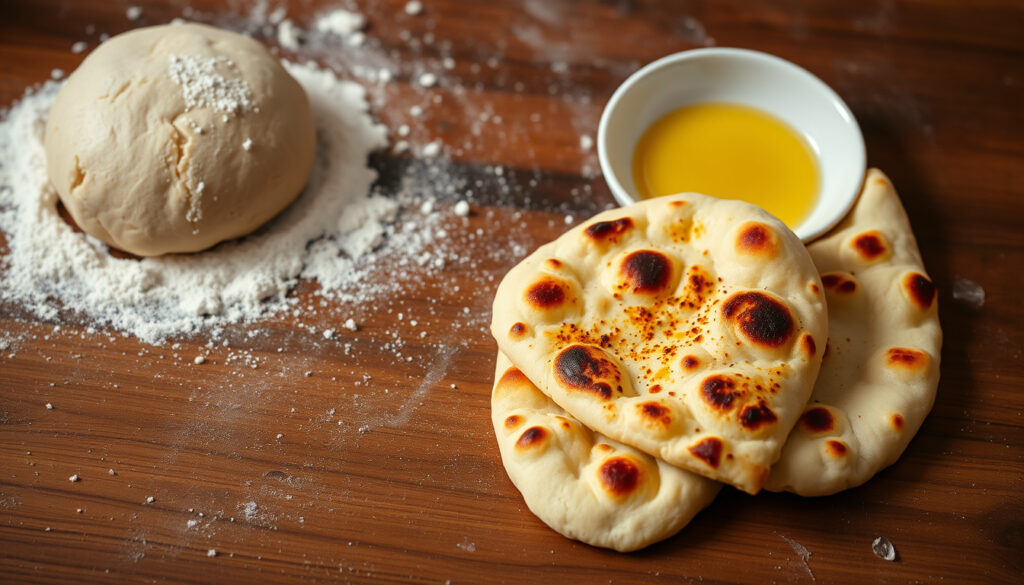
How to Make Naan Bread: Simple, 3-Ingredient & Traditional
There are few things more satisfying than tearing into a warm, buttery piece of naan fresh off the skillet. But if you’ve ever wondered whether you need a tandoor and a day’s worth of patience to make it at home, the answer is simpler than you think — this guide breaks down three reliable methods, from a traditional yeasted dough to a two-ingredient shortcut, so you can pick your approach based on time, ingredients, and confidence level.
Average recipe rating: 4.8/5 (BBC Good Food) ·
Traditional naan ingredients: flour, water, yeast, yogurt, salt, butter ·
Common dietary swaps: whole wheat flour, dairy-free yogurt, dry yeast ·
Time to cook one naan: 2–3 minutes
Quick snapshot
- Requires 1 hour rise (BBC Good Food)
- Fluffiest texture (BBC Good Food)
- Authentic tandoor taste (RecipeTin Eats)
- Best for traditionalists (BBC Good Food)
- No yeast needed (The Kitchen Paper)
- Self-raising flour + yogurt (Cheat Day Design)
- Ready in 10 minutes (Dished by Kate)
- Ideal for emergencies (The Kitchen Paper)
- Only self-raising flour and Greek yogurt (The Big Man’s World)
- No salt added (The Big Man’s World)
- Very quick, but less flavor (The Big Man’s World)
- Beginner-friendly (The Big Man’s World)
- Baking powder based (The Kitchen Paper)
- Tangy from yogurt
- No rise time
- Good for short notice
Five key facts about naan bread, one pattern: each method relies on a specific leavening and liquid ratio.
| Fact | Detail |
|---|---|
| Traditional naan origin | Indian subcontinent, cooked in tandoor (BBC Good Food) |
| Primary flour used | All-purpose or bread flour (strong white flour) (BBC Good Food) |
| Typical leavening | Yeast (traditional) or baking powder (quick) (RecipeTin Eats) |
| Key tenderizer | Yogurt or buttermilk (Cheat Day Design) |
| Common servings | 1 naan per person as side |
What are the ingredients of naan bread?
Flour, yeast, and leaveners
- All-purpose or bread flour is standard for gluten development (BBC Good Food (UK cooking authority))
- Instant yeast can be mixed directly with flour — no proofing needed (RecipeTin Eats (popular recipe site))
- Baking powder replaces yeast when combined with an acid like yogurt (The Kitchen Paper (home cooking blog))
Flour choice affects chew. Bread flour’s higher protein yields a more elastic dough, while all-purpose keeps it tender. For quick versions, self-raising flour already contains salt and leavening.
Yogurt and butter
- Yogurt adds tang and tenderizes gluten (RecipeTin Eats)
- Greek yogurt works best for thicker dough (Dished by Kate (recipe developer))
- Butter or ghee is brushed after cooking for authentic finish (BBC Good Food)
Yogurt is the backbone of soft naan. In a pinch, milk can substitute, but the dough becomes less pliable.
Salt and sugar balance
- Salt controls yeast activity and strengthens dough structure
- Sugar (optional) feeds yeast and aids browning (The Kitchen Paper)
- 2-ingredient dough omits salt — flavor comes from butter glaze
The implication: skipping salt in quick naan is fine because the butter finish carries the taste. For yeast-based dough, salt is non-negotiable for texture.
How to make simple naan bread?
- Mix dry ingredients and yeast
- Knead and rise
- Shape and cook in a hot skillet
- Brush with melted butter
Mix dry ingredients and yeast
- Combine 2 cups flour, 1 tsp salt, 1 tsp instant yeast
- Add ¾ cup warm water and 2 tbsp yogurt (BBC Good Food (UK cooking authority))
- Knead 5–7 minutes until smooth
Instant yeast dissolves straight into the dry mix, saving a proofing step. Nagi Maehashi of RecipeTin Eats says to mix water and yogurt together before adding to the flour for even hydration.
Knead and rise
- Let dough rest in a covered bowl for 1 hour at room temperature
- Dough should double in size and feel pillowy (RecipeTin Eats)
- A longer rise (up to 4 hours) deepens flavor (BBC Good Food)
Sticky dough is desirable. Resist the urge to add extra flour — the moisture helps the naan puff.
Shape and cook in a hot skillet
- Divide dough into 6 pieces, roll each into a teardrop shape
- Cook in a dry cast-iron skillet over medium-high heat
- Flip after 1–2 minutes when bubbles appear and bottom is charred
- Press gently to encourage puffing (RecipeTin Eats)
The skillet mimics a tandoor’s intense heat. Alexandra Stafford of Alexandra Cooks notes that a preheated pan is critical — if the pan isn’t hot enough, the naan will cook through before it has a chance to puff.
Brush with melted butter
- Immediately after cooking, brush with melted butter or ghee
- For garlic naan, add minced garlic and fresh coriander
- Nigella seeds or sesame seeds make a traditional garnish
The catch: the butter has to go on while the naan is still steaming. Delaying even 30 seconds reduces absorption.
For home cooks without a tandoor, the cast-iron skillet method delivers 90% of the authentic result. High heat and a wet dough are the two non‑negotiable variables.
The pattern: high heat and wet dough are the two non-negotiable variables for home cooks.
How to make naan bread with 3 ingredients?
3-ingredient dough: self-raising flour, yogurt, salt
- Self-raising flour contains baking powder and salt — no yeast needed
- Mix 2 cups self-raising flour with ¾ cup Greek yogurt (Cheat Day Design (recipe site))
- Bring together into a soft, slightly sticky ball
This method skips the rise entirely. The yogurt reacts with the leavening in the flour, producing carbon dioxide as soon as it hits the heat.
Optional baking powder for extra lift
- Add ½ tsp baking powder to self-raising flour for an extra puff
- Use within 5 minutes of mixing — the reaction starts immediately (The Kitchen Paper)
Some recipes add a pinch of garlic powder or dried herbs directly into the flour.
No yeast needed – quick method
- Cook immediately after mixing — no resting time
- Roll dough thin (¼-inch) and cook in a hot pan 2 minutes per side
- Brush with melted garlic butter while hot (Dished by Kate)
The trade-off: you lose the complex fermented flavour of yeast, but you gain speed. For a weeknight curry, this is your go-to.
How to make 2 ingredient naan bread?
Self-raising flour and Greek yogurt
- Stir together 1½ cups self-raising flour and 1 cup Greek yogurt (The Big Man’s World (recipe blog))
- Mix with a wooden spoon until a shaggy dough forms
- Knead 30 seconds — no more, or it toughens
The dough will feel wetter than typical bread dough. That’s intentional — the low flour-to-wet ratio is what creates pliability.
No salt – flavour boost from butter
- Because self-raising flour is unsalted, the only seasoning comes from the butter brush
- To compensate, season the butter with garlic powder or flaky salt
- Roll thin and cook in a dry pan over medium-high heat (The Big Man’s World)
Why this matters: the 2-ingredient version is the most accessible entry point for beginners. But its simplicity means you must rely on toppings to build flavour.
What are common mistakes when making naan?
Overworking the dough
- Kneading too much develops excessive gluten, turning naan rubbery
- 2- and 3-ingredient versions need minimal kneading (Dished by Kate)
- Yeast dough: knead until smooth, not beyond
Using too much flour when rolling
- Dusting the board heavily dries the surface, preventing char marks
- Wet your hands with oil instead of adding flour (RecipeTin Eats)
- Sticky dough is a sign of proper hydration
Pan not hot enough
- Without searing heat, the naan won’t puff or develop leopard spots
- Preheat the skillet for 5 minutes over medium-high before the first piece (The Kitchen Paper)
- A smoking pan is ideal — lower heat results in dense bread
Skipping the butter brush
- Butter isn’t just flavouring; it traps steam and keeps the crust soft
- Brush immediately after cooking, while the naan is still hot
- Ghee offers a nuttier taste than butter (BBC Good Food)
The pattern: every common mistake comes down to either heat management or moisture control. The right pan temperature and a slightly tacky dough are the two pillars of good naan.
How to make naan bread without yeast?
Baking powder or self-raising flour substitute
- Swap yeast for 2 tsp baking powder per cup of flour
- Combine with an acidic ingredient (yogurt or buttermilk) to activate (Cheat Day Design)
- Self-raising flour (plain flour + baking powder + salt) works perfectly
Yogurt-based quick dough
- Use a 2:1 ratio of self-raising flour to Greek yogurt
- No water needed — the yogurt provides all the liquid (Dished by Kate)
- Dough comes together in 2 minutes and is ready to roll
No rise time, cook immediately
- Unlike yeast dough, no-rise naan doesn’t benefit from resting
- Cook within 15 minutes of mixing to get the best texture (The Kitchen Paper)
- The leavening reaction happens in the pan, not the bowl
The trade-off: yeast-free naan is faster but less flavourful. If you’re serving it with a strongly spiced curry, the difference is barely noticeable.
The implication: managing dough moisture is key for no-yeast versions.
Confirmed facts vs. what’s unclear
Confirmed facts
- Naan contains flour, water, yeast or leavening, yogurt, salt (BBC Good Food)
- High heat is necessary for puffing (RecipeTin Eats)
- Butter or ghee glaze is standard after cooking (The Kitchen Paper)
- Two-ingredient dough uses self-raising flour and Greek yogurt (The Big Man’s World)
What’s unclear
- Exact calorie differences between white and whole wheat naan vary by recipe
- Whether yogurt can be omitted without affecting texture significantly — most recipes rely on it for tenderness
- Whether using milk instead of yogurt produces acceptable texture – no consistent data
- Whether 2-ingredient dough can be made with whole wheat self-raising flour – no reliable test
The key to a good naan is a hot pan — it gives you that charred, puffy texture almost instantly.
Nagi Maehashi, RecipeTin Eats
Instant yeast can be mixed directly with the flour — no need to proof it in water first. That saves time without sacrificing rise.
Alexandra Stafford, Alexandra Cooks
For a quick weeknight naan, the 2-ingredient version is a revelation. It’s forgiving, fast, and the kids can help roll it out.
Recipe editor, BBC Good Food
Summary
Choosing between a yeast-risen and a quick naan comes down to how much time you have and what you’re pairing it with. For the home cook in a busy household, the 3-ingredient shortcut hits the sweet spot: it delivers a soft, pillowy bread in under 15 minutes without skimping on texture. For anyone chasing that tandoor-charred authenticity, the traditional yeast method remains the gold standard — but you’ll need to plan ahead. Either way, the skillet, not the oven, is your best friend. For the home cook without a tandoor, the choice is clear: cast iron at high heat, or a pan that mimics it.
Frequently asked questions
Can I use whole wheat flour for naan?
Yes, but the texture will be denser. Replace up to half the all-purpose flour with whole wheat to keep some fluffiness.
How do I store leftover naan?
Wrap in foil and keep at room temperature for 1 day, or freeze for up to 3 months. Reheat in a dry pan for 30 seconds per side.
Can I freeze naan dough?
Yes. Wrap the dough in plastic and freeze for up to 1 month. Thaw overnight in the fridge and bring to room temperature before rolling.
Why is my naan not puffing up?
The pan isn’t hot enough or the dough is too dry. Preheat the skillet for 5 minutes and keep the dough slightly sticky.
What can I substitute for yogurt in naan?
Milk mixed with a teaspoon of lemon juice or vinegar works in a pinch. The acid is needed to activate baking powder if you’re using a no-yeast recipe.
How hot should the pan be for cooking naan?
Medium-high to high heat. You should see faint wisps of smoke before the first piece goes in.
Is naan vegan if I use plant-based yogurt?
Yes, as long as you use a vegan yogurt alternative and skip the butter glaze (use oil instead). The dough itself is dairy-free if you substitute.
More related posts
 Dirk Benedict 2025 Update: Still Alive, Living in Montana
 Jameela Jamil: Disability, Fame, and Personal Life
 Kaitlyn Dever: Biography, Last of Us Role, and Controversies
 Best Small SUV UK 2026: Top Picks, Reliability & Reviews
 Flynn Rider Age, Controversy & Character Facts
 Tony Sirico Biography: 28 Arrests to Paulie Walnuts
 Liev Schreiber: Facts vs. Health Rumors
 Check MOT History UK: Free GOV.UK Checker Guide