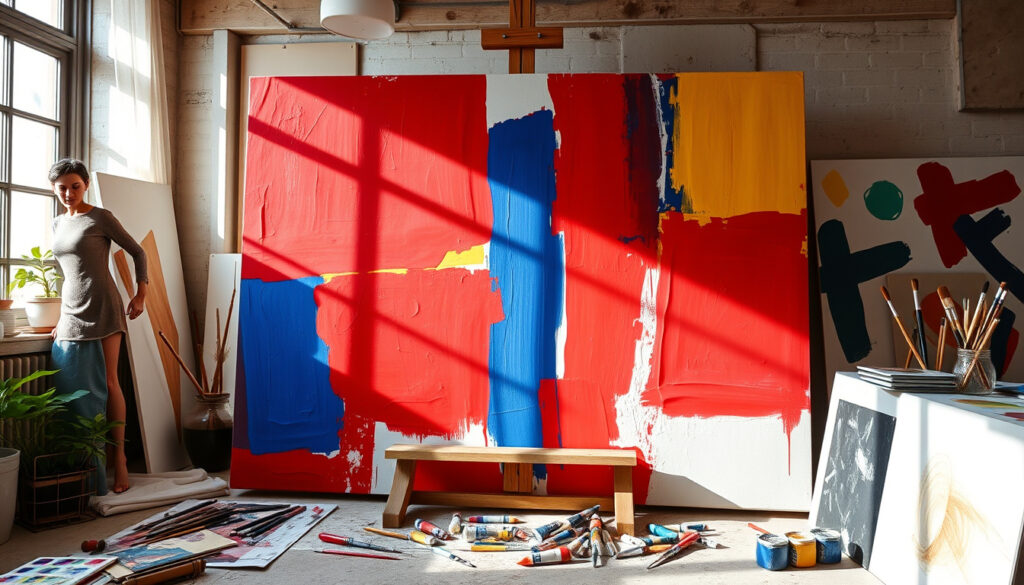
Henri Matisse: Fauvist Color Master and Modern Art Pioneer
You might know Henri Matisse as the French artist who turned color into a revolution. But before he picked up a brush, he was a law student—until an illness pushed him to paint. This article traces his journey from courtroom to canvas, and the bold style that changed modern art, drawing on museum archives and expert sources.
Born: 31 December 1869, Le Cateau-Cambrésis, France ·
Died: 3 November 1954, Nice, France ·
Artworks produced: 1,246+ (paintings, sculptures, prints, collages) ·
Known for: Vibrant color, fluid draughtsmanship, Fauvism ·
Famous piece: Woman with a Hat (1905)
Quick snapshot
- Born 1869 in northern France. (Wikipedia (free encyclopedia))
- Studied law before art. (Wikipedia)
- Began painting after illness. (Wikipedia)
- Leader of Fauvism from 1905. (The Metropolitan Museum of Art (museum institution))
- Exhibited at Salon d’Automne. (The Metropolitan Museum of Art)
- Woman with a Hat caused scandal. (The Metropolitan Museum of Art)
- Simplified forms and flat color. (Musée Matisse de Nice (museum))
- Travels to Morocco and Tahiti influenced work. (Mayfield Schools (school district))
- Created large murals. (Mayfield Schools)
- Gouache découpé collages. (Gallery Thane (art gallery))
- Chapel of the Rosary in Vence. (Wikipedia)
- Continued until his death in 1954. (Wikipedia)
Five facts, one pattern: Matisse’s career was a constant reinvention of color and form.
The table below captures the essentials.
| Full name | Henri Émile Benoît Matisse (Wikipedia) |
| Birthplace | Le Cateau-Cambrésis, France (Wikipedia) |
| Movement | Fauvism, Modernism (The Metropolitan Museum of Art) |
| Notable quote | “Creativity takes courage.” (Wikipedia) |
| Artwork count | Over 1,200 paintings, plus sculptures and prints (Wikipedia) |
The pattern: Matisse’s personal stats reveal a prodigious output that spanned six decades.
What was Henri Matisse best known for?
Use of color and draughtsmanship
Matisse is widely recognized for his vibrant color and fluid drawing. As Wikipedia (free encyclopedia) notes, his “use of color and original draughtsmanship” became his signature. He treated color as an independent force, not a servant of nature.
Role as a Fauvist leader
He led the Fauvism movement from 1905 to 1910. The term “Fauvism” comes from the French fauve (wild beast), coined after the 1905 Salon d’Automne (The Metropolitan Museum of Art). Matisse and André Derain used bold, arbitrary colors that shocked audiences.
Major works
His most famous pieces include Woman with a Hat (1905) and The Dance (1910). Woman with a Hat is a breakthrough Fauvist work that caused a scandal at the Salon d’Automne (The Metropolitan Museum of Art). The Dance exemplifies his simplified, dynamic forms (Mayfield Schools).
Matisse didn’t just paint with color—he made color the subject. For modern artists, his lesson is that hue can carry emotion as powerfully as line or shape.
What defines Henri Matisse’s art style?
Fauvism characteristics
Fauvism uses wild, expressive brushwork and strong colors. According to The Metropolitan Museum of Art, Fauve painters “relied on sensation and experience rather than painting perceptually from nature.” Brushwork ranged from blended strokes to blocky marks.
Color theory and expression
Matisse valued color over realistic representation. In Luxe, Calme et Volupté he used a regularized Neo-Impressionist technique, but soon abandoned it for looser, separated strokes on raw canvas (Khan Academy (educational platform)). He consistently sought emotional expression through color.
Simplified forms
Matisse’s later paintings feature flat planes of pure color and simplified shapes. The Musée Matisse de Nice (museum) describes his early Fauvist technique as using “flat areas of pure color rather than naturalistic modeling.”
The pattern: Matisse stripped away detail to let color and form deliver the emotional punch. That trade-off—losing naturalism for intensity—defined his entire career.
Was Matisse an impressionist?
Comparison with Impressionism
Matisse was not an Impressionist; he was a Fauvist. Impressionists like Monet focused on optical effects of light, while Matisse used color to express emotion, not to capture fleeting moments. As Mayfield Schools notes, he emerged as a Post-Impressionist before leading Fauvism.
Matisse’s influences
He was influenced by Impressionists but rejected their approach. The Metropolitan Museum of Art explains that Matisse and Derain “redefined color by relying on sensation and experience” rather than perceptual painting.
Transition to Fauvism
After the 1905 Salon d’Automne, Matisse fully embraced Fauvism. He also rejected Cubism, choosing instead to “use color as the foundation for expressive, decorative, often monumental painting” (Mayfield Schools).
Matisse borrowed from Impressionism’s liberation of color, then pushed it further. For viewers, the difference is clear: Monet paints light on water; Matisse paints the feeling of water with pure pigment.
What techniques did Matisse use?
Oil painting and brushwork
Matisse used flat planes of color and simplified shapes. His early Fauvist technique involved “flat areas of pure color” (Musée Matisse de Nice). He also employed a limited range of colors, emphasizing the brightest primaries and secondaries (LibreTexts (educational resource)).
Cut-paper collage (gouache découpé)
In later life, after surgery in 1941, Matisse created collages from painted paper. He cut shapes from painted paper and assembled them into compositions (Gallery Thane (art gallery)). This technique allowed him to continue creating art despite declining health.
Printmaking and sculpture
Matisse also produced sculptures and prints throughout his career. His body of work includes over 1,200 paintings, plus sculptures, prints, and collages (Wikipedia).
The implication: Matisse’s methods evolved continuously, but his core belief—that color could stand alone as a narrative force—never wavered.
What is Matisse’s most famous painting?
Woman with a Hat (1905)
Widely cited as his breakthrough Fauvist work, Woman with a Hat depicts his wife Amélie with bold, non-naturalistic colors. The Metropolitan Museum of Art notes that the painting caused a scandal at the 1905 Salon d’Automne, helping to define Fauvism.
The Dance (1910)
The Dance is a key example of Matisse’s simplified, dynamic forms. Commissioned by a wealthy collector, it shows five figures in a circular dance, using flat, intense red against a green and blue background (Mayfield Schools).
Other iconic works
Other famous pieces include The Red Studio (1911), Goldfish (1912), and his late cut-out series like The Snail (1953). Multiple sources list these among his most recognized works (Wikipedia).
Why this matters: The debate over Matisse’s “most famous” painting reflects the breadth of his output. But Woman with a Hat remains the definitive starting point for understanding his revolution.
Timeline
- 1869 – Henri Matisse born in Le Cateau-Cambrésis. (Wikipedia)
- 1891 – Abandons law to study art at Académie Julian. (Wikipedia)
- 1905 – Exhibits at Salon d’Automne; Fauvism is named. (The Metropolitan Museum of Art)
- 1910 – Paints The Dance for a wealthy collector. (Mayfield Schools)
- 1941 – After surgery, begins cut-paper collages. (Gallery Thane)
- 1954 – Dies in Nice, France. (Wikipedia)
The catch: Matisse’s most productive late period came after a major health crisis—proving that physical limitation could fuel artistic innovation.
Clarity check
Confirmed facts
- Matisse was a French Fauvist artist. (Wikipedia (free encyclopedia))
- He used color expressively and simplistically. (The Metropolitan Museum of Art (museum institution))
- Woman with a Hat is a seminal Fauvist work. (The Metropolitan Museum of Art (museum institution))
What’s unclear
- The exact date of his first cut-paper collage is debated among scholars.
- Some sources list different artworks as “most famous”—opinions vary.
The trade-off: Even with an extensive research record, small gaps remain in the timeline of Matisse’s collage technique. That ambiguity doesn’t change the big picture: his color legacy is solid.
Quotes on Matisse
“Creativity takes courage.”
— Henri Matisse (Wikipedia (free encyclopedia))
“Matisse’s color is not a description of what something looks like—it is an expression of what something feels like.”
— The Metropolitan Museum of Art (The Metropolitan Museum of Art (museum institution))
For collectors and art lovers today, the choice is clear: engage with Matisse’s work on its own terms—bold, emotional, and unapologetically colorful—or miss the very point of modern art. The legacy of a lawyer-turned-painter who trusted color above all else remains a masterclass in creative risk.
britannica.com, metmuseum.org, russell-collection.com, prominentpainting.com, masterworksfineart.com, prixhotels.fr
For those wanting to learn more about his Fauvist masterpieces, Henri Matisses biography and art style offers an in-depth exploration of his techniques and famous works.
Frequently asked questions
What is the meaning behind Matisse’s Goldfish?
Matisse’s Goldfish (1912) is often interpreted as a meditation on color, light, and tranquility. The goldfish in a glass bowl allow him to experiment with transparency and reflection, using vibrant orange against cool blues and greens. The painting lacks a single “hidden” meaning—it’s an exercise in pure visual pleasure.
How did Matisse’s law career affect his art?
Matisse studied law and worked as a court clerk before an illness (appendicitis) in 1890 left him bedridden. His mother gave him art supplies to pass the time, and he discovered a passion that led him to abandon law. His legal training gave him discipline, but he admitted that painting “felt like paradise.”
What museum holds the largest Matisse collection?
The Musée Matisse in Nice, France, holds the largest collection, with over 236 paintings, sculptures, and drawings. The museum is housed in a 17th-century villa. The Metropolitan Museum of Art in New York also has a significant collection.
Did Matisse ever marry?
Yes, Matisse married Amélie Parayre in 1898. They had three children: Marguerite, Jean, and Pierre. Amélie appears in many of his early paintings, including Woman with a Hat. The couple separated later in life but never divorced.
What is the saddest painting by Matisse?
There is no widely recognized “saddest” Matisse painting. His work is generally joyful and vibrant. However, some critics point to The Piano Lesson (1916) as more somber, with its muted palette and tense composition, reflecting the mood of World War I.
How did Matisse’s health affect his later work?
After surgery for intestinal cancer in 1941, Matisse was confined to a wheelchair. He invented the “gouache découpé” technique—cutting shapes from painted paper—to continue creating art. This period produced some of his most celebrated works, including The Snail and the designs for the Chapel of the Rosary.
What is the value of a Matisse painting today?
Matisse paintings frequently sell for tens of millions of dollars. In 2021, Odalisque couchée aux magnolias sold for $48.8 million at auction. His cut-outs also command high prices, with The Snail estimated at over $50 million—though it resides in the Tate Modern collection.
Related reading
More related posts
 Calvin Bassey: age, religion, parents, salary
 Bryan Johnson: Age, Net Worth, Diet, and Anti-Aging Blueprint
 Newspaper – Origins, History and Formats
 Pets at Home Jobs: Salaries, Careers & Animal Care Pay in 2025
 Iggy Azalea: Biography, Net Worth, OnlyFans
 Generation Millennials: Age Range, Traits, and Key Differences
 Olivia Buzaglo: Age, Career, and Football Presenter Profile
 Kate Moss: Biography, Height, Weight, and Why She Was a Big Deal