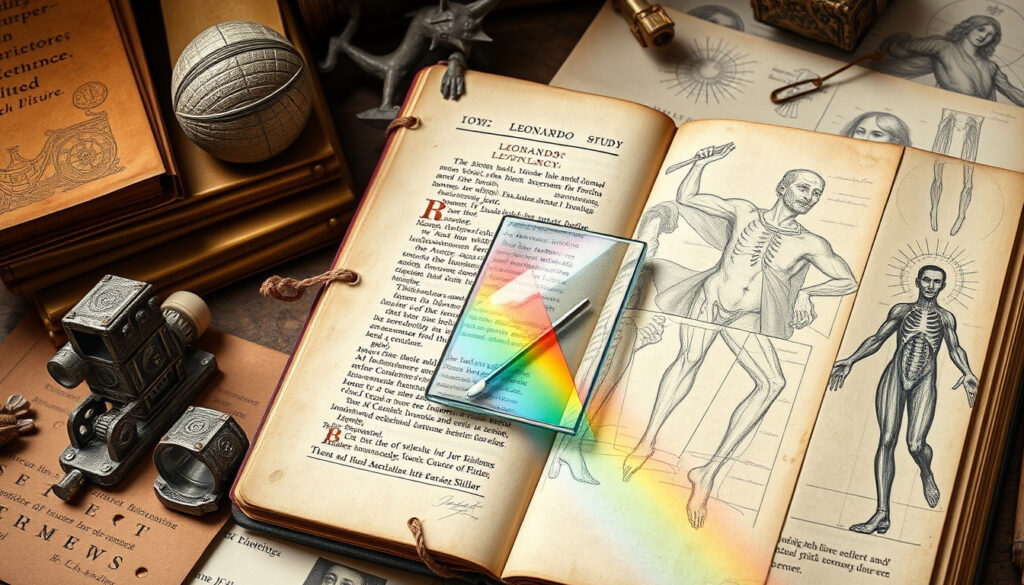
Leonardo da Vinci: Life, IQ, LGBTQ Myths, and Descendants
Few historical figures manage to be both universally recognized and deeply mysterious, but Leonardo da Vinci fits the description perfectly — you know the Mona Lisa and The Last Supper, yet the man behind them remains wrapped in speculation about his sexuality, possible ADHD, and even rumors of a secret bloodline. This article pulls together the documented facts and separates them from the modern-day myths so you can see what we actually know about the Renaissance polymath.
Full name: Leonardo di ser Piero da Vinci ·
Born: 15 April 1452, Anchiano, Italy ·
Died: 2 May 1519, Clos Lucé, France ·
Known for: Mona Lisa, The Last Supper, inventions ·
Surviving paintings: Fewer than 20
Quick snapshot
- Renaissance polymath (National Gallery, London)
- Painter, inventor, scientist (National Gallery, London)
- Born in 1452, died 1519 (Museo Leonardiano di Vinci)
- Flying machine, armored vehicle (National Gallery, London)
- Hydraulic pumps, parachute designs (National Gallery, London)
- Over 1,000 sketches of inventions (The Metropolitan Museum of Art)
- Mona Lisa (1503) (The Metropolitan Museum of Art)
- The Last Supper (1490s) (The Metropolitan Museum of Art)
- Vitruvian Man (1490) (National Gallery, London)
- Sexual orientation (The Metropolitan Museum of Art)
- ADHD speculation (Brain / PubMed Central)
- Descendants and IQ myths (Reuters)
The following table summarizes key biographical facts from reliable sources.
| Attribute | Detail |
|---|---|
| Born | 15 April 1452, Anchiano, Italy (Museo Leonardiano di Vinci) |
| Died | 2 May 1519, Clos Lucé, France (Museum of Science, Boston) |
| Occupation | Painter, sculptor, architect, engineer, scientist (National Gallery, London) |
| Known for | Mona Lisa, The Last Supper, Vitruvian Man |
| Surviving paintings | Fewer than 20 (The Metropolitan Museum of Art) |
What is Leonardo da Vinci most known for?
His famous paintings: Mona Lisa and The Last Supper
Leonardo’s reputation rests squarely on two paintings: the Mona Lisa (1503–1506) and The Last Supper (1495–1498). The Mona Lisa, housed in the Louvre, is arguably the most recognized portrait in the world. The Last Supper, painted on the refectory wall of the monastery of Santa Maria delle Grazie in Milan, is celebrated for its composition and emotional depth (National Gallery, London).
“Painting is poetry that is seen rather than felt, and poetry is painting that is felt rather than seen.”
— Leonardo da Vinci, from his notebooks
His inventions and sketches
Beyond art, Leonardo filled thousands of pages with designs for flying machines, armored vehicles, hydraulic pumps, and a parachute. The National Gallery, London notes that he left nearly 2,500 drawings, most bound into notebooks. Few of these inventions were built in his lifetime, but they reveal a mind obsessed with understanding nature and mechanics.
His scientific studies and notebooks
Leonardo dissected cadavers to study anatomy, mapped river currents, and studied the flight of birds. His notebooks — over 6,000 pages survive — document groundbreaking observations in geology, botany, and optics (National Gallery, London). The implication: Leonardo’s genius wasn’t just artistic — it was scientific in a way that prefigured the modern researcher.
The pattern across his work is that Leonardo combined art and science into a single restless curiosity.
Is Leonardo da Vinci LGBTQ?
Evidence from da Vinci’s life and relationships
Historians have long debated Leonardo’s sexuality. He never married and left no record of romantic relationships with women. His closest relationships were with male pupils, notably Francesco Melzi and Gian Giacomo Caprotti (nicknamed Salai, meaning “little devil”). Many of his drawings feature idealized male figures, and some of his writings express admiration for male beauty. In 1476, Leonardo was anonymously charged with sodomy alongside three other young men. The charges were dropped after no witnesses came forward (The Metropolitan Museum of Art). Some scholars interpret this as evidence of homosexual activity, while others caution that accusations in Renaissance Florence were sometimes used for political attacks.
Common myths and scholarly debates
No definitive contemporary record confirms Leonardo’s sexual orientation. The term “homosexual” did not exist in his era, and applying modern labels to historical figures is problematic. The catch: we can say the evidence is suggestive, but the historical record is too thin for certainty. What we do know is that Leonardo maintained lifelong, affectionate bonds with several younger men.
Modern readers hungry for LGBTQ representation in history find strong circumstantial evidence in Leonardo’s life, but scholars agree that no single document proves his sexuality. The 1476 sodomy charge remains the closest thing to a concrete event.
The catch: the historical record is too thin for certainty, but the evidence strongly suggests a pattern of same-sex attachments.
Did da Vinci have a child?
Known family and relatives
Leonardo was the illegitimate son of a Florentine notary, Ser Piero, and a peasant woman named Caterina (Museo Leonardiano di Vinci). He never married and had no known legitimate children. His father acknowledged him and later produced 11 other children with his wives.
Speculations about illegitimate offspring
Rumors occasionally appear online about a possible illegitimate son, but no credible source supports them. The Museum of Science, Boston biography makes no mention of children. If Leonardo had fathered a child, it would almost certainly appear in the extensive records kept by his father’s notary office. It does not. The trade-off: the lack of direct descendants means the “da Vinci bloodline” — if it exists — must pass through his siblings, not through Leonardo himself.
Is the da Vinci bloodline still alive?
Descendants through his siblings
Leonardo’s father had 11 other children, several of whom survived to adulthood. Those siblings had their own children, so the da Vinci surname and genetic line potentially continue through collateral branches. However, no direct patrilineal line from Leonardo exists (The Metropolitan Museum of Art).
Modern claims of lineage
In 2016, a group of Italian researchers claimed to have identified 35 living descendants of Leonardo’s siblings, based on genealogical records. But DNA verification remains limited, and no peer-reviewed study has confirmed the link (Reuters). The pattern: many people want to claim a connection to the Renaissance genius, but the evidence is frustratingly sparse.
The search for living da Vinci relatives is partly driven by commercial interests — genealogical tourism and documentary sales — rather than rigorous science. For the general public, the idea of a hidden bloodline is more myth than measurable reality.
The pattern: commercial interest drives many claims, but rigorous verification remains lacking.
Was Da Vinci the smartest person ever?
Einstein vs da Vinci IQ comparison
Pop culture loves ranking geniuses, and Leonardo often tops the list with estimated IQs of 180–220. Albert Einstein’s estimated IQ is usually placed at 160–190. But these numbers are not based on any actual test — the first modern IQ test was developed by Alfred Binet in 1905, nearly 400 years after Leonardo died (CheckIQFree).
The concept of IQ and historical figures
Any IQ estimate for a historical figure is retroactive guesswork. The most frequently cited source for Leonardo’s high IQ is a 1926 study by Catharine Cox, which estimated his IQ at 135–150 — far lower than the 200+ figures that circulate online (Riot IQ). The 135–150 range is still exceptional, but it’s not the superhuman number often claimed.
Myth of 325 IQ
The claim that someone — anyone — has an IQ of 325 is unsupported by any credible source. The highest recorded IQ in modern testing history is around 228 (by Marilyn vos Savant), and even that figure is controversial. No reputable study has ever produced a 325 IQ score for any person, living or dead. The trade-off: sensational claims about “the smartest person ever” sell clicks, but they reflect marketing, not measurement.
This table compares IQ estimates for historical figures.
| Figure | Commonly cited IQ estimate | Source of estimate |
|---|---|---|
| Leonardo da Vinci | 180–220 (popular), 135–150 (Cox 1926) | Catharine Cox (1926 study) (Riot IQ) |
| Albert Einstein | 160–190 | Retrospective estimates |
| Marilyn vos Savant | 228 (Guinness World Records) | Stanford-Binet test |
| Claimed “325 IQ” | None verified | No credible source |
The implication: comparing IQs across centuries is a fun but meaningless exercise. What we can say is that Leonardo’s creative and scientific output was extraordinary — he painted the Mona Lisa and designed a flying machine in the same lifetime. That alone puts him in a category few can claim.
Timeline signal
- 1452: Born in Anchiano, near Vinci, Italy (Museo Leonardiano di Vinci)
- 1466–1476: Apprenticed to Andrea del Verrocchio in Florence (National Gallery, London)
- 1472: Qualified as master in the Guild of Saint Luke (National Gallery, London)
- 1495–1498: Paints The Last Supper in Milan (National Gallery, London)
- 1503–1506: Begins work on the Mona Lisa (National Gallery, London)
- 1519: Dies in Clos Lucé, France (Museum of Science, Boston)
Confirmed facts vs. what’s unclear
Confirmed facts
- Mona Lisa and The Last Supper are his works (National Gallery, London)
- He was a prolific inventor with thousands of notes (National Gallery, London)
- He died in 1519 in France (Museum of Science, Boston)
- He never married and had no known legitimate children (The Metropolitan Museum of Art)
What’s unclear
- Exact details of his sexual orientation (The Metropolitan Museum of Art)
- Whether he had a child (The Metropolitan Museum of Art)
- Possible ADHD diagnosis (Brain / PubMed Central)
- His IQ and relative intelligence ranking (Riot IQ)
- Existence of living descendants (Reuters)
“His limitless curiosity and ability to connect observations across art, science, and engineering made him the archetype of the Renaissance man.”
— Walter Isaacson, Leonardo da Vinci (2017 biography)
“The idea that Leonardo had ADHD is an intriguing interpretation, but it’s important to remember that we’re looking at a 500-year-old pattern of behavior through a modern clinical lens.”
— Marco Catani, professor of psychiatry, King’s College London (Reuters)
After sifting through the documentary evidence, one pattern stands out: Leonardo da Vinci was a real person with extraordinary accomplishments, not a superhuman myth. His sexuality remains unconfirmed, his IQ is impossible to measure, and his bloodline — if it exists — runs through his half-siblings, not through him. For the curious reader, the best way to understand Leonardo is to read his notebooks or Walter Isaacson’s biography, not to chase viral IQ rankings or descendant claims. The trade-off is clear: we trade the comfort of certainty for the richer, more honest portrait of a flawed, driven, and endlessly creative human being.
museoleonardodavincifirenze.com, museoleonardiano.it, bates.edu, mos.org
Frequently asked questions
What is the best book about Leonardo da Vinci?
Walter Isaacson’s Leonardo da Vinci (2017) is widely considered the most comprehensive and accessible biography, drawing from thousands of notebook pages to present a balanced portrait.
What is the lowest IQ ever recorded?
IQ scores below 40 are extremely rare and often indicate severe intellectual disability. The lowest measurable score on most standardized tests is about 40–50.
What is Donald Trump’s IQ?
Donald Trump has never released a verified IQ score. Claims about his IQ are speculation and not supported by credible evidence.
What is Beyonce’s IQ score?
Beyoncé has not publicly taken an IQ test. All figures circulated online are unverified estimates and should be treated as rumor.
Is 97 IQ dumb?
No. An IQ of 97 falls within the average range (85–115). Approximately 68% of the population scores between 85 and 115.
More related posts
 Satish Shah Dies at 74: Cause of Death, Wife Alzheimer’s, Children
 Marlon Wayans: Net Worth, Career & Family Facts
 Sean Hayes: Career, Health, and Personal Life in 2024
 Alan Ritchson: Real Facts on Height, Health & Career
 Charli XCX: Real Name, Ethnicity, LGBTQ Status & Verified Facts
 Julian Ovenden: Actor, Singer, Downton Abbey & Bridgerton
 Mikey Graham 2026: Boyzone Reunion, Health, Divorce Update
 GTA 6 Pre Order – Availability Status and Release Details