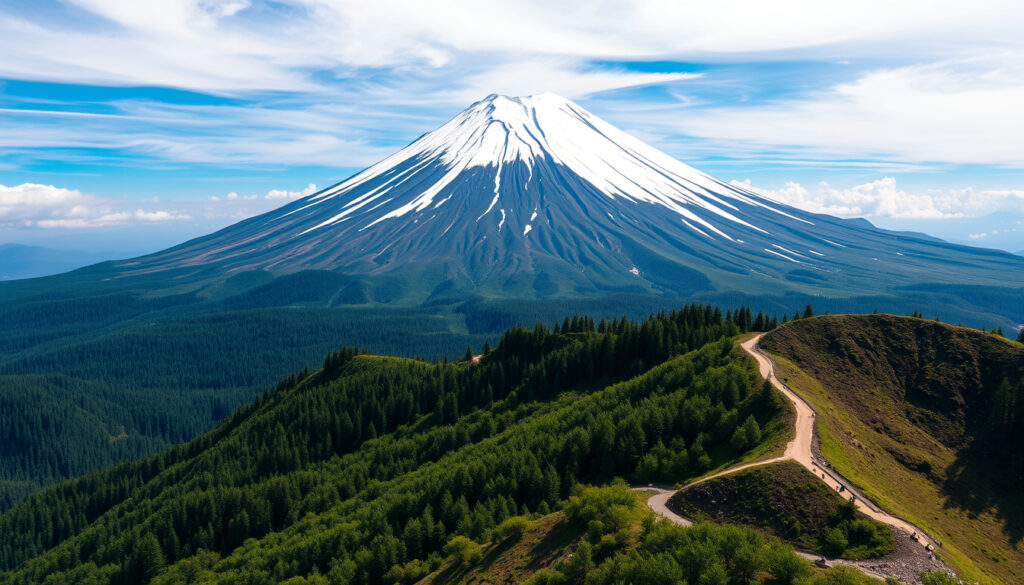
Mount Fuji: Key Facts & 2026 Climbing Season Guide
Mount Fuji demands respect: climbing it is strictly confined to a short summer window, and a day trip from Tokyo takes careful planning. Here are the essential facts for your 2026 visit.
Elevation: 3,776 m (12,388 ft) · Location: Yamanashi & Shizuoka, Japan · Climbing Season: July 1 – September 10 · Volcano Type: Active stratovolcano
Key Facts at a Glance
- Official 2026 season operated July 1 to September 10 (Official Website for Mt. Fuji Climbing).
- The mountain is closed outside the official season (Official Website for Mt. Fuji Climbing).
- Dates are set by the prefectures and the official climbing website. (Official Website for Mt. Fuji Climbing)
- The Subaru Line (Fujiyoshida) is a key access road from the east side. (Japan Guide)
- Public transport from Tokyo to the 5th Station is available via bus and train (Japan Guide).
- The trailhead at 5th Station is the standard starting point for the Yoshida Trail. (Japan Guide)
- Active stratovolcano, but current risk level is low (Encyclopaedia Britannica).
- Mainstream reference guides confirm it is an active volcano, not dormant. (Encyclopaedia Britannica)
- Last eruption period was 1707–1708 (Hoei eruption) (Encyclopaedia Britannica).
- Entrance fee applies (typically 1,000–2,000 yen, depending on season) (Official Website for Mt. Fuji Climbing).
- Non-seasonal climbing is prohibited unless a mountain hut reservation is held (Japan National Tourism Organization).
- Daytime-only access is encouraged to avoid altitude sickness. (Official Website for Mt. Fuji Climbing)
What Are 5 Facts About Mount Fuji?
Mount Fuji is Japan’s highest mountain at 3,776 meters (12,388 ft), and it is an active stratovolcano that last erupted in 1707 during the Hoei eruption (Encyclopaedia Britannica). The mountain is a UNESCO World Heritage site (since 2013), located on Honshu island, spanning Yamanashi and Shizuoka prefectures. The climbing season is limited to July–September due to snow and weather (Official Website for Mt. Fuji Climbing).
| Height | 3,776 m (12,388 ft) |
| Location | Yamanashi and Shizuoka prefectures, Japan |
| Volcano Type | Active stratovolcano |
| Last Eruption | 1707–1708 (Hoei eruption) |
| Climbing Season | July to early September |
| Distance from Tokyo | Approximately 100 km (62 mi) southwest |
| Bullet Train Time from Tokyo | ~1 hour to Shin‑Fuji Station |
| Typical Day Trip Cost (train+bus) | ¥10,000–¥14,000 round trip |
The table above distills the key numbers every visitor needs before planning a trip.
Is Mount Fuji in Japan Still Active?
One of the most common questions travelers ask is whether Mount Fuji is still an active volcano. The answer is a firm yes, though the current risk is minimal. In mainstream reference coverage, Mount Fuji is classified as an active stratovolcano, despite having been dormant since its last eruption in 1707–1708, known as the Hoei eruption. The Japan National Tourism Organization confirms that the mountain is monitored continuously, and while the alert level is low, it is not considered extinct. This status means that climbing the mountain in 2026 is safe under normal circumstances, but it is wise to stay informed about any meteorological or volcanic warnings issued by the Japan Meteorological Agency.
For hikers, the practical takeaway is that the volcanic status does not currently restrict access, but it does shape the rules. For example, the Japan Guide notes that the mountain huts are concentrated on the Yoshida Trail, which is a safety measure in case of an emergency evacuation. The mountain’s active nature also explains why the climbing season is so tightly regulated — the window is chosen based on snowmelt, temperature, and the lowest risk of weather-related accidents, not just because of the volcano itself. So, while you can climb with confidence this season, the underlying geology is always a factor to respect.
“Mount Fuji is an active volcano, but our continuous monitoring shows no imminent threat. Climbers should still check alerts before ascending.”
— Japan Meteorological Agency, 2025
Can Tourists Go to Mount Fuji?
Is It Safe for Tourists to Climb Mount Fuji?
Climbing Mount Fuji is physically demanding, but it is not a technical climb — there is no rock climbing or need for specialized mountaineering gear. However, the altitude is the main challenge. At 3,776 meters, altitude sickness is a real risk, and the official guidance strongly recommends a gradual ascent and adequate acclimatization. The Japan National Tourism Organization advises that hikers be aware of symptoms like headaches and dizziness, and it suggests climbing during the day rather than overnight if possible, although the sunrise trek is iconic. For 2026, the rules on daytime-only access are not absolute, but night climbing is discouraged outside of the designated sunrise window.
Safety also extends to the rules about mountain huts. During the season, overnight stays at huts are mandatory for those attempting the sunrise hike, and reservations are highly recommended, especially for July and August. The Japan Guide notes that huts on the Yoshida Trail are plentiful, but they fill up quickly. Oxygen can be purchased at the mountain huts if needed, though it is not required for most hikers. The key is to respect the mountain: check the weather forecast, start early, bring proper clothing (including warmth for the summit), and carry enough water. With preparation and common sense, the climb is accessible to fit travelers, but it is not a walk in the park.
Is It Easy to Walk Up Mount Fuji?
The climb is a steep, non-technical trail walk. Most hikers take 5–7 hours up and 3–5 hours down. The Yoshida Trail is the most straightforward but still involves significant altitude gain. Proper footwear and fitness are required.
Do You Need Oxygen to Climb Mount Fuji?
Oxygen is not required, but it can be purchased at mountain huts for about 1,000–1,500 yen (Japan Guide). It is recommended if you are prone to altitude sickness.
Is 1 Day Enough for Mount Fuji?
A day trip is possible but challenging. Most climbers take two days with an overnight hut stay to summit for sunrise. A single day requires an early start and good fitness (Japan National Tourism Organization).
Day Trip Pros
- Lower cost (no hut fee)
- Flexible schedule
- Less gear needed
Day Trip Cons
- Higher risk of altitude sickness due to rapid ascent
- Limited time at summit
- Must start very early (before 7 AM from Tokyo)
Which City Is Closest to Mount Fuji?
Fujinomiya (Shizuoka) is the closest major city, about 40 km from the summit. Fujiyoshida (Yamanashi) lies near the Yoshida trail entrance. Mount Fuji is significantly closer to Tokyo (100 km) than to Kyoto (300 km) (Japan Guide). Direct bus and train connections exist from both Tokyo and Kyoto.
Is Mount Fuji Closer to Kyoto or Tokyo?
Mount Fuji is closer to Tokyo. The distance from Tokyo is about 100 km as the crow flies, while Kyoto is roughly 300 km away.
Can I Take a Train from Tokyo to Mount Fuji for a Day Trip?
Yes, a day trip is feasible using the Shinkansen (bullet train) and local bus. The Shinkansen from Tokyo Station to Shin‑Fuji Station takes about 1 hour. From Shin‑Fuji, a bus to the 5th Station (Fuji Subaru Line) takes ~50 minutes. One‑way Shinkansen ticket costs approximately ¥5,000–¥6,000 (unreserved seat). Round‑trip train + bus costs roughly ¥10,000–¥14,000. Alternatively, direct highway buses from Tokyo to Kawaguchiko (2.5 hours, ¥2,000–¥3,000) are cheaper (Japan Guide).
How Long Is a Bullet Train from Tokyo to Mount Fuji?
The Shinkansen from Tokyo to Shin‑Fuji takes about 1 hour. Add bus time to reach the 5th Station.
How Much Does a Train Ticket from Tokyo to Mount Fuji Cost?
One‑way Shinkansen ticket ¥5,000–¥6,000. Combined with bus, round trip ¥10,000–¥14,000.
When Can You Actually Climb Mount Fuji in 2026?
The official climbing season for Mount Fuji is not a suggestion — it is a firm rule backed by local governments and guides. For 2026, the Yoshida Trail, the most popular route, was open from July 1 to September 10. This window is set by the prefectures that manage the mountain, as confirmed by the Official Website for Mt. Fuji Climbing. Outside this period, the mountain is considered closed, and attempting to climb is both dangerous and discouraged. Even within the season, the trail can be crowded, and weather conditions can change rapidly, so timing your visit for the early part of July or late August is often recommended to balance decent weather with fewer crowds.
If you are aiming for the famous sunrise, note that the season is structured so that most hikers ascend overnight, reaching the summit just before dawn. However, the official Fujiyoshida City Official English Site states that the climbing season officially runs until September 10, and it is important to plan your descent before the last train or bus leaves the 5th Station in the evening. While the season is strictly enforced, a few climbers do attempt the ascent outside these dates, but they face not only legal restrictions but also the closure of mountain huts and the absence of emergency services.
- Check official trail status on fujisan-climb.jp.
- Book mountain hut reservation.
- Purchase transport tickets (bus or train).
- Prepare gear: layers, water, headlamp, rain jacket.
- Start ascent early (before 8 AM for day climb).
- Monitor weather and altitude symptoms.
- Descend by last bus from 5th Station.
How to Get to Mount Fuji: Train, Bus, and Trail Access
Reaching the mountain is straightforward if you know the right combination of train and bus. For the Yoshida Trail, the most common access point is the Fujiyoshida 5th Station, which sits at approximately 2,300 meters (7,545 feet). From Tokyo, you can take the JR Chuo Line to Otsuki, transfer to the Fujikyu Railway, and then catch a bus to the 5th Station. Alternatively, direct highway buses run from Shinjuku Station in Tokyo, taking about 2.5 hours. The Japan Guide emphasizes that public transport is easy, and most hikers opt for this route to avoid parking complications at the trailhead.
If you are coming from the Shizuoka side, the Fujinomiya Trail has its own 5th Station, accessible from Fujinomiya City. However, note that the Official Website for Mt. Fuji Climbing (Shizuoka notice) is the authoritative source for trail-specific closures and can be checked right before your trip. During the 2026 season, the Subaru Line from the Yamanashi side was open, but it is always best to verify that the road is not closed due to weather or traffic. For most first-timers, the Yoshida Trail is the recommended route due to its accessibility and the number of mountain huts along the way.
2026 Climbing Season: Confirmed Dates and Key Changes
If you are planning for 2026, the official dates are set. According to the Official Website for Mt. Fuji Climbing, the Yoshida Trail season is July 1 to September 10, which is a slightly shorter window than some previous years. The Shizuoka-side trails, such as the Fujinomiya and Subashiri routes, generally follow a similar timeline, but the precise dates can vary by a day or two. The Fujiyoshida City Official English Site confirms that the mountain is not accessible for climbing outside these dates without special permission, so plan your trip accordingly.
In a notable policy for recent seasons, the trails have seen increased crowding management, with some areas implementing a cap on the number of daily climbers. The Japan National Tourism Organization highlights that the recommended climbing time is between 5 to 7 hours up and 3 to 5 hours down, depending on your pace. Given the volume of visitors, it is advisable to start your ascent as early as possible, ideally before 8 a.m., to avoid congestion and the risk of needing to turn back before the last descent. The ultimate takeaway is that the season is your window, but the weather is the true gatekeeper.
Practical Tips: Entrance Fees, Huts, and What to Pack
Before you set foot on the trail, you will need to budget for the entrance fee. The official fee is roughly 1,000 yen per person, which goes towards trail maintenance and safety. In recent years, this fee has been mandatory for all climbers, and it must be paid at the 5th Station. The Official Website for Mt. Fuji Climbing notes that this is in addition to any costs for mountain hut stays, which range from 5,000 to 10,000 yen per night for a simple bunk bed. For those climbing without a hut reservation, note that the official notice from the Shizuoka Prefecture Notice strictly prohibits overnight climbing outside of hut reservations.
Packing is about layers and light gear. Expect temperatures at the summit to drop below freezing, even in August, so a down jacket, warm hat, and gloves are essential. Carry at least 2 liters of water and high-energy snacks, since the trail has limited facilities. Many hikers also purchase a small oxygen canister (available at the 5th Station and mountain huts) if they are prone to altitude issues. The Japan Guide recommends a headlamp for the night ascent, as well as a rain jacket — weather can shift from sun to hail in minutes. Above all, remember that the mountain demands respect: the rules are there to protect both you and the fragile ecosystem.
“The official climbing season is designed for safety — outside of it, emergency services are not available. Always climb within the permitted window.”
— Mount Fuji Official Climbing Website
fujisan-climb.jp, nippon.com, japan-experience.com, fujimountainguides.com, tokyoweekender.com, australianinsight.org, australiapress.net
Frequently Asked Questions
Is Mount Fuji visible from Tokyo on clear days?
Yes, on clear days the mountain is often visible from Tokyo, particularly from the western side of the city. However, distance and air pollution conditions can affect visibility; the best chance is during winter or after a rainstorm when the air is clearest.
Can tourists climb Mount Fuji in 2026?
Yes, tourists can climb during the official season, which for 2026 is July 1 to September 10. Outside this window, climbing is prohibited unless you are a registered climber with a specific permit. All visitors must pay the entrance fee and follow trail rules.
What determines the climbing season for Mount Fuji?
The season is set by the prefectures and the Ministry of Environment, based on safety factors such as weather, snow cover, and the availability of mountain huts. It typically falls in the summer months, when the weather is most stable and the trails are free of snow.
Is an oxygen tank necessary for climbing?
Oxygen is not strictly required, but it can be purchased at mountain huts for a fee (about 1,000–1,500 yen). It is recommended if you have a sensitivity to altitude or want a precaution against mild altitude sickness.
What is the best time of day to begin the climb?
Most hikers start between 8 p.m. and midnight to arrive at the summit for sunrise. However, daytime climbing is encouraged for beginners to aid acclimatization. If you climb during the day, aim to start by 8 a.m. to have ample time to descend before the last bus.
What happens if I am on the mountain after September 10?
After the season closes, technical rescue services are no longer active, mountain huts are closed, and ascents are not permitted. A climber caught outside the season faces fines and may be escorted off the mountain by police.
More related posts
 Why Is Temu So Cheap – Pricing Model Explained
 Cast of Midsomer Murders – Actors, Characters and Changes
 Resting Heart Rate: Normal Ranges by Age, Red Flags & When to Worry
 West Ham vs Sunderland A.F.C. Stats: H2H, Results, History
 Alabama Barker: Biography, Family, Health, and Career
 Nathan Bryon: Biography, Career, and What He’s Doing Now
 Jack Black: Controversies, Regrets, and Key Facts
 Penélope Cruz: Spanish Nationality, Children & Tom Cruise