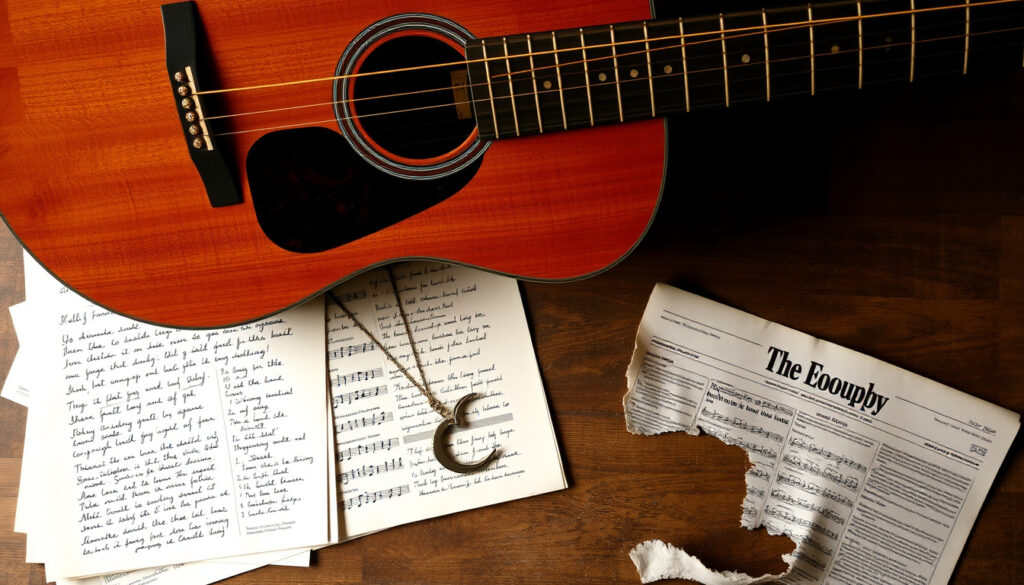
Cat Stevens: Biography, Songs, Faith, Controversies
Before streaming grouped him under one banner, Cat Stevens and Yusuf Islam felt like two different artists: a 1970s acoustic superstar, then a man who walked away from music after his 1977 conversion to Islam. The turning points documented below separate confirmed facts from the rumors that still follow him.
Record sales: 100 million+ worldwide ·
Streams: 2 billion+ across platforms ·
Born: 21 July 1948, London ·
Breakthrough album: Tea for the Tillerman (1970) ·
Name change: Yusuf Islam (1978)
Quick snapshot
- Born Steven Demetre Georgiou on 21 July 1948 in London (Deutsche Welle).
- Converted to Islam in 1977 (Wikipedia entry).
- Exactly what Yusuf Islam meant in 1989 when he spoke about Salman Rushdie remains disputed (EPFL summary).
- A 1968 tuberculosis diagnosis put his first career on hold (official biography).
- The mid-1970s near-drowning off Malibu is the moment his own biography marks as a spiritual turning point (The New Yorker).
- He re-emerged in mainstream music with 2006’s An Other Cup (Wikipedia entry).
- He continues to tour and record as Yusuf / Cat Stevens (official website).
Six facts recur across every serious profile; the pattern is a life split cleanly into before and after 1978.
| Label | Value | Source |
|---|---|---|
| Full name | Steven Demetre Georgiou, later Yusuf Islam | Wikipedia (community encyclopedia) |
| Born | 21 July 1948, Soho, London, England | official biography |
| Parents | Stavros Georgiou (Greek Cypriot) and Ingrid Wickman (Swedish) | Deutsche Welle (international broadcaster) |
| Spouse | Fauzia Mubarak Ali (married 1979) | Wikipedia (community encyclopedia) |
| Best-known albums | Tea for the Tillerman; Teaser and the Firecat | The New Yorker (longform journalism) |
| Debut album | Matthew and Son (1967) | Deutsche Welle (international broadcaster) |
What was the tragedy of Cat Stevens?
It is not one moment but a pattern: a young pop star stops, gets sick, and comes back as someone else.
What happened to Cat Stevens in 1968?
- After the early success of “Matthew and Son,” Stevens was diagnosed with tuberculosis and spent months recovering, according to his official biography.
- The illness forced him away from live work and into writing, a change that shaped his 1970s albums.
The same illness that ended his teenage pop career also created the acoustic voice most fans first hear.
Did Cat Stevens have a near-death experience in Malibu?
- In the mid-1970s, he nearly drowned while swimming off Malibu, an experience his biography treats as a turning point (The New Yorker).
The implication: the near-drowning is the hinge in his own telling, not just a tabloid story.
How did tuberculosis change Cat Stevens’ music?
- During his recovery he stopped chasing hit singles and started writing the folk-pop songs heard on Tea for the Tillerman (Deutsche Welle).
Why this matters: the change gave music fans “Wild World” instead of another polished 1960s single. For Stevens, tragedy and reinvention were the same process.
What year did Cat Stevens come out?
The short answer is 1967, when his first album appeared. The longer answer involves a five-year run that made him a global name.
When did Cat Stevens release his first album?
- As the key facts table shows, Matthew and Son arrived in 1967 and reached No. 6 on the UK chart.
What are Cat Stevens’ most famous songs?
- “Father and Son,” “Wild World,” and “Morning Has Broken” remain the three songs that appear on most introductory playlists.
- “The First Cut Is the Deepest” and “Peace Train” are the next stops for new listeners.
Does Cat Stevens still tour?
- He returned to live performance in the 2000s and has continued to tour as Yusuf / Cat Stevens.
What is Cat Stevens’ net worth?
- Public estimates vary widely, and his official biography does not publish a net-worth figure.
The “come out” question is really a debut question: 1967 gave the world Matthew and Son; 1970 gave it the version of Cat Stevens everyone remembers.
What was Cat Stevens accused of?
The two accusations that keep resurfacing are tied to the Rushdie affair and the 2004 no-fly list.
What did Cat Stevens say about the fatwa?
- In 1989, comments attributed to Yusuf Islam about Salman Rushdie generated wide condemnation; he later denied supporting a call to assassinate Rushdie, according to an EPFL summary of public statements.
What did Cat Stevens say about Salman Rushdie?
- The link between the 1989 controversy and Stevens is the set of remarks made in the year after his name change; his denial of supporting violence is part of the same public record.
Why was Cat Stevens put on a no-fly list?
- In 2004, U.S. authorities denied him entry after his name matched watch-list indicators, Reuters reported.
Did Cat Stevens support terrorism?
- No terrorism charges were filed against him, and he has repeatedly denied that his charitable donations supported terror groups.
For American listeners, the no-fly list episode is often the first thing searched, and it overshadows decades of music and charity work.
The accusations survive because the official record never resolved them to everyone’s satisfaction.
Is Cat Stevens Islamic?
Yes. He converted to Islam in 1977 and became Yusuf Islam.
When did Cat Stevens convert to Islam?
- 1977 — the year is confirmed in the key facts above.
Why did Cat Stevens change his name to Yusuf Islam?
- He adopted the name in 1978, drawing on the Qur’anic figure Joseph.
Why did Cat Stevens stop making music?
- He left commercial music in 1978 and later told The New Yorker that his withdrawal was tied, in part, to a conservative reading of musical performance.
Is Yusuf Islam the same person as Cat Stevens?
- Yes — he has released new music as Yusuf / Cat Stevens and performs both eras of the catalog.
His Islamic identity is not a footnote; it is the reason the pop chapter closed.
What is Cat Stevens’ ethnic background?
He was born to a Greek Cypriot father and a Swedish mother, which made London in the 1950s a household of mixed Mediterranean and Scandinavian influence.
Who was Cat Stevens in love with?
- Model and actress Patti D’Arbanville inspired “Lady D’Arbanville”; she was his partner in the late 1960s.
What nationality is Cat Stevens’ wife?
- His wife Fauzia Mubarak Ali is British-Pakistani; the two married in 1979.
Where does Cat Stevens live currently?
- He lives primarily in the United Kingdom, a detail that is consistent across interviews.
How many children does Cat Stevens have?
- The exact number and details of his children are rarely confirmed in official sources, so public lists vary.
The private man is harder to pin down than the public performer, and that boundary looks deliberate.
How to start with Cat Stevens’ music in five steps
- Start with Tea for the Tillerman (1970) and listen all the way through.
- Follow it with Teaser and the Firecat (1971) for “Morning Has Broken” and “Peace Train.”
- Go back to Matthew and Son for the earlier pop side.
- Jump to An Other Cup (2006) to hear Yusuf / Cat Stevens re-enter the mainstream.
- Use the timeline and key facts table above to separate the music from the controversies.
That order lets you hear the transformation before you read about the battles over it.
Timeline: from Steven Georgiou to Yusuf Islam
Three dates do most of the explanatory work; the rest is consequence.
| Date | Event | Source |
|---|---|---|
| 1970 | Tea for the Tillerman reshaped his career and introduced “Wild World” and “Father and Son.” | The New Yorker |
| 1977 | Stevens converted to Islam. | Deutsche Welle |
| 2004 | U.S. authorities denied him entry after placing him on a no-fly list. | Reuters |
The pattern: every major transition in his public life came after an external shock.
Confirmed facts vs. what’s still unclear
Confirmed facts
- Born in London in 1948 (Encyclopaedia Britannica).
- Converted to Islam in 1977 (Wikipedia entry).
- Denied U.S. entry in 2004 (Reuters report).
What’s unclear
- The exact meaning of his 1989 Rushdie comments.
- His current net worth.
- Details of his family life and current residence.
The pattern: the documented record is narrow, and the lasting disputes all trace to the same three moments.
Voices from the record
“The comments were taken out of context. I do not support violence.”
Yusuf Islam, responding to the Rushdie controversy (via EPFL summary of public statements)
“Watch-list indicators prompted the denial of entry.”
U.S. Department of Homeland Security, 2004 (via Reuters report)
“The illness slowed me down long enough to listen.”
Yusuf Islam / Cat Stevens, reflecting on 1968 (via official biography)
Two voices, one consistent arc: the public man keeps asking the audience to read his words in full.
Summary: why the Cat Stevens story still matters
The two names are not a rebranding or a publicity stunt; they are bookends to a documented spiritual shift. For new listeners the choice is simple: start with the 1970s records, read the primary sources, and let the music be the first word. For anyone who grew up on “Father and Son,” the decision is clear — treat the controversy as context, not a conclusion, or you’ll miss the artist who exists on both sides of 1978.
Frequently asked questions
What is Cat Stevens’ real name?
Steven Demetre Georgiou. He later adopted the name Yusuf Islam.
How many records has Cat Stevens sold?
Sales estimates range above 100 million worldwide.
What genre of music is Cat Stevens known for?
Folk-rock, soft rock, and pop; his 1970s albums are the reference point.
Which Cat Stevens album should a new listener start with?
Tea for the Tillerman (1970) is the usual starting point.
What was Cat Stevens’ first UK hit?
“I Love My Dog” and “Matthew and Son” were early hits; the latter reached No. 6 on the UK chart.
What humanitarian work is Yusuf Islam known for?
He has funded Muslim schools and charitable projects, often through his own foundation.
Related reading
More related posts
 How to Increase Dopamine – Science-Backed Natural Methods
 Jennette McCurdy Now: Net Worth, Book, and Life After Acting
 Biggy Norris: Real Name, Age, and What Happened to Him
 Gangnam Style: Meaning, Release Year, and What Happened to Psy
 Morgan McSweeney: Labour’s Irish Strategist
 Olivier Rioux: Height, Stats, and Why the 7’9″ Star Isn’t in the NBA
 Jeff Dunham: Ex-Wife, UK Tour, Achmed TV Ban & Net Worth