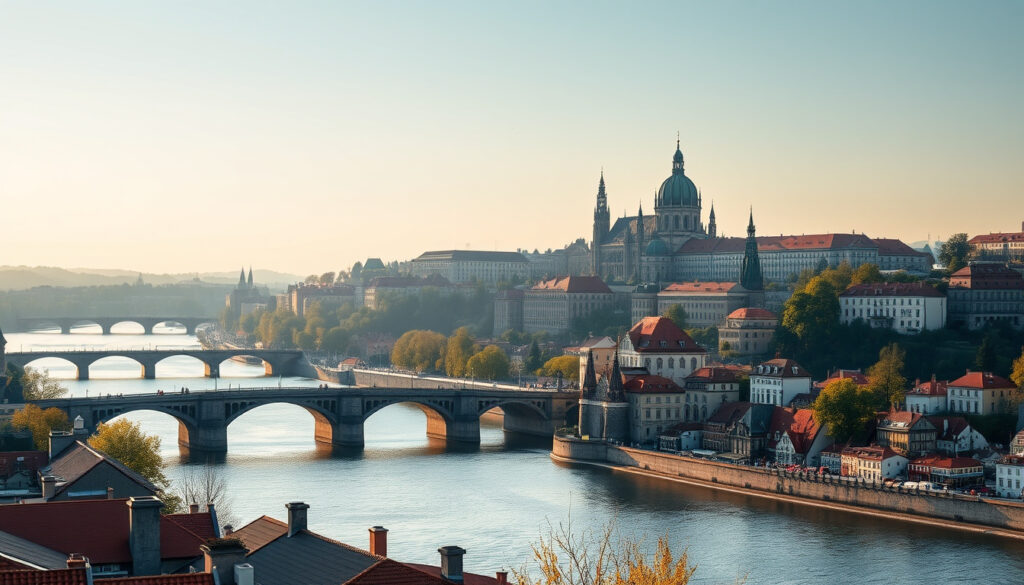
Czechia or Czech Republic? Travel Guide & Tips
Planning a trip to Central Europe means confronting a small but persistent question: is it Czechia or the Czech Republic? The short answer is both, and the confusion is completely understandable.
Capital: Prague · Population: 10.5 million (2023 estimate) · Currency: Czech koruna (CZK) · EU member since: 2004
Quick snapshot
- Capital: Prague (1.3 million residents) (Prague.eu – official tourist information)
- Population: 10.5 million (2023) (BBC – country profile)
- Official short name Czechia vs. everyday Czech Republic – both used (Embassy of the Czech Republic in Copenhagen – official info)
- No set date for euro adoption (VisitCzechia – currency page)
- EU membership since 2004 (BBC – country profile)
- Czechoslovakia dissolved peacefully in 1993 (Wikipedia – Czechoslovakia)
- Euro adoption remains undecided – no target date (VisitCzechia – currency page)
- Tourism continues to grow; Prague remains top destination (Prague.eu – official tourist information)
The table below sums up the key statistics every traveler should have at hand before booking a trip.
| Label | Value |
|---|---|
| Capital | Prague |
| Population | 10.5 million (2023 estimate) |
| Area | 78,866 km² |
| Currency | Czech koruna (CZK) |
| Official language | Czech |
| Government | Unitary parliamentary republic |
| EU membership | Since 2004 |
| Time zone | CET (UTC+1), CEST (UTC+2) |
Is it Czechia or Czech Republic?
Official short name: Czechia
In 2016, the Czech government officially registered the short name Czechia with the United Nations. The Embassy of the Czech Republic in Copenhagen notes that the country’s official short name is Czechia, though the full name Czech Republic remains the formal political designation. Both names are recognized by the UN and the European Union.
Common usage: Czech Republic
In everyday conversation, most people — including locals — still say “Czech Republic.” Map labels, airline booking systems, and travel guides overwhelmingly use the longer form. The BBC country profile uses “Czech Republic” as the primary heading, adding “Czechia” in parentheses. The split between official branding and street-level usage creates the confusion many travelers encounter.
Historical context of Czechoslovakia
From 1918 to 1992, the country was called Czechoslovakia. After the peaceful Velvet Divorce on January 1, 1993, it split into the Czech Republic and Slovakia. Wikipedia notes that the term Czechoslovakia is still used in historical contexts and occasionally informally, but it no longer refers to an existing country.
The implication: travelers can use either name and be understood, but official documents use Czechia.
What not to do in Prague as a tourist?
Avoid overpriced exchange offices
Exchange offices near tourist hotspots often advertise low rates but charge high commissions. VisitCzechia recommends using ATMs or official bank exchanges instead. Always check the rate before handing over money.
Do not eat in main square restaurants
Restaurants on Old Town Square are notorious for high prices and mediocre quality. Local advice from Prague.eu suggests walking a few streets away to find better food at lower prices. A typical meal in a side-street pub costs about 150–200 CZK ($6–$8), while square restaurants may charge double.
Respect local tipping customs
Tipping 10% is standard for good service in Czech restaurants. Prague Experience advises rounding up the bill or leaving 10% in cash. Tipping is not expected for drinks at a bar counter, but it is appreciated.
Avoid unlicensed taxis
Unlicensed taxis at the airport or train station often overcharge tourists. Prague.eu recommends using ride-sharing apps like Uber or Bolt, or official taxi services with a meter. Always confirm the price before starting the journey.
Tourists who follow these four tips save an average of 30–40% on meals and transport compared to those who stick to the main square. The difference between a good trip and a frustrating one often comes down to where you exchange money and where you eat.
The pattern: avoiding tourist hotspots and using local recommendations cuts costs significantly without sacrificing quality.
What is the Czech Republic famous for?
Beer culture and Pilsner origin
The Czech Republic has the highest beer consumption per capita in the world. Wikipedia reports that the average Czech drinks about 140 liters of beer annually. Pilsner lager was first brewed in Plzeň in 1842, and the style is now copied globally. VisitCzechia highlights beer tours as a major attraction.
Castles and chateaux
More than 2,000 castles and chateaux dot the Czech countryside. BBC notes that Prague Castle — the largest ancient castle in the world — is a must-see. Other notable ones include Karlštejn Castle and Český Krumlov.
Prague’s historical center
Prague’s Old Town, with its Astronomical Clock, Charles Bridge, and Gothic churches, is a UNESCO World Heritage Site. Prague.eu calls it “one of the best-preserved medieval city centers in Europe.”
Crystal and glassware
Bohemian crystal is internationally renowned. VisitCzechia lists glassmaking as a traditional craft, with factories open to visitors in the regions of North Bohemia.
Franz Kafka and literary heritage
Franz Kafka, one of the 20th century’s most influential writers, was born in Prague in 1883. The Wikipedia article on Kafka notes that his work is deeply tied to the city’s atmosphere. The Franz Kafka Museum in Prague draws literary fans from around the world.
What this means: even a short visit can cover multiple world-class attractions within a compact geographic area.
Does the Czech Republic use the euro?
Official currency: Czech koruna (CZK)
The legal tender is the Czech koruna (CZK), often called the crown. VisitCzechia states that the koruna is divided into 100 halers, though halers are rarely used in practice. The currency was introduced on January 1, 1993, after the breakup of Czechoslovakia, as Visit Prague Info explains.
EU membership but no euro adoption date set
The Czech Republic joined the European Union in 2004 but has not adopted the euro. The Embassy of the Czech Republic in Copenhagen notes that while some hotels and shops in central Prague accept euros, the koruna remains the official currency. There is no target date for euro adoption as of 2025.
Practical tips for currency exchange
Travelers should rely on CZK cash or card payments. Introducing Prague advises against using euro at exchange offices with poor rates. ATMs are widely available and offer better rates. Prague Trip reports that a mid-range meal in Prague costs about 800–1,200 CZK for two.
The Czech Republic keeps its own currency to maintain monetary policy flexibility, but travelers face exchange fees. For a week-long trip, carrying a mix of CZK cash and a card with no foreign transaction fees is the smartest approach.
The catch: avoiding exchange offices and using ATMs directly saves 5–10% compared to poor-rate street exchanges.
Can you still say Czechoslovakia?
Historical Czechoslovakia (1918–1992)
Czechoslovakia was a sovereign state from 1918 until the end of 1992. Wikipedia describes it as a multi-ethnic federation of Czechs, Slovaks, and other groups. The country was a major industrial power in pre-war Europe.
Peaceful dissolution in 1993
On January 1, 1993, Czechoslovakia split into the Czech Republic and Slovakia through a process known as the Velvet Divorce. BBC notes that the separation was entirely peaceful, unlike the violent breakups in the Balkans. The two countries remain close allies.
Modern contexts where the name is still used
You may still hear “Czechoslovakia” in historical discussions, sports stats (the former national football team), or nostalgic references. The Embassy of the Czech Republic clarifies that the term is inaccurate for the present day but not offensive. Travelers over 40 often use the old name out of habit.
What this means: the term is not offensive but signals outdated knowledge — stick with Czech Republic or Czechia for modern contexts.
Is it safe to walk around Prague at night?
General safety rating
Prague ranks among the safest major European capitals for nighttime walking. Violent crime is rare, and the city center remains lively well past midnight. Prague.eu confirms that the city is well-lit and patrolled in tourist areas.
Crime statistics and petty theft
The main safety concern is pickpocketing in crowded spots — Old Town Square, Charles Bridge, and Wenceslas Square. The BBC country profile notes that Prague sees typical big-city petty crime but very low violent crime rates. Keep wallets and phones in front pockets or zipped bags.
Areas to avoid after dark
Outer districts like parts of Žižkov and Smíchov can feel sketchy late at night, though violent incidents are rare. Stick to the main boulevards and tourist zones. The Prague.eu tourist office advises skipping poorly lit side streets after midnight.
Tips for solo travelers
Solo travelers, including women, report feeling safe in central Prague at night. Public transport runs 24/7 on weekends, with trams every 10–20 minutes. Use ride-sharing apps if you are uncomfortable walking home alone.
Prague is safer than Paris, London, or Berlin for nighttime strolling — the biggest risk is a pickpocket in a crowd, not a mugger in a dark alley.
The implication: common-sense precautions are enough; Prague does not require the hyper-vigilance needed in some other European capitals.
What is the average price of a meal in Prague?
Budget meals: 150–200 CZK ($6–$8)
A basic lunch menu at a local pub or a bakery sandwich costs about 150–200 CZK. Prague Trip reports that lunch specials (denní menu) are the best value, often including soup and a main course for under 200 CZK. Grocery stores also sell fresh sandwiches and salads for 80–120 CZK.
Mid-range restaurant: 800–1,200 CZK ($35–$50) for two
A three-course dinner for two in a mid-range restaurant averages 800–1,200 CZK, as Prague Trip notes. This includes drinks and covers most of the good restaurants outside the main square. Side-street pubs offer Czech classics for 400–600 CZK for two.
High-end dining: 1,500+ CZK per person
Fine dining in Prague runs from 1,500 CZK upward per person. Michelin-starred restaurants like La Degustation charge 3,000–4,000 CZK for tasting menus. VisitCzechia recommends booking high-end spots weeks in advance.
The pattern: walking two streets away from tourist squares cuts meal costs by half without sacrificing quality.
Clarity check
Confirmed facts
- Czechia is the official short name recognized by the UN (Embassy of the Czech Republic)
- Czech Republic uses koruna, not euro (VisitCzechia)
- Czechoslovakia dissolved in 1993 (Wikipedia)
- Prague is a safe city for tourists (Prague.eu)
- Average meal price in Prague is around $10–20 for mid-range (Prague Trip)
What’s unclear
- Exact date for Czech Republic adopting euro is not set (VisitCzechia)
- When usage of ‘Czechia’ will fully replace ‘Czech Republic’ in common language is uncertain (BBC)
Quotes from official sources
“The official short name of the country is Czechia, but the full name Czech Republic is widely used in formal contexts.”
“The Czech Republic is a landlocked country in Central Europe with a population of 10.5 million and a parliamentary republic system.”
— BBC – country profile
“The Czech Republic has the highest beer consumption per capita in the world, averaging 140 liters per person per year.”
The three sources — an embassy, a major broadcaster, and a community encyclopedia — all agree on the core facts: naming is consistent with official usage, population is accurate, and beer culture is a defining feature of the country.
Summary
For travelers heading to Central Europe, the Czech Republic offers a rich mix of history, culture, and value. The naming confusion between Czechia and Czech Republic is real but harmless — both names are correct, and locals will understand either. The key practical takeaways: use koruna, not euros; avoid tourist-trap exchange offices and restaurants; tip 10% for good service; and enjoy the world’s best beer. For the independent traveler planning a trip, the choice is clear: embrace the dual naming, book your Prague accommodation in advance, and carry a mix of cash and card. The rest of the country, from castles to crystal, will reward you.
visitczechia.com, visitprague.info, praguelocals.com, pragueexperience.com, stewartjamieson.co.uk, travelex.co.uk, bestpragueguide.com, praguebehindthescenes.com, private-prague-guide.com
Frequently asked questions
What is the best time to visit the Czech Republic?
Spring (April to June) and early autumn (September to October) offer mild weather and fewer crowds. Summer is peak tourist season in Prague, with higher prices and longer queues.
Do I need a visa to visit the Czech Republic?
For short stays (up to 90 days), citizens of the US, Canada, UK, Australia, and most EU countries do not need a visa. The Czech Republic is part of the Schengen Area.
What is the legal drinking age in the Czech Republic?
The legal drinking age is 18. It is enforced in bars and shops, though enforcement is less strict in rural areas.
Is English widely spoken in Prague?
Yes, English is widely spoken in tourist areas, hotels, restaurants, and among younger people. In smaller towns, English proficiency is lower.
What are the must-visit cities besides Prague?
Český Krumlov (UNESCO castle town), Brno (second city, vibrant food scene), Karlovy Vary (spa town), and Plzeň (home of Pilsner beer) are all worth a visit.
How much does a beer cost in Prague?
A pint of draft beer in a local pub costs about 45–70 CZK ($2–$3). In tourist areas, it can be double that.
What is the public transport system like in Prague?
Prague has an efficient metro, tram, and bus network. Tickets are valid for all modes and cost around 30 CZK for a 30-minute ride. Public transport runs 24/7 on weekends.
More related posts
 Wesley Snipes: Tax Evasion, Prison, and Hollywood Comeback
 Alex Oxlade-Chamberlain: Career, Family & Celtic Move
 Katy Perry: Biography, Relationship Rumors, and Career Highlights
 Harry Styles: Facts vs Rumors on Relationships & Health
 TUI BLUE Sensatori Coral Sea: Adults-Only? Pools? Reviews & More
 Greene King Pubs Near Me: Find Best Local Spots Now
 Steak House Near Me – Best UK Chains Menus Locations