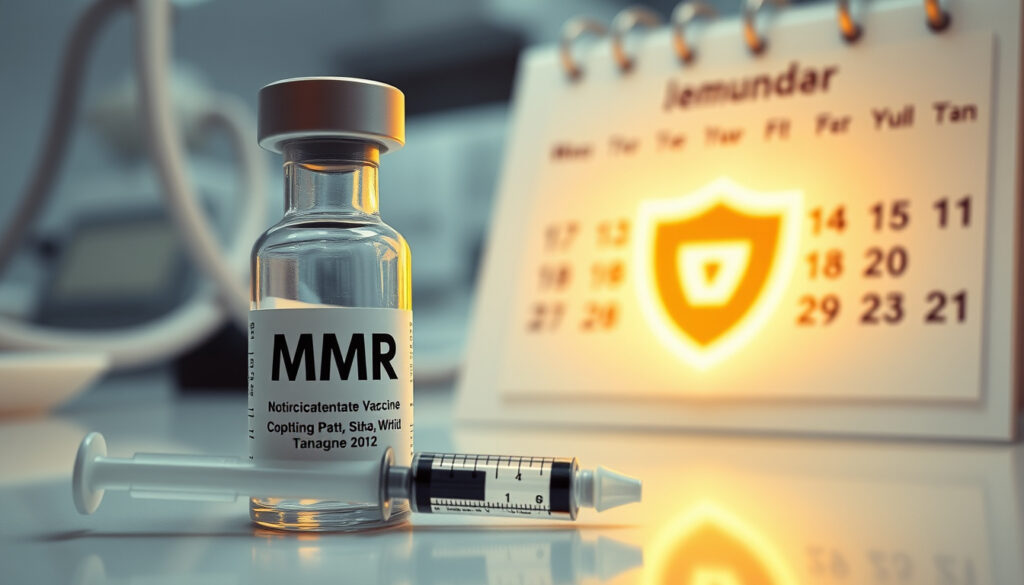
MMR Vaccine: Safety, Schedule, and Effectiveness Facts
Few topics in public health stir as much conversation as the MMR vaccine. Whether you’re a new parent mapping out the immunization schedule or an adult wondering if you need a booster, the questions are real. The data consistently shows that two doses of the MMR vaccine are about 97% effective at preventing measles, according to the CDC (U.S. public health authority). Here’s what the evidence actually says about safety, scheduling, and lifelong protection.
MMR vaccine effectiveness after two doses: 97% against measles ·
Year MMR vaccine was first introduced: 1971 ·
Percentage of U.S. children receiving MMR by age 2: >90% ·
Number of deaths prevented globally per year by measles vaccination: Over 1 million ·
Recommended age for first dose: 12–15 months
Quick snapshot
- MMR vaccine is safe and effective; no link to autism (CDC Vaccine Safety)
- Two doses provide high protection for most people (CDC Measles Vaccination)
- First introduced in 1971 as a combined vaccine (CDC MMWR 2013)
- Duration of immunity from older single-dose measles vaccines (CDC MMR guidance)
- Exact reasons for variation in vaccine hesitancy among different communities (WHO)
- 1971: MMR vaccine first licensed in the U.S. (CDC MMWR 2013)
- 1989: Two-dose schedule recommended for better measles control (CDC)
- 2018: ACIP recommends third dose during mumps outbreaks (CDC MMWR 2018)
- Adults without immunity will continue to be offered catch-up doses (CDC MMR guidance)
- Outbreak settings may trigger third-dose campaigns for at-risk groups (CIDRAP)
Six key facts about the MMR vaccine, one pattern: protection is high but requires adherence to the schedule.
| Label | Value |
|---|---|
| Vaccine name | MMR (measles, mumps, rubella) |
| Number of doses | 2 |
| Effectiveness after two doses | 97% against measles |
| First dose age | 12–15 months |
| Second dose age | 4–6 years |
| Available for adults | Yes, if no evidence of immunity |
The implication: the numbers confirm what the schedule demands — two doses, on time, for maximum protection.
What is the MMR vaccine?
What does MMR stand for?
MMR stands for measles, mumps, and rubella — three viral diseases that can cause serious complications. The combined vaccine was first introduced in 1971, replacing separate shots for each disease. According to the CDC (U.S. public health authority), the MMR vaccine is the standard of care for preventing these infections.
How does the MMR vaccine work?
The vaccine contains weakened live viruses that stimulate the immune system to produce antibodies without causing the disease. The WHO (global health agency) states that this approach builds long-lasting immunity in most recipients. Two doses are recommended to ensure high levels of protection, especially against measles.
The MMR vaccine is a single shot that tackles three diseases. For a child or adult who receives both doses, the odds of contracting measles drop to just 3 in 100 — a level of protection that few public health interventions can match.
The implication: a routine shot that has been used for over 50 years remains the most effective tool against outbreaks.
What age is MMR vaccine given?
MMR vaccine schedule for children
In the U.S., the first dose is given at 12–15 months of age, and the second at 4–6 years, according to the CDC (U.S. public health authority). The NHS (UK health service) follows a similar schedule: first dose at 12 months, second at 3 years 4 months. Slight variations exist by country, but the two-dose principle is universal.
Catch-up vaccination for older children and adults
Anyone who missed the childhood doses can receive catch-up vaccination at any age. The CDC (U.S. public health authority) recommends that adolescents and adults without evidence of immunity get at least one dose, with a second dose for high-risk groups.
The catch: missing the window doesn’t mean you’re out of luck — but it does mean you’re vulnerable until you catch up.
Do adults need an MMR booster?
Which adults should get an MMR booster?
Adults born in 1957 or later should have at least one documented dose of MMR unless they have other evidence of immunity, as per the CDC MMWR 2013 ACIP recommendations (U.S. expert panel). Healthcare workers, international travelers, college students, and outbreak contacts are specifically identified as needing two doses, according to HHS/Healthy People ACIP summary (U.S. health policy agency).
How many doses do adults need?
Most adults need only one dose if they are not at high risk. However, for those at increased risk of exposure — such as healthcare personnel — two doses separated by at least 28 days are recommended. The CDC (U.S. public health authority) states that adults born before 1957 are generally considered immune due to natural infection and do not need vaccination.
For adults in the U.S. who work in healthcare or plan to travel internationally, skipping the booster is a real risk. A single dose leaves you 93% protected against measles, but two doses push that to 97% — and in an outbreak, every percentage point counts.
The trade-off: adults who cannot verify their vaccination status face a simple choice — get tested for immunity or get a dose. The latter is often faster and cheaper.
Is the MMR vaccine good or bad?
Is the MMR vaccine 100% safe?
No vaccine is 100% safe, but the MMR vaccine has an excellent safety record. Common side effects include sore arm, fever, mild rash, and temporary joint pain — especially in adults and women, according to the CDC Vaccine Safety (U.S. public health authority). Rare serious side effects include febrile seizures (which do not cause long-term harm) and a temporary drop in platelet count. The CDC (U.S. public health authority) emphasizes that anaphylaxis is extremely rare.
Pros and cons of the MMR vaccine
Upsides
- Prevents measles, mumps, and rubella — all potentially severe diseases
- Two doses are 97% effective against measles (CDC)
- Lifelong immunity for most people (CDC MMR guidance)
- Global measles deaths dropped 73% between 2000 and 2018 (WHO)
- No proven link to autism (CDC Vaccine Safety)
Downsides
- Mild side effects: fever, rash, joint pain (more common in adults) (CDC Vaccine Safety)
- Rare serious reactions: febrile seizures, low platelet count (CDC Vaccine Safety)
- Two doses required for full effectiveness
- Not recommended during pregnancy (CDC MMR guidance)
The pattern: the benefits of vaccination far outweigh the risks. The CDC (U.S. public health authority) states that the risk of serious harm from the diseases themselves is far higher than from the vaccine.
Why are parents refusing the MMR vaccine?
Common reasons for vaccine hesitancy
Concerns about side effects and safety top the list. A 1998 study that falsely linked MMR to autism has been thoroughly discredited and retracted, but its legacy persists. According to the CDC (U.S. public health authority), numerous large-scale studies have found no connection between MMR and autism. Religious or philosophical beliefs also play a role, as does a lack of awareness about the severity of measles, mumps, and rubella.
Addressing misinformation
Health authorities have responded with clear, evidence-based messaging. The WHO (global health agency) notes that vaccine hesitancy is a complex issue requiring tailored community engagement. The NHS (UK health service) provides resources to help parents weigh the evidence.
Misinformation is sticky. Even after the fraudulent autism study was retracted, repeated surveys show that a significant minority of parents still believe the link exists. For public health officials, correcting this false belief is as important as administering the vaccine itself.
Why this matters: when vaccination rates drop, outbreaks return. Measles was declared eliminated in the U.S. in 2000, but pockets of under-vaccination have led to resurgences.
Can I get measles if I was vaccinated 40 years ago?
Are older measles vaccines still effective?
Yes, for most people. The CDC (U.S. public health authority) states that those who receive the MMR vaccine according to the U.S. schedule are usually considered protected for life against measles and rubella. Protection can wane slightly over time, but the vast majority of vaccinated individuals remain immune. If you received only one dose decades ago, your protection may be lower — one dose is about 93% effective, while two doses are 97% effective, per the CDC (U.S. public health authority).
Why do people born before 1966 not need MMR?
The CDC MMWR 2013 ACIP recommendations (U.S. expert panel) state that people born before 1957 are generally considered immune because they were likely exposed to natural measles, mumps, or rubella before the vaccine was available. For those born between 1957 and 1966, vaccination history and risk factors determine need.
The implication: if you received two doses as a child, you’re almost certainly protected for life. If you’re unsure, a blood test or a booster dose can resolve the uncertainty.
MMR Vaccine Specifications
Seven specifications that define the MMR vaccine, one pattern: the vaccine is a live attenuated combination product with a proven safety profile.
| Specification | Detail |
|---|---|
| Vaccine type | Live attenuated viral vaccine |
| Number of doses | 2 (standard schedule) |
| Effectiveness (1 dose vs measles) | 93% (CDC) |
| Effectiveness (2 doses vs measles) | 97% (CDC) |
| Common side effects | Sore arm, fever, mild rash, joint pain (CDC Vaccine Safety) |
| Rare serious side effects | Febrile seizures, thrombocytopenia, anaphylaxis (CDC Vaccine Safety) |
| Contraindications | Pregnancy, severe allergic reaction to a previous dose, immunodeficiency (CDC MMR guidance) |
| Storage requirements | Refrigerated at 2°C to 8°C (36°F to 46°F), protect from light (Merck Vaccines) |
The trade-off: the vaccine requires cold chain storage and two visits, but the payoff is decades of protection against three diseases that once caused widespread illness and death.
What the evidence confirms — and what remains uncertain
Confirmed facts
- MMR vaccine is safe and effective (CDC Vaccine Safety)
- Two doses provide high protection for most people (CDC Measles Vaccination)
- There is no connection between MMR and autism (CDC Vaccine Safety)
What’s unclear
- Duration of immunity from older single-dose measles vaccines (CDC MMR guidance)
- Exact reasons for variation in vaccine hesitancy among different communities (WHO)
“Two doses of MMR vaccine are about 97% effective at preventing measles.”
CDC (U.S. public health authority)
“Measles vaccination resulted in a 73% drop in measles deaths between 2000 and 2018 worldwide.”
WHO (global health agency)
The MMR vaccine has prevented millions of deaths and countless cases of severe disease. For parents deciding whether to vaccinate their children, and for adults wondering about their own immunity, the evidence is clear: the vaccine works, it is safe, and the consequences of skipping it are real. For the parent weighing the schedule, the choice is straightforward: follow the recommended timeline, or leave your child exposed to diseases that still cause outbreaks today. For the adult who cannot recall their vaccination status, the action is simple: get a dose or a titer test. The only wrong move is uncertainty.
Related reading: Patrick Dempsey: Age, Net Worth, Wife, Children, Diagnosis, and More
cdc.gov, webmd.com, hopkinsguides.com, cdc.gov, cdc.gov, skien24.org
Frequently asked questions
What are the common side effects of the MMR vaccine?
Common side effects include sore arm, fever, mild rash, and temporary joint pain. In adults, joint pain is more frequent than in children. Serious side effects are rare. (CDC Vaccine Safety)
Is there a cost for the MMR vaccine?
In the U.S., the MMR vaccine is covered by most insurance plans and is available at low or no cost through the Vaccines for Children program. Costs vary by provider. (CDC)
Can pregnant women get the MMR vaccine?
No. The MMR vaccine is not recommended during pregnancy because it contains live viruses. Women should avoid pregnancy for at least 28 days after vaccination. (CDC MMR guidance)
What is the MMR vaccine name?
The vaccine is commonly called MMR (measles, mumps, rubella). The brand name in the U.S. is M-M-R II, manufactured by Merck. (Merck Vaccines)
Is the MMR vaccine required for school entry?
Yes, all 50 U.S. states require the MMR vaccine for school entry, with some exemptions for medical, religious, or philosophical reasons. Requirements vary by state. (CDC)
Can adults get the MMR vaccine if they are unsure of their vaccination status?
Yes. Adults who cannot document immunity or vaccination should receive at least one dose of MMR. Two doses are recommended for high-risk groups. (CDC MMR guidance)
Does the MMR vaccine protect against all strains of mumps?
The MMR vaccine provides protection against mumps, but effectiveness is lower than for measles — two doses are about 86% effective. Outbreaks have occurred in highly vaccinated populations, leading to recommendations for a third dose in outbreak settings. (CDC MMWR 2018)
More related posts
 Wesley Snipes: Tax Evasion, Prison, and Hollywood Comeback
 Duke of Kent: Family, Wife’s Illness, Ear Deformity & Title
 Last of Us Season 2 Cast – Full Actors and Characters Guide
 Jabba the Hutt: Character Guide, Moral Alignment, and Death Scene
 Tom Selleck Latest News: Health Rumors & Facts 2025
 New York Time Now: Current Local Time & Time Zone Guide
 Victor McGuire: Biography, Bread, Haribo & eBay Advert Roles
 Digestive System: Steps, Organs, Function & Common Questions