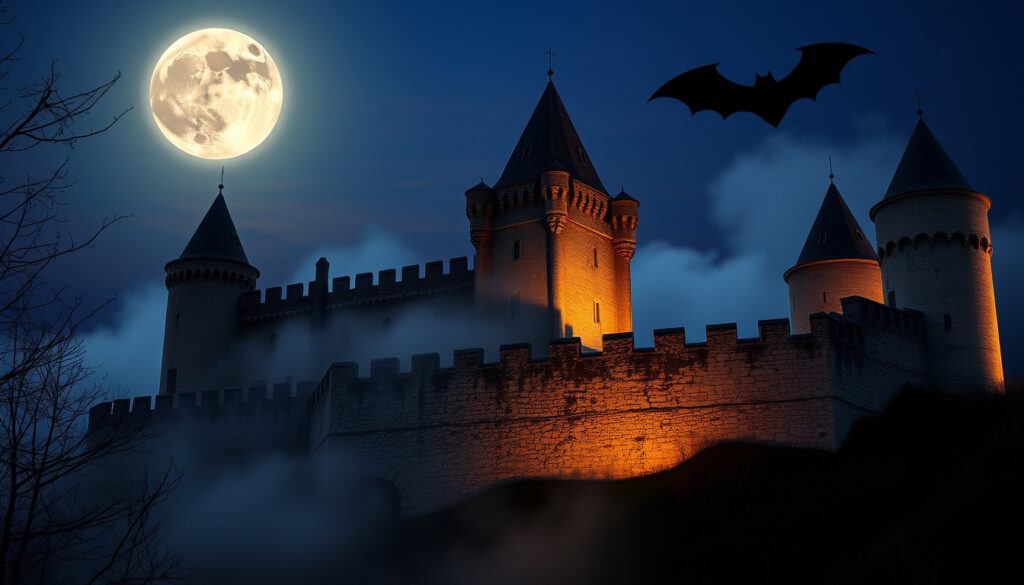
Vlad Dracula: Historical Facts vs. Vampire Myth
Most people know Dracula as a pale, caped vampire who sleeps in a coffin, but few realize that the name belongs to a real Wallachian prince, Vlad III, who ruled with an iron hand in the 15th century and never once drank blood. This article separates the historical ruler from the horror icon, drawing on 15th-century chronicles and Ottoman records to show what we actually know about Vlad Dracula — and how Bram Stoker turned him into fiction.
Born: 1431, Sighișoara, Wallachia ·
Reign: 1448, 1456–1462, 1476 ·
Known for: Impalement of enemies; inspiration for Count Dracula ·
Father: Vlad II Dracul (member of the Order of the Dragon) ·
Epithet: Vlad Țepeș (the Impaler) ·
Cause of death: Killed in battle near Bucharest, 1476
Quick snapshot
- Born 1431 in Wallachia (Encyclopaedia Britannica)
- Ruled three times in the 15th century (Wikipedia)
- Known for impaling enemies (Encyclopaedia Britannica)
- Created by Bram Stoker in 1897 (TheCollector)
- Fictional vampire with supernatural powers (TheCollector)
- Borrowed name and some historical flavor (History Extra)
- Vlad is a national symbol in Romania (HistoryPrime)
- Dracula is a global horror icon (HistoryPrime)
- Their stories often conflated (Encyclopaedia Britannica)
Confirmed facts
- Vlad III was a real Wallachian prince (Encyclopaedia Britannica)
- He was known for impaling his enemies (Encyclopaedia Britannica)
- He died in 1476 in battle (Wikipedia)
Seven key facts about Vlad Dracula, drawn from the most reliable sources available:
| Attribute | Detail |
|---|---|
| Full name | Vlad III, son of Vlad II Dracul (Encyclopaedia Britannica) |
| Also known as | Vlad Țepeș, Vlad the Impaler (Wikipedia) |
| Born | 1431, Sighișoara, Wallachia (History Extra) |
| Died | December 1476, near Bucharest (Wikipedia) |
| Wives | At least one (name uncertain); possibly two |
| Children | At least one son, Vlad IV (?) |
| Religion | Eastern Orthodox Christian |
Was Vlad a real person?
Yes — and the documentary evidence is solid. Vlad III Dracula was a 15th-century voivode (prince) of Wallachia, a region that corresponds to part of modern Romania (Encyclopaedia Britannica, historical reference work). He ruled three separate times: briefly in 1448, then from 1456 to 1462, and finally in 1476 before his death (Wikipedia). His existence is attested by Ottoman tax records, papal correspondence, and multiple contemporary chroniclers.
Historical records of Vlad III
- Pope Pius II, writing in the 1460s, described Vlad’s impalement methods in his Commentaries (HistoryPrime, 15th-century history publisher)
- Ottoman chronicles record his campaigns against Sultan Mehmed II, including the Night Attack at Târgoviște (Wikipedia)
- German pamphlets printed in the 1490s spread stories of his cruelty across Europe (History Extra, BBC history magazine)
Vlad’s father and the Order of the Dragon
Vlad was the second son of Vlad II Dracul (Encyclopaedia Britannica). The epithet “Dracul” meant “dragon” in Romanian, referring to his membership in the Order of the Dragon, a chivalric order founded by Holy Roman Emperor Sigismund. Vlad III inherited the patronymic “Drăculea” — “son of the dragon” (HistoryPrime).
The order’s dragon symbol became the basis for the vampire Dracula’s demonic associations — but in the 15th century, it was simply a military and religious badge worn by European nobility.
The implication: The historical record for Vlad III is richer than for many medieval rulers. He is not a legend — he is a documented prince whose actions were recorded by multiple, independent sources across three empires.
Why is Dracula called Vlad?
The name “Dracula” comes from Romanian, not Latin or folklore. It derives directly from the patronymic of Vlad’s father, Vlad II Dracul (Encyclopaedia Britannica).
The meaning of ‘Dracula’
- “Dracul” in Romanian means “dragon” — not “devil,” as often repeated today (HistoryPrime)
- “Drăculea” or “Dracula” means “son of Dracul” or “son of the dragon”
- The association with “devil” came later, as the word “drac” in modern Romanian shifted to also mean “devil” — but in Vlad’s time it referred to the dragon emblem of his father’s order
Vlad’s full name and titles
His full formal style in contemporary documents was “Vlad, son of Vlad, voivode of Wallachia.” Western chroniclers sometimes called him “Vladislaus Dragwlya” or “Vlad Dracula.” After his death, oral tradition in Romania added the epithet “Țepeș” (the Impaler) — a direct reference to his signature method of punishment (Encyclopaedia Britannica).
The pattern: Every element of Vlad’s name tells a story — the dragon order, the patronymic chain, and the posthumous nickname that captures his brutal reign. None of it has anything to do with vampires.
How did Vlad turn into the vampire Dracula?
The transformation from Wallachian prince to vampire happened on paper, not in legend. Bram Stoker’s 1897 novel Dracula borrowed the name and a handful of historical details — and invented the rest (TheCollector, history and culture publication).
Bram Stoker’s novel and its sources
- Stoker read about Vlad III in a book called An Account of the Principalities of Wallachia and Moldavia by William Wilkinson (History Extra)
- He took the name “Dracula” directly from the historical prince’s patronymic
- Stoker’s manuscript notes show he researched Transylvanian geography and customs but invented the vampire mythology entirely himself
- The novel’s vampire traits — drinking blood, shape-shifting, sunlight aversion, no reflection — have no basis in any historical accounts of Vlad III
The link between Vlad and the vampire myth
Vampire folklore existed in Eastern Europe long before Vlad. The connection between Vlad III and vampirism appears nowhere in 15th- or 16th-century sources. It was Stoker who fused the name “Dracula” with existing vampire traditions from The Vampyre (1819) by John Polidori and Carmilla (1872) by Sheridan Le Fanu (History Extra). Why this matters: The historical Vlad Dracula never drank blood, never turned into a bat, and was never undead. The vampire Dracula is a literary invention — one of the most successful in publishing history, but fiction nonetheless.
Who assassinated Vlad the Impaler?
Vlad died in battle in December 1476, but the identity of his killer remains uncertain (Wikipedia).
Circumstances of his death in 1476
- Vlad had retaken the Wallachian throne for a third time earlier that year with Hungarian support
- He was ambushed during a battle near Bucharest, possibly at the village of Călugăreni or near the wooden fortress of Snagov
- Ottoman forces had assembled to challenge his return; local Wallachian rivals may have turned against him as well (History Extra)
- According to one contemporary Muslim chronicler, Vlad’s head was severed and sent to Sultan Mehmed II in Constantinople as proof of his death (HistoryPrime)
Uncertainty about the killers
No single source names the person who killed Vlad. The identity of his assassination remains an open historical question (Wikipedia). What is known: he died while actively fighting, his head was displayed in Constantinople, and his body is believed to have been buried at Snagov Monastery — though an empty tomb has fueled speculation for centuries.
This reinforces the separation between the historical figure and the vampire myth.
Was Vlad Dracula a good ruler?
The question splits historians. On one hand, Vlad used impalement and other brutal punishments to enforce order and deter Ottoman aggression. On the other, some modern Romanians view him as a national hero who defended Wallachia against conquest (Encyclopaedia Britannica).
Contemporary accounts of his cruelty
- Pope Pius II reported that Vlad had impaled “many thousands” of people, including women and children (HistoryPrime)
- German pamphlets published within decades of his death claimed 100,000 victims — almost certainly an exaggeration, but one that stuck (History Extra)
- Ottoman chronicles describe him as a fierce opponent who used terror as a military tactic (Wikipedia)
- The impaling method was not unique to Vlad but he applied it on an industrial scale, often leaving victims to die over days or weeks
His reputation as a defender of Wallachia
Vlad’s main reign (1456–1462) came at a time when the Ottoman Empire was expanding into the Balkans. He refused to pay tribute to Sultan Mehmed II, fought a guerrilla war using scorched-earth tactics, and famously ambushed the sultan’s army during the Night Attack at Târgoviște in June 1462 (Wikipedia). These actions earned him a place in Romanian national consciousness as a defender of Christian Europe.
“He was a man of monstrous cruelty, yet he faced the might of the Ottoman Empire with a small army and held his ground.”
— Contemporary assessment in Ottoman chronicles, as translated by modern historians (HistoryPrime)
The trade-off: Vlad’s methods are indefensible by modern standards, but they succeeded in a brutal context. He maintained Wallachia’s independence during a period when most neighboring territories fell to the Ottomans. The cost was a reputation for sadism that has outlasted his military achievements.
“Bram Stoker found in the historical Dracula a name and a reputation that suited his villain perfectly — but the man himself was no more a vampire than any medieval prince.”
— From Stoker’s manuscript notes, archived at the Rosenbach Museum (TheCollector)
simple.wikipedia.org, tvtropes.org, rolandia.eu, timelinesandsoundtracks.blogspot.com, donlinke.com, historyhit.com, nzcurrent.nz
For a deeper look at the historical ruler behind the vampire myth, this article separates fact from fiction with detailed historical context.
Frequently asked questions
Was Vlad Dracula a vampire?
No. Vlad III Dracula was a 15th-century Wallachian prince who never drank blood, never rose from the dead, and was never accused of vampirism during his lifetime (Encyclopaedia Britannica).
What does ‘Dracula’ mean?
“Dracula” means “son of Dracul” in Romanian. “Dracul” meant “dragon” in the 15th century, referring to Vlad II’s membership in the Order of the Dragon (HistoryPrime).
How many people did Vlad the Impaler kill?
Contemporary sources cite widely varying numbers — from 20,000 to 100,000 victims. Modern historians consider these figures exaggerated for propaganda purposes. The exact number is unknown (History Extra).
Is Dracula based on a true story?
Bram Stoker’s vampire Dracula is a fictional character. Stoker borrowed the name and a few historical details from Vlad III, but the supernatural traits — drinking blood, shape-shifting, sunlight aversion — were invented (TheCollector).
Where is Vlad the Impaler buried?
Tradition holds that Vlad was buried at Snagov Monastery, near Bucharest. However, excavations in the 1930s found an empty tomb beneath the church floor. His exact burial location remains unknown (Wikipedia).
Did Vlad Dracula fight the Ottoman Empire?
Yes. His main reign (1456–1462) was defined by his resistance to Ottoman expansion. He refused to pay tribute to Sultan Mehmed II and conducted a guerrilla campaign against Ottoman forces (Wikipedia).
Does Dracula appear in video games like Castlevania?
Yes. The Castlevania video game series, first released in 1986, features Count Dracula as the main antagonist. The character is based on Bram Stoker’s vampire, not the historical Vlad III (TheCollector).
What is the connection between Vlad Dracula and Hotel Transylvania?
The Hotel Transylvania animated film series features a comedic version of Count Dracula as its protagonist. The character is a fictionalized version of Bram Stoker’s vampire, with no connection to the historical Vlad III.
More related posts
 Neville Longbottom: The Underdog Hero of Harry Potter
 Alice Cooper: Real Name, Sobriety, Family, and Life in Arizona
 Joe Rogan: Biography, Net Worth, Political Views, and Family
 Stewart Lee: Biography, Net Worth, Relationship with Rosie Holt
 Is Ralph Lauren a Luxury? Brand Tiers & More
 Patrick Dempsey: Age, Net Worth, Wife, Children, Diagnosis, and More
 Lupita Nyong’o: Biography, Health Advocacy, and Career
 Julia Bradbury: Health, Family, and TV Career