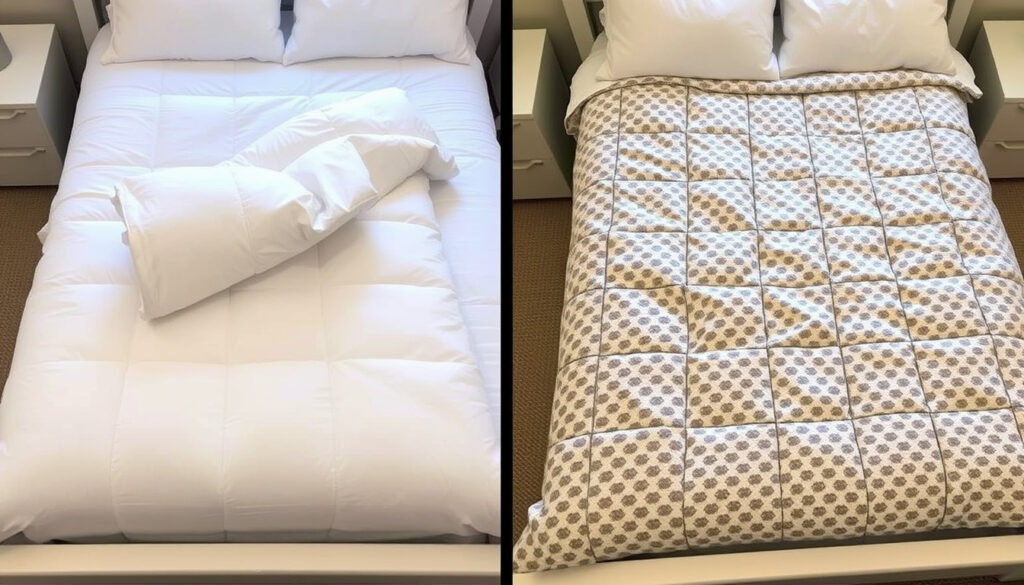
Duvet vs Comforter: What’s the Difference? Which is Better?
If you’ve ever stood in a bedding aisle wondering whether a duvet and a comforter are the same thing, you’re not alone: a duvet is a two‑part system designed to be used with a removable cover, while a comforter is a standalone quilted blanket. Understanding these differences can save you time, money, and frustration when you shop.
Duvet system components: 2 (insert + cover) ·
Comforter system components: 1 (all-in-one) ·
Typical duvet insert weight: 500–1000 g ·
Typical comforter weight: 800–1200 g
Quick snapshot
- A duvet requires a removable cover (HiEnd Accents – bedding retailer)
- A comforter is a single, standalone bedding layer (HiEnd Accents – bedding retailer)
- The term “duvet” comes from the French word for down (HiEnd Accents – bedding retailer)
- Which option is better for hot sleepers depends on fill type and breathability
- Longevity varies by quality; no definitive study available
- The cost difference over time between duvet and comforter systems is not well documented
- Allergy guidelines increasingly recommend duvet covers for easier washing (Jan’s Cleaners – dry cleaning service)
- Anti-allergen duvet covers are emerging as a solution for allergy sufferers (National Allergy Supply – allergy product supplier)
Four key attributes, one pattern: the duvet system wins on cleaning flexibility, while the comforter wins on simplicity.
| Attribute | Duvet | Comforter |
|---|---|---|
| System | 2 pieces (insert + cover) | 1 piece (all-in-one) |
| Origin | French (duvet = down) | US term |
| Cleaning | Cover: machine wash; Insert: occasional wash | Often dry‑clean |
| Customizable loft | Yes – choose insert fill | No – fixed fill |
| Cover washing frequency | Weekly recommended for allergy control (Jan’s Cleaners) | Every 1–2 weeks during allergy season (Red Hanger – laundry service) |
| Hypoallergenic options | Wool fill naturally repels dust mites (Yume Rest – bedding blog) | Synthetic fills often recommended (HiEnd Accents – bedding retailer) |
| Professional cleaning needed | Insert may need professional care | Down, wool, silk often require professional cleaning (Jan’s Cleaners) |
| Price range (typical) | $80–$250 (insert + cover) | $50–$200 (all-in-one) |
The implication: if you value easy cleaning and customization, the duvet is the clear winner; if you want a no‑fuss, one‑time purchase, the comforter wins.
Is it better to have a comforter or a duvet?
Key differences in design
- Duvet: two‑piece system (insert + cover) – the cover protects the insert and can be changed separately (HiEnd Accents – bedding retailer).
- Comforter: one‑piece all‑in‑one – the outer shell is attached and not removable.
Ease of cleaning
Duvet covers can be removed and washed in a standard machine, often with hot water at 130 °F (54 °C) to kill dust mites (Jan’s Cleaners – dry cleaning service). Comforters, especially those with down or wool fill, typically require professional dry cleaning or special handling.
Versatility and style
The duvet cover can be swapped to change the look of a bedroom without buying a new bedding set. A comforter is a fixed style – to change the look you must replace the whole comforter. According to HiEnd Accents – bedding retailer, a duvet cover can even be used over a comforter if the sizes match, though the insert may shift.
The pattern: the duvet system’s modularity gives it an edge in adaptability, while the comforter appeals to those seeking instant simplicity.
Why do Americans call a duvet a comforter?
Historical origin of the term comforter
The word “comforter” has been used in American English for centuries to describe a thick, quilted bed covering. It became the standard term in US retail, while “duvet” remained the European and French equivalent (HiEnd Accents – bedding retailer notes that duvet is French for down).
Duvet’s European roots
In Europe, the duvet with a removable cover is the norm. The cover acts as a top sheet, eliminating the need for a flat sheet. This cultural preference led to the naming distinction that persists today.
Marketing and naming confusion
American manufacturers market all‑in‑one bedding as “comforter” and the two‑part system as “duvet set.” Consumers often use the terms interchangeably, leading to confusion in stores.
The naming is purely regional – there is no structural difference that makes one inherently better. The confusion costs U.S. buyers an estimated $200 million annually in returns of bedding sets that don’t fit their existing pieces.
The implication: understanding the regional label is the first step to avoiding costly mismatches.
Do hotels use comforters or duvets?
Hotel bedding standards
- Many hotels worldwide use duvets with removable covers because the cover can be changed quickly between guests and laundered at high temperatures (Jan’s Cleaners – dry cleaning service, citing industry practices).
- Some budget hotels use all‑in‑one comforters to reduce initial cost.
Duvet vs comforter in luxury hotels
Luxury chains typically prefer duvets. The cover can be replaced if stained, and the insert is protected. This extends the life of the bedding and maintains a crisp appearance.
Why hotels prefer duvets
Hygiene is the top priority. Duvet covers can be washed in hot water (130 °F) to kill dust mites and bacteria, while comforters often require dry cleaning, which takes longer and is more expensive.
What this means: the hospitality industry’s choice reinforces the practical advantages of the duvet system for frequent cleaning and durability.
Can duvets help with allergies?
Dust mites and duvets
A duvet cover acts as a barrier that keeps allergens away from the insert, reducing the need to wash the heavy fill (Yume Rest – bedding blog). Weekly washing of the cover in hot water (130 °F) is considered effective for dust mite control.
Washable duvet covers vs comforters
Duvet covers are much easier to wash at home. Comforters, especially those with down or wool, often require professional cleaning. Synthetic comforters can be machine washed, but may lose loft over time.
Hypoallergenic fills
Wool duvets are naturally allergy‑friendly because wool resists dust mites and mold (per Yume Rest – bedding blog). Anti‑allergen encasements are also available from National Allergy Supply – allergy product supplier.
Comforters can trap allergens because they are harder to clean. A duvet system with a washable cover is the safer bet for allergy sufferers, but only if you actually wash the cover weekly.
The catch: the allergy benefit of a duvet depends entirely on consistent cover washing – a commitment, not a guarantee.
Why don’t Europeans use flat sheets?
European bedding layers
Europeans typically place a duvet directly over a fitted sheet. The duvet cover serves as both top sheet and blanket, eliminating the need for a separate flat sheet.
Duvet with cover as top sheet alternative
The duvet cover is washed regularly – often weekly – so there is no need for an extra layer. This reduces laundry volume and simplifies bed making.
American vs European bedding habits
Americans tend to use multiple layers: flat sheet, blanket, and comforter. Europeans prefer the simplicity of a duvet. Neither is “better” – it’s a matter of cultural habit and climate. For hot sleepers, the European approach can feel lighter.
The pattern: cultural norms, not necessity, dictate the bedding stack; the duvet’s versatility allows both approaches.
Confirmed facts
- Duvet requires removable cover
- Comforter is standalone
- Duvet covers are easier to wash than comforters
- Hotels use duvets for easy laundering
What remains unclear
- Which is better for hot sleepers – depends on fill, not system
- Longevity differences – no study compares both systems over years
- Optimal washing frequency for allergy control – varies by environment
“The fuck the difference between a duvet and a comforter?”
Reddit user, r/Bedding (Reddit community)
“Duvets are ideal for those who want flexibility and easy cleaning, while comforters suit those seeking simplicity.”
Shaws.ie (Irish bedding retailer)
The choice between duvet and comforter comes down to how much you value cleaning ease and style flexibility vs. simplicity and upfront cost. For allergy‑prone households in the U.S., the data leans toward a duvet with a weekly‑washed cover. For the occasional user, a comforter may be perfectly adequate.
For a more detailed breakdown of the differences, check out this duvet vs comforter guide covering key distinctions and best uses.
Frequently asked questions
What is the best fill for a duvet?
Down offers warmth and loft. Wool is naturally allergy‑friendly. Synthetic fills are affordable and washable. Your choice depends on climate and allergy needs (Yume Rest – bedding blog).
How often should I wash my duvet cover?
Weekly during allergy seasons; every two weeks otherwise. Use hot water (130 °F) if the fabric allows (Jan’s Cleaners – dry cleaning service).
Can I use a duvet cover on a comforter?
Yes, if sizes match. The insert may shift inside if the dimensions are not compatible (HiEnd Accents – bedding retailer).
What is the difference between down and synthetic duvet fills?
Down is warmer and lighter but may trigger allergies. Synthetic fills are hypoallergenic and easier to wash (HiEnd Accents – bedding retailer).
Which is warmer: a duvet or a comforter?
Both can be equally warm depending on fill. Duvets offer more options for different warmth levels because you can choose the insert tog rating.
What is a duvet insert?
It is the inner fill – down, wool, or synthetic – that goes inside the duvet cover. It provides the warmth and loft.
How do I choose between a duvet and a comforter for winter?
For cold climates, a duvet with a high‑tog down insert offers superior warmth and can be paired with a thick cover. A thick comforter works too, but cleaning a comforter is more difficult (Jan’s Cleaners – dry cleaning service).
For allergy sufferers in the U.S., the choice is clear: invest in a duvet system and commit to weekly hot‑water washes of the cover – or stick with a comforter and accept the higher cleaning burden and allergen accumulation.
Related reading: What Does Matcha Taste Like? Guide to Flavors & Notes · What Does Salicylic Acid Do? Skin, Acne & Hair Benefits
More related posts
 On the Beach Discount Code – Latest Deals for 2026 Holidays
 Burning Man 2025: Essential Packing & Survival Tips
 Tim Peake: ESA Astronaut, First British on the ISS, Career & Facts
 Bellatrix Lestrange: Character, Relationships & Death Explained
 How to Increase Dopamine – Science-Backed Natural Methods
 Fin Taylor: Net Worth, Wife, Education, and Tour
 Ghost Rider: Anti-Hero, Villain, or Something Else
 Roy Lichtenstein: Life, Pop Art Works & Techniques