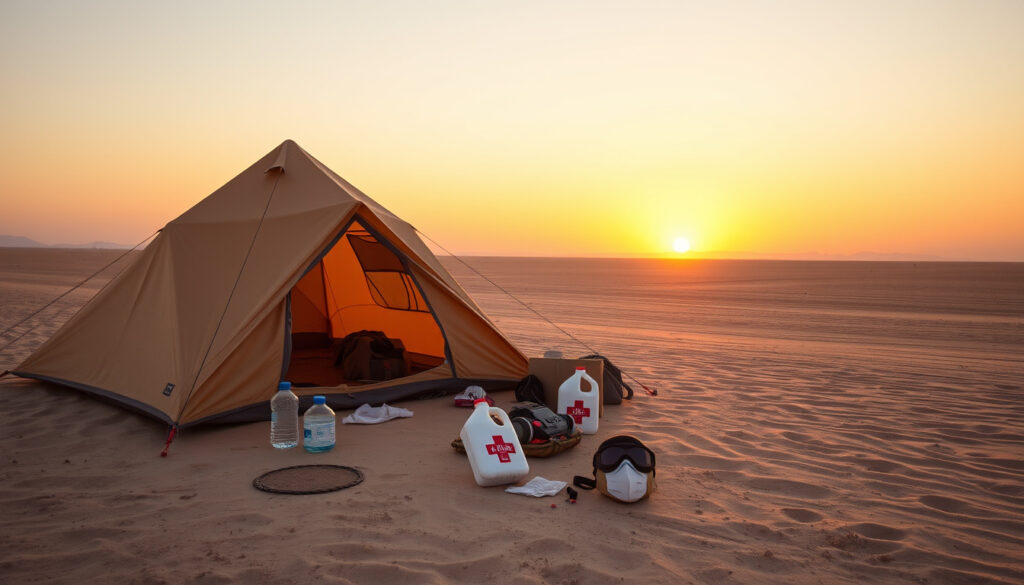
Burning Man 2025: Essential Packing & Survival Tips
There’s a reason Burning Man veterans obsess over their packing lists months before the gates open. The Black Rock Desert is one of the most unforgiving environments on the planet, and the official survival checklist is not optional — it’s a lifeline.
Water per day: 1.5 gallons per person ·
Dust protection: Mask + goggles required ·
First aid: Extensive kit recommended ·
Warm gear: Cold desert nights below 40°F ·
Bike lights: Mandatory for night riding
Burning Man Survival Guide (official event survival guidance)
Quick snapshot
- Bring 1.5 gallons of water per person per day (Burning Man Survival Guide)
- Ticket and photo ID required for Will Call pickup (Burning Man Survival Guide)
- Dust mask and goggles essential for dust storms (Burning Man Survival Guide)
- Warm clothing and sleeping bag for cold nights (Burning Man Survival Guide)
- Exact 2025 ticket sale dates beyond general on-sale window
- Specific weather forecast for 2025 event week
- Whether theme camps will have sufficient water supply for newcomers
- Ticket sales typically begin in January; secure registration by February
- Will Call opens one week before event start
- Exodus begins Monday after the Man burns
- Subscribe to Burning Man email list for 2025 ticket announcements
- Start gathering gear now — avoid last-minute supply shortages
- Plan transportation and camp setup with your group
Six critical items, one pattern: the official checklist is built around self-reliance in a remote environment with no services. Every item on the list either keeps you hydrated, protected from the elements, or able to pitch camp and clean after yourself.
| Category | Essential Item | Why It Matters |
|---|---|---|
| Hydration | 1.5 gallons water per person per day + reusable bottle | Dehydration is the #1 preventable risk |
| Shelter | Tent + warm sleeping bag + bedding | Nights can drop below 40°F |
| Dust protection | Particle mask + goggles | White-out dust storms reduce visibility to zero |
| Sun protection | Sunscreen SPF 50+ + sunglasses + shade structure | Midday sun is relentless; no natural shade |
| First aid | Extensive kit with prescriptions in original containers | No medical services on playa; nearest hospital is 2+ hours away |
| Lighting | Headlamp + bike lights + personal lights | Mandatory for night visibility; bikes without lights are ticketed |
| Tools | Duct tape + rope/tie-downs + garbage bags | Duct tape solves countless camp repairs; rope secures shade structures |
| Communication | Battery-powered AM/FM radio (BMIR 94.5 FM) | Only way to receive event updates and emergency info |
| Fire safety | Fire extinguisher + portable ashtray | Open flames are common; MOOP (Matter Out Of Place) fines apply |
| Sanitation | Hand sanitizer (60%+ alcohol) + recycling bags | No running water; leave no trace |
What to Pack: The Official Survival Checklist
The Burning Man Survival Guide breaks down the must-bring items into categories. Here’s what you cannot afford to leave behind.
Hydration and Food
Bring 1.5 gallons of water per person per day, plus a reusable water bottle. Food and beverages must be brought in by you — there are no vendors on the playa. The Burning Man Survival Guide emphasizes that dehydration is the most common health issue.
Shelter and Warmth
A camp tent or other shelter is mandatory, along with warm sleeping bags and bedding. Nights can be bitterly cold. The official checklist also recommends rain gear and footwear, and a shade structure or umbrella to break the midday sun. Bring rope or tie-down straps to secure your setup.
Protection from Dust and Sun
Goggles and a particle or dust mask are essential for dust storms. Sunscreen or sunblock and sunglasses are non-negotiable. The playa dust is alkaline and can irritate eyes and lungs — the Survival Guide warns that even a minor dust event can reduce visibility to near zero.
Lighting and Safety
Flashlights and spare batteries (headlamps are especially useful), lights for your bike and your person. Bike lights are required by Burning Man rules. Fire extinguishers, a first-aid kit with prescriptions in their original containers, and hand sanitizer with at least 60% alcohol round out the safety kit. Portable ashtrays are needed for smokers to prevent MOOP (Matter Out Of Place).
Tools and Miscellaneous
Duct tape — you will find a need for it, says the official guide. Also rope, garbage and recycling bags, a battery-powered AM/FM radio (to listen to BMIR 94.5 FM for event updates), and durable footwear. The Burning Man Survival Guide is the definitive source for the complete list.
First-timers often underestimate the cold and the dust. The two most common regrets: not bringing enough warm layers and not having a proper dust mask. Spend the extra $20 on a respirator-style mask and a pair of clear ski goggles — your lungs and eyes will thank you.
Ticketing and Entry Essentials
Getting into Burning Man starts with a ticket — and the process has its own set of rules. Bring your ticket or photo ID and confirmation number for Will Call pickup, as required by the Burning Man Survival Guide. The official sale typically opens in January, with a registration window in February. For 2025, keep an eye on the Burning Man email list for exact dates.
If you’re flying in, consider shipping your gear or using a Burner Express bus service. You’ll need to arrange transportation from the nearest airport (Reno or San Francisco) to the playa. The event’s ticketing page also lists vehicle passes and early arrival passes for those volunteering to help build the city.
Tickets are non-transferable and often sell out within hours. Missing the registration window means relying on the secondary market (STEP) or waiting until the last minute. For first-timers, the risk of not securing a ticket is real — plan your calendar around the sale dates.
Staying Safe in the Desert
Self-reliance is the core principle. The playa has no running water, no electricity, and no medical services beyond a small emergency clinic. The official survival checklist is designed to keep you alive for a week in an extreme environment. Here are the critical safety rules drawn from the Burning Man Survival Guide.
Hydration and Heat
Drink at least 1.5 gallons of water per day. Electrolyte supplements are recommended. Watch for signs of heat exhaustion — headache, dizziness, nausea. Rest in the shade during the hottest part of the day (11 a.m. to 4 p.m.).
Dust Storms
When a white-out hits, stop moving, cover your face, and wait it out. Use your bike lights and personal lights so others can see you. Goggles are essential — the fine alkaline dust can cause corneal abrasions.
Cold Nights
After sunset, temperatures can drop to the 40s or lower. Layer up. A warm sleeping bag rated for 20°F or lower is recommended. Bring a hat and gloves.
Fire Safety
Open flames are part of the culture, but so are burn bans. Always have a fire extinguisher nearby. Use portable ashtrays for cigarette butts. The MOOP (Matter Out Of Place) team will fine you for leaving trash.
The more safety gear you bring, the more you have to haul. But skimping on a dust mask or a $10 headlamp can turn a minor inconvenience into a trip-ruining problem. The trade-off is clear: pack light on costumes, heavy on survival essentials.
Transportation and Setup
Getting your gear to the playa and setting up camp is a logistical challenge. The Burning Man Survival Guide recommends bringing rope or tie-down straps to secure your shade structure and tent against high winds. A sturdy bike is your primary mode of transportation on the playa — don’t forget lights for it.
If you’re driving, fill your gas tank before entering the playa (there’s no gas station). Bring a spare tire and basic tools. For those using the Burner Express bus, you can bring up to two suitcases and a bike. Arrive early to stake out a camp spot that’s not in a flood-prone area.
The Ten Principles and Community Spirit
Burning Man is more than a festival — it’s a community built on the Ten Principles: Radical Inclusion, Gifting, Decommodification, Radical Self-reliance, Radical Self-expression, Communal Effort, Civic Responsibility, Leaving No Trace, Participation, and Immediacy. The official survival checklist embodies Radical Self-reliance: you bring everything you need and take everything you leave.
For first-timers, the principle of Gifting is especially important. Bring a small gift to share — a handmade trinket, a bottle of hot sauce, a poem. It’s not about the monetary value; it’s about the connection.
Clarity Check
Confirmed facts
- 1.5 gallons of water per person per day is required
- Ticket and photo ID needed for Will Call
- Dust mask and goggles are mandatory
- Warm clothing and sleeping bag for cold nights
- Fire extinguisher and first-aid kit on the list
- Bike lights are required
What’s unclear
- Exact 2025 ticket sale dates (not yet announced)
- Specific weather forecast for the event week
- Whether theme camps will have water available for newcomers
- Exact number of attendees expected
“Bring 1.5 gallons of water per person per day — that’s a minimum. Dehydration is the most common medical issue on the playa.”
— Burning Man Survival Guide (official event survival guidance)
“The Ten Principles are not suggestions; they are the foundation of our community. Radical Self-reliance means you come prepared.”
— Burning Man Project (event organizer)
For a first-time Burner heading to the playa in 2025, the choice is clear: follow the official survival checklist to the letter, or risk a trip that ends in discomfort, illness, or worse. The desert does not negotiate — it only demands.
youtube.com, whereandwander.com, youtube.com, trippinginthetropics.com, youtube.com, venga-store.com, calvinrosser.com, citybit.in, nottinghamwire.co.uk
If you’re gearing up for the playa, you might also find the Burning Man 2026 guide helpful for understanding next year’s tickets and principles.
Frequently asked questions
How much water do I need to bring to Burning Man?
At least 1.5 gallons per person per day, according to the Burning Man Survival Guide. For a full week, that’s 10.5 gallons per person.
Do I need a ticket to enter Burning Man?
Yes. A valid ticket, photo ID, and confirmation number are required for Will Call pickup. All tickets are non-transferable.
What should I wear for cold nights?
Warm layers, a hat, gloves, and a sleeping bag rated for 20°F or lower. Night temperatures can drop to the 40s.
Are dust masks really necessary?
Yes. The alkaline playa dust can cause lung irritation and eye damage. A particle mask and goggles are essential during dust storms.
Can I buy food and water at Burning Man?
No. There are no vendors. You must bring all your own food and beverages. Some theme camps may offer meals, but don’t rely on them.
Do I need a bike?
A bike is the primary mode of transportation on the playa. Bring lights for night riding — they are required by Burning Man rules.
What is MOOP and why should I care?
MOOP stands for Matter Out Of Place. Burning Man has a strict Leave No Trace policy. Fines are issued for littering, and portable ashtrays are required for smokers.
When do 2025 tickets go on sale?
Exact dates are not yet confirmed, but the main sale typically opens in January. Register for the Burning Man email list to get notified.
More related posts
 Down’s Syndrome: Causes, Symptoms, Lifespan & More
 Dango Ouattara: Age, Nationality, Transfer Fee, Stats & FPL Points
 Mimi Rogers: Age, Movies, Tom Cruise Marriage & Career Today
 Bowel Cancer Survival Rate by Stage: Key Facts and Prognosis
 Balvinder Sopal: Partner, Tragedy, and Strictly Facts
 Miles Teller: Biography, Accident, and Movie Career
 Iris Law: Biography, Age, Height, Parents, Net Worth & More
 Viktoria Plzeň vs Rangers – Final Score and Key Highlights